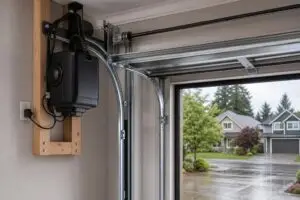
Choosing the right garage door opener is about more than just lifting and lowering your garage door—it’s about balancing noise, maintenance, cost, and overall durability. Two of the most popular systems on the market are chain drive and belt drive garage door openers, each with distinct advantages and drawbacks.
Quick Summary
- Chain drives cost less upfront but may cost more long-term due to lubrication, tensioning, and wear-related repairs.
- Belt drives cost more initially but run quieter, smoother, and typically need less maintenance over time.
- Chain drives are louder and can feel clunkier, making them less ideal for attached garages or noise-sensitive homes.
- Chain drives suit heavy doors (wood, insulated, oversized), while belt drives fit standard residential doors best.
- Belt drives are often faster and more compact; chain drives can be bulkier and need more ceiling space.
Cost Comparison
Initial Cost
When it comes to upfront price, chain drive garage door openers are the more budget-friendly option. This makes them an appealing choice for homeowners looking to save on installation without sacrificing performance. Their straightforward design using a metal chain and trolley system keeps manufacturing costs lower, which is reflected in the retail price.
On the other hand, belt drive garage door openers—featuring a rubber belt rather than a chain—come with a higher initial investment. This is mainly due to the advanced materials and quieter motor design.
Long-term Cost
While chain drive openers cost less initially, their long-term expenses can add up. Regular maintenance, lubrication of the chain, and potential repair costs due to wear and tear should be factored in. In contrast, belt drive garage door openers require less frequent service, making them potentially more economical over their lifespan despite the higher upfront price.
Noise Level
Chain Drive
Noise is one of the most significant differences between these systems. Chain drive garage door openers are known for producing more noise, especially during opening and closing. The metal chain generates vibrations and clanking sounds, which may be disruptive in homes with garage doors located beneath or adjacent to living spaces.
Chain drive pros include strength and affordability, but noise is a notable con that can’t be ignored.
Belt Drive
In contrast, belt drive garage door openers are celebrated for their near-silent operation. The rubber belt absorbs vibrations, resulting in a much smoother and quieter experience. This makes them a top choice for homeowners with attached garages or anyone sensitive to noise.
Belt drive pros include minimal noise, smoother motion, and reduced disruptions—especially during early mornings or late nights.
Durability
Chain Drive
When it comes to durability, chain drive garage door openers are known for their ruggedness. The metal chain is built to handle heavy garage doors and withstand demanding environments, making them a reliable choice for garage door types like oversized or insulated doors.
However, regular maintenance is essential to keep them running at peak performance, and the chain may eventually stretch, requiring adjustments.
Belt Drive
While belt drive openers provide smoother performance, they typically have a slightly shorter lifespan compared to chain drive systems—especially if the rubber belt is exposed to extreme temperatures or humidity over time.
That said, high-quality belt drive garage door openers with reinforced belts can match chain drive longevity when properly maintained, especially in residential settings.
Maintenance Requirements
Chain Drive
Here’s where chain drive openers demand more attention:
- Regular lubrication of the metal chain to prevent squeaking and grinding
- Checking the trolley system for wear
- Inspecting and tightening bolts and hardware
- Adjusting the chain tension as it stretches over time
Neglecting these tasks can lead to issues like jerky movement, noise, or even damage to the garage door opener itself.
Belt Drive
Belt drive garage door openers shine in the maintenance department. Their rubber belts require minimal upkeep compared to their chain drive counterparts. Key maintenance practices include:
- Periodic inspection of the belt for cracks or wear
- Ensuring the drive opener remains aligned
- Checking for belt tension as part of annual service
Because there’s no need for constant lubrication or tensioning like with chain drive, belt drive pros extend to lower maintenance efforts and fewer repair calls over the system’s lifespan.
Speed
Chain Drive
While both systems perform well, chain drive garage door openers generally operate at a slightly slower pace due to the metal chain’s weight and friction. This might not be a dealbreaker for all homeowners, but those prioritizing faster door opening and closing may find belt drive openers more appealing.
However, chain drive openers do offer dependable power, especially for heavy garage doors, which can sometimes balance out the slower cycle times.
Belt Drive
Speed is one of the standout advantages of belt drive openers. The rubber belt and smooth motion system allow these openers to operate faster and more quietly than chain alternatives.
This faster performance can make daily routines feel more efficient and reduces strain on the garage door opener, especially in homes with high frequency of garage use.
Smooth Operation
Chain Drive
When it comes to overall smoothness, chain drive openers are reliable but can feel clunky during opening and closing. The metal chain and trolley produce more vibration, which can shake the garage door, leading to a rougher experience over time.
While this does not always affect dependability, it can make daily use more annoying, especially if the garage is attached to a bedroom, living room, or home office. If the opener is shaking, jerking, or getting louder over time, the issue may involve the chain, trolley, rail, rollers, or door balance.
Belt Drive
Belt drive garage door openers offer unmatched smoothness thanks to the rubber belt’s flexibility and shock absorption qualities. The reduction in vibrations not only results in a quieter system but also minimizes wear and tear on the garage door tracks, springs, and other door components.
For homeowners seeking the most seamless, low-impact garage door opener, belt drive systems come out ahead.
Compatibility with Garage Door Types
Chain Drive
Chain drive garage door openers are better suited for heavier, oversized, or reinforced garage doors. They deliver strong lifting power, making them a smart choice for:
- Wooden doors
- Insulated doors
- Oversized double doors
If you have a large or custom garage door, a chain drive opener is likely your best bet due to its durability and lifting strength.
Belt Drive
Belt drive garage door openers are ideal for standard garage door types, such as:
- Single or double garage doors
- Aluminum or composite doors
- Residential garage doors with standard weight
While they can handle moderate door weights well, they might not be the best option for extra-heavy garage doors, where chain drive systems offer more robust support.
Size and Space Considerations
Chain Drive
Chain drive openers are bulkier in size, which can require additional ceiling space for the drive mechanism and trolley system. This might be a consideration for garages with lower ceilings or where space optimization is essential.
Additionally, the exposed metal chain takes up more visual space and may not appeal to those seeking a clean, minimal look.
Belt Drive
Belt drive garage door openers tend to be more compact and streamlined, making them a better fit for modern garages with space or aesthetic considerations. The rubber belt is sleek and blends better with contemporary garage door opener designs.
This space-friendly design is particularly appreciated in homes where the garage doubles as a workspace or recreation area.
Conclusion: Which Is Right for You?
Choosing between a chain drive and belt drive garage door opener depends on your door weight, noise tolerance, budget, and how often you use the garage.
A chain drive opener is usually better if you want a lower upfront cost or need dependable lifting strength for a heavier door. A belt drive opener is usually better if your garage is attached to the home and quiet, smooth operation matters more.
If you are not sure which opener fits your garage door, a technician can check the door weight, balance, opener strain, ceiling space, and daily-use needs before recommending the right setup.
Need Help Choosing a Garage Door Opener in Seattle?
Dan’s Garage Door Services can help you compare chain drive, belt drive, smart opener, and battery backup options based on your garage door, home layout, and budget.
We install and repair garage door openers for homeowners across Seattle, Burien, Renton, Bellevue, Tacoma, Auburn, and nearby areas.