Glass garage doors are a striking alternative to traditional steel, wood, or paneled doors, and they are showing up everywhere from modern new builds to renovated mid-century homes. If you are considering glass garage doors, the big questions usually come down to looks, privacy, comfort, and budget. This guide breaks down what full-view doors are, the main advantages and tradeoffs, typical pricing drivers, and practical ways to control visibility without losing the light, modern feel that makes these doors so popular. You will also learn what to ask about insulation and efficiency so the door matches your climate, garage use, and day-to-day expectations.
- Full-view doors use large glass panels in an aluminum or steel frame for a clean, modern look
- The biggest benefits are natural light, curb appeal, and a more open feel
- The biggest drawbacks are privacy needs, cleaning, and higher upfront cost
- Privacy can be improved with frosted or tinted glass, interior coverings, or switchable smart glass
- Efficiency depends on glazing type, insulation, and air sealing, not just the material
- Total cost varies widely based on size, glass choice, frame, hardware, and installation complexity
Introduction
Full-view garage doors can dramatically change the character of a home, but they are not a one-size-fits-all upgrade. Because the panels are largely glass, the door behaves more like a large window than a typical sectional garage door. That affects everything from daytime lighting to temperature swings and nighttime visibility into the garage.
The goal is to balance design and performance. The right glass type, frame, and insulation package can make the door feel premium and practical, while the wrong choices can create glare, heat loss, and a space that feels exposed. The sections below walk through what these doors are, what homeowners love about them, what to watch out for, and how to plan for privacy, cost, and energy use.
What Are Glass Garage Doors?
Glass garage doors are usually sectional overhead doors built with a perimeter frame and multiple horizontal rows of glazing. Instead of solid panels, each section contains one or more glass lites. When the door opens, it rolls along tracks just like a standard sectional door, but the door’s appearance and performance are influenced heavily by the type of glazing and frame.
They are often chosen for modern architecture, ADU conversions, workshops, or garages used as a gym or hangout space. In many homes, the garage becomes a hybrid area, and a full-view door helps it feel less like storage and more like usable square footage, especially when the door faces a backyard, patio, or driveway with a view.
Definition
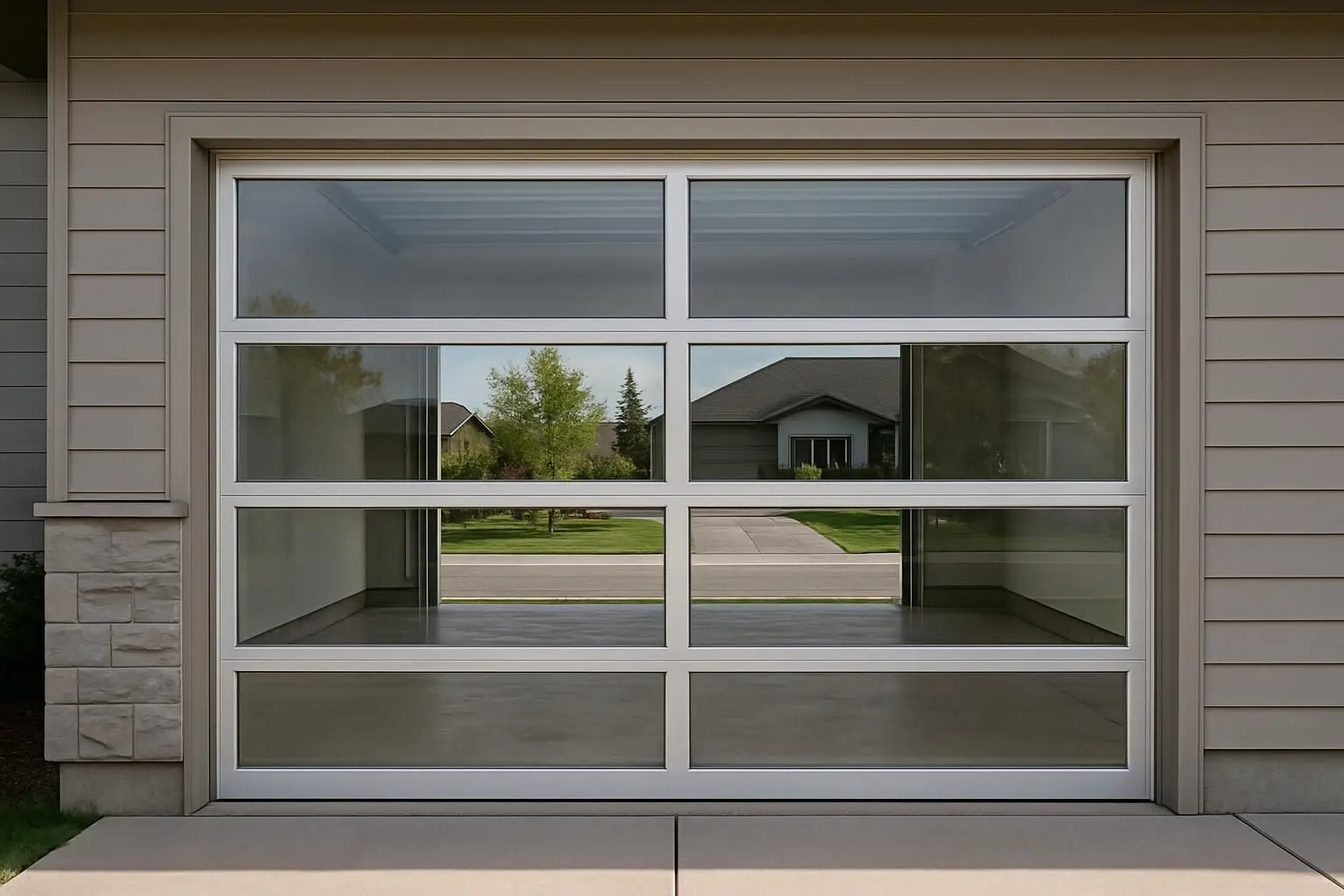
A glass garage door, often called a full-view garage door, is a framed door where most of the surface area is transparent or translucent glazing. The frame is commonly aluminum, though steel options exist, and the panels can be clear glass, frosted glass, tinted glass, or other specialty glazing. Some versions use acrylic or polycarbonate instead of glass for impact resistance and lower weight, but they still fall under the “full-view” style category.
The key feature is the uninterrupted, window-like look. From the street, it reads as a grid of glass, similar to industrial loft windows. From inside, it brings in daylight across a wide opening, which can change how you use the garage and how comfortable it feels during the day.
Styles Available
Full-view doors vary more than many homeowners expect. You can choose frame thickness, grid pattern, panel count, and how reflective or opaque the glazing is. Some styles aim for a minimalist, nearly frameless look with wider glass lites, while others lean into a pronounced grid that fits craftsman or industrial design.
Common style variables include:
- Frame finish (natural metal, dark, light, or color-matched coatings)
- Glass appearance (clear, frosted, tinted, mirrored, or textured)
- Grid layout (short panels, tall panels, equal squares, or custom divisions)
- Opener compatibility (standard lift, high lift, or special track setups in taller garages)
- Contemporary vs. vintage industrial detailing (hardware, rails, and sightlines)
Choosing a style is not just aesthetic. Frame depth, glass thickness, and seal design influence noise, stiffness, and how well the door resists air leakage.
Pros of Full-View Garage Doors
The appeal of full-view doors is immediate: they look architectural. But the benefits go beyond curb appeal, especially if you spend time in the garage. For many homeowners, these doors make the garage feel like a brighter, more intentional room rather than a dark utility zone.
That said, the advantages show up most clearly when the door is planned as part of a broader use case, such as a workshop, home gym, or entertaining spillover area. If your garage is primarily storage and you rarely open it except to park, you may value the look more than the daylight. Either way, understanding the key benefits helps clarify whether the upgrade fits your priorities.
Aesthetic Appeal
The visual impact is the number one reason people consider full-view doors. The clean lines and reflective surface can modernize an older exterior, complement contemporary architecture, and create a high-end feel without changing the footprint of the home. Because the door is often a dominant facade element, upgrading it can rebalance proportions and make the home look more intentional.
Full-view doors can also coordinate nicely with other exterior features like large windows, metal railings, or modern entry doors. The grid pattern can echo window muntins, and the frame color can be matched to trim or accent elements. For homes with a strong indoor-outdoor concept, a glass door can help the garage read as a flexible living-adjacent space.
Natural Light
Natural light is the most functional benefit. A garage with daylight can feel safer, more pleasant, and easier to work in, especially for hobbies that require detail. With a full-view door, the light is distributed across a large surface area rather than coming from a single side window, which can reduce harsh contrasts.
Daylight can also reduce the need for artificial lighting during daytime hours, particularly if the garage is used as a studio, gym, or office-like space. The effect depends on orientation and glazing choice. Clear glass maximizes light, while frosted or tinted options soften glare and reduce visibility. If your garage faces direct afternoon sun, choosing the right glazing helps keep the benefit without turning the space into a bright, hot box.
Space Perception
A full-view door can make a garage feel larger because it visually connects the interior to the outdoors. Even when the door is closed, the eye reads depth beyond the wall line. This can be especially valuable in narrower garages, tandem spaces, or garages with low ceilings where a traditional paneled door can feel heavy.
This “bigger room” effect is also why these doors are popular in garages converted for gatherings or workouts. The door becomes a feature wall that changes the mood throughout the day. In cooler seasons or rainy weather, you still get an open, airy feeling without opening the door, which can make the garage more inviting and more frequently used.
Customization Options
Customization is another major advantage, and it is not limited to appearance. Beyond frame color and grid pattern, you can choose glazing that matches your privacy needs, climate, and durability concerns. Some homeowners prioritize clarity and reflection for a sleek, modern facade, while others want a softly diffused look that hides clutter.
Common customization choices include:
- Glass type for privacy (frosted, obscure, tinted)
- Safety glazing (tempered or laminated configurations)
- Insulated glass units for better comfort
- Upgraded track and hardware for smoother, quieter operation
- Window-like details such as divided lites or specialty textures
The more you customize, the more important it becomes to confirm lead times, serviceability, and how replacement panels are handled if one gets damaged.
Cons of Full-View Garage Doors
The cons are not deal-breakers, but they are real, and they tend to show up after the initial excitement wears off. Full-view garage door pros and cons often hinge on how visible your garage is from neighbors and passersby, how much time you want to spend cleaning, and whether the garage is conditioned or connected to living space.
In other words, the “right” choice depends on context. A private property with a backyard-facing garage has different needs than a home where the garage door is close to the sidewalk. Thinking through privacy, upkeep, and budget early helps you choose glazing and hardware that prevent regret later.
Privacy Concerns
Privacy is the most common hesitation. Clear glass shows everything: vehicles, tools, storage bins, and sometimes doors that lead into the home. At night, interior lights can turn the garage into a display case. If your garage faces a street or nearby neighbors, you will likely want some type of obscured or tinted glazing.
Privacy is also about comfort, not only security. Even if you have nothing valuable visible, it can feel unsettling to work out, tinker, or leave the door closed while feeling “watched.” The good news is that privacy can be addressed through glass selection and coverings, but those choices can affect light quality and the clean look that drew you to the door in the first place.
Maintenance Requirements
Glass shows dirt, water spots, pollen, and fingerprints more readily than painted or textured panels. If you live in a dusty area, near sprinklers, or in a region with frequent rain spots, you may find yourself cleaning the door more often to keep it looking sharp. Frames and seals also need periodic inspection to ensure they remain tight and free of debris.
Maintenance is not necessarily difficult, but it is ongoing. You will want to consider safe cleaning access, especially for taller doors. Hardware is similar to other sectional doors, but heavier glazing and larger panels can make proper alignment more important. A door that is slightly out of balance can wear rollers and tracks faster, so routine checks and tune-ups matter.
Cost Considerations
Full-view doors typically cost more than standard raised-panel options because of materials, glazing, and often upgraded hardware. The cost of full view garage doors can also increase if you choose insulated glass, specialty finishes, or non-standard sizes. Installation may be more involved as well, particularly if the opening needs reinforcement or if the track configuration needs to change.
Budgeting is not only about the door itself. You may need to account for an upgraded opener, new weather seals, or electrical adjustments for lighting and sensors. If you are remodeling the garage into a more comfortable space, you may also pair the door with insulation upgrades in the walls and ceiling, which can change the total project scope.
Glass Garage Door Privacy Options
Privacy solutions work best when planned before you order the door. The easiest and cleanest approach is often choosing the right glazing up front, but that is not the only route. Interior treatments can be flexible and cost-effective, while newer technologies can provide privacy on demand.
Your ideal option depends on what you are trying to hide and when. Some people want constant obscurity, while others want visibility during the day and privacy at night. Also consider whether you still want to see out. Many homeowners want light without the feeling of being on display, and that typically points to frosted or tinted solutions rather than fully opaque coverings.
Frosted and Tinted Glass
Frosted, obscure, or etched-style glazing diffuses light and reduces clear visibility. This is one of the most popular choices because it keeps the bright, modern look while hiding clutter and silhouettes. It can also soften glare and make the garage feel more comfortable for daytime use.
Tinted glass reduces visibility by darkening the view, especially from the outside in bright daylight. It can also help with solar gain depending on the tint type and placement. The tradeoff is that tint reduces incoming light, and at night, a brightly lit garage can still be visible. In many cases, a combination of light frosting plus mild tint offers a balanced look, but the best choice depends on how close your neighbors are and how you use the space.
Blinds and Curtains
Interior coverings add privacy without changing the exterior-facing glass choice. Blinds, shades, or curtains can be used only when needed, which is appealing if you want clear glass for maximum daylight and visibility at certain times. They also offer some flexibility if your privacy needs change later.
However, coverings can look less streamlined than a clean glass grid, especially if the garage is visible from the street. They can also collect dust in a garage environment. If you go this route, consider materials that are easy to clean and operate, and plan for mounting so the coverings do not interfere with door movement. Blackout-style shades can provide full privacy, while light-filtering shades maintain a softer glow.
Smart Glass Technology
Smart glass, sometimes called switchable or privacy glass, can change from more transparent to more opaque with a control. This can deliver the best of both worlds: daylight and openness when you want it, privacy when you need it. It is particularly attractive for garages used as studios or entertaining spaces where the door is a major visual element.
The main limitation is complexity. Smart glass typically requires electrical integration and careful planning for wiring and controls. It can also complicate future repairs because you are not just replacing a standard pane. If you are interested in this option, think through long-term serviceability and how you will use the feature day to day, so it does not become an expensive novelty.
Cost of Full View Garage Doors
Pricing for full-view doors ranges widely because the door is a system: frame, glazing, seals, tracks, hardware, and installation all matter. Two doors that look similar in photos can differ significantly in performance and durability based on glazing type and insulation. Custom sizes, specialty finishes, and upgraded hardware can also shift the total quickly.
When budgeting, separate the door itself from installation and any related upgrades. Installation complexity can change based on the condition of the opening, the need for reinforcement, and the type of track lift required. If your garage ceiling is low or you have limited headroom, additional hardware adjustments may be needed.
Average Pricing
Instead of a single number, it helps to think in tiers. A basic full-view door with standard clear glazing and a common frame finish is typically the entry point. Mid-range builds often add insulated glass, upgraded seals, and sturdier hardware for smoother operation. Premium builds can include specialty glazing, custom colors, higher-end tracks, and design-forward grid layouts.
Your final total is also influenced by whether you are replacing an existing door with standard dimensions or creating a new opening. If you are comparing quotes, make sure each quote specifies the glazing type, whether the glass is insulated, and what is included for sealing and hardware. That is where the real differences usually hide.
Factors Influencing Cost
Several variables drive the cost of full view garage doors, and understanding them helps you choose where to spend and where to simplify. Glass choice is a major factor, especially when you move from single pane to insulated units or from clear to specialty finishes. Frame material and finish also matter, as does the grade of rollers, tracks, and hinges.
Key cost drivers typically include:
- Door size and configuration (single vs. double width, height, custom openings)
- Frame material and finish quality
- Glazing type (clear, frosted, tinted, insulated, laminated)
- Insulation and thermal breaks in the frame
- Hardware upgrades (tracks, rollers, springs) and opener requirements
- Installation conditions (reinforcement, headroom, track lift changes, disposal)
If you are cost-sensitive, focus on getting the right privacy and insulation choices first, then consider aesthetic upgrades like custom finishes.
Potential Savings and ROI
“Return” can show up in a few ways: everyday enjoyment, functional use of the garage, and perceived curb appeal. If a brighter garage reduces your reliance on daytime lights, you may see small operating savings, but the more meaningful value is usually how the space gets used. A garage that feels like a studio or extension of the home can be used more often, which many homeowners view as a quality-of-life payoff.
For resale, the benefit is typically about buyer perception. A well-chosen full-view door can make a listing stand out visually, but it can also raise questions about privacy and efficiency if the door faces the street and the garage is visibly cluttered. The best “ROI” approach is to pair the door with a tidy interior plan and a privacy strategy that fits the neighborhood context.
Are Glass Garage Doors Energy Efficient?
Whether glass garage doors are energy efficient depends on the specific build. Glass itself is not automatically inefficient, but large glazed areas are more sensitive to heat transfer than insulated solid panels. The frame design, glazing type, and weather seals play a major role in real-world comfort.
Start by thinking about how you use the garage. If it is unconditioned and primarily for parking, efficiency may matter less than durability and air sealing. If the garage is conditioned, connected to living space, or used daily as a gym or workshop, insulation and drafts matter a lot more. In those cases, the right door specification can make the space noticeably more comfortable.
Insulation Options
Insulation comes from two places: the glazing and the frame. Insulated glass units generally perform better than single-pane glass because they create an airspace between layers that slows heat transfer. Some doors also use glazing that is designed to reflect heat or reduce solar gain, which can help in sunny exposures.
The frame can also be a weak point. A design that separates interior and exterior metal surfaces can reduce heat transfer through the frame. Regardless of the insulation package, good perimeter seals are essential. Even an insulated door can feel uncomfortable if air leaks around the edges. When evaluating options, ask how the door is sealed at the bottom, sides, and top, and whether the system is designed to reduce drafts in windy conditions.
Energy Efficiency Ratings
Energy performance is easiest to compare when you look for consistent, clearly stated metrics from the door configuration you are considering. Ratings can vary based on glass type, thickness, and whether the door uses insulated units. Even without focusing on numbers, you can make smart comparisons by asking direct questions: is the glass single or insulated, is the frame designed to reduce heat transfer, and what sealing system is included?
Also consider practical factors that influence comfort:
- Orientation and sun exposure (morning vs. afternoon sun)
- Shade from trees, overhangs, or nearby buildings
- How often the door opens and closes during the day
- Whether the garage shares a wall with conditioned rooms
If comfort is a priority, pairing an efficient door with broader garage insulation improvements often delivers the best real-world results.
Conclusion
Choosing a full-view door is largely about matching the design to how you live. Glass garage doors can elevate curb appeal, bring in generous daylight, and make the garage feel like a more open, usable space. The tradeoffs, mainly privacy, cleaning, and higher upfront cost, are manageable when you plan ahead with the right glazing and a clear idea of how visible your garage is from the street.
As a practical next step, list your top two priorities (privacy, light, insulation, or budget), then request quotes that specify glazing type, insulation approach, and sealing details so you are comparing like for like. With that clarity, glass garage doors can be a confident upgrade rather than a leap of faith.