If a bedroom, nursery, or living room sits over your garage, opener vibration can feel much louder than it does from the driveway. For quiet garage door opener installation in Seattle, the best choice usually isn’t just “buy the quietest motor.” It’s checking the whole system first. For related context, see our guide to garage door opener battery backup.
A belt drive opener, DC motor opener, or wall-mount opener can reduce motor noise, especially when replacing an older chain drive. But if the door itself bangs, shakes, or scrapes, a new opener won’t solve the real problem. Think of the opener as the motor and the garage door as the moving system it has to guide. Both have to run smoothly.
For example, in a Seattle townhome with a shared garage wall, a belt drive may help with motor vibration. But worn rollers or loose hinges can still send noise into the next room.
Quick Summary
- Attached garages make opener noise more noticeable through shared walls, ceilings, and bedrooms above the garage.
- Check door balance, rollers, hinges, tracks, and hardware before choosing a new opener.
- Belt drive and DC motor openers are common quiet choices for attached garages.
- Wall-mount openers can be a good fit when ceiling vibration or overhead space is an issue.
- Smart controls and battery backup are worth planning before installation, especially during Seattle power outages.
- No opener is completely silent if the door itself needs repair.
Why Opener Noise Matters in Attached Garages
Attached garages turn normal opener noise into house noise. The garage door opener, meaning the motorized unit that lifts and lowers the door, is usually bolted to the ceiling or mounted near the door. When it runs, vibration can travel through framing, drywall, floor joists, and shared walls. Think of it like tapping a pipe in one room and hearing it somewhere else.
That’s why a door that sounds “fine” from the driveway can feel loud inside the house. In a Seattle townhome, the rumble from a chain drive opener may carry through a shared wall into the next room. In a house with a nursery above the garage, a 6 a. m. departure can shake enough structure to wake a sleeping child.
For quiet garage door opener installation in Seattle, the goal isn’t just picking a quieter motor. You’re trying to reduce two different kinds of noise: opener noise and door movement noise.
- Opener noise: motor hum, chain rattle, rail vibration, and ceiling transfer.
- Door movement noise: rollers grinding, hinges squeaking, panels flexing, or the door thumping in the tracks.
A new opener can help a lot with the first category, especially if you’re replacing an older chain drive unit. But it won’t magically quiet a rough-moving door. Before choosing a model, pay attention to where the sound starts, where you feel vibration, and whether the door moves smoothly from fully closed to fully open.
Door Balance Comes Before Opener Selection
A quiet opener can only stay quiet if the door itself is balanced. Door balance means the springs are carrying the door’s weight correctly, so the opener guides the door instead of dragging it like a stuck suitcase.
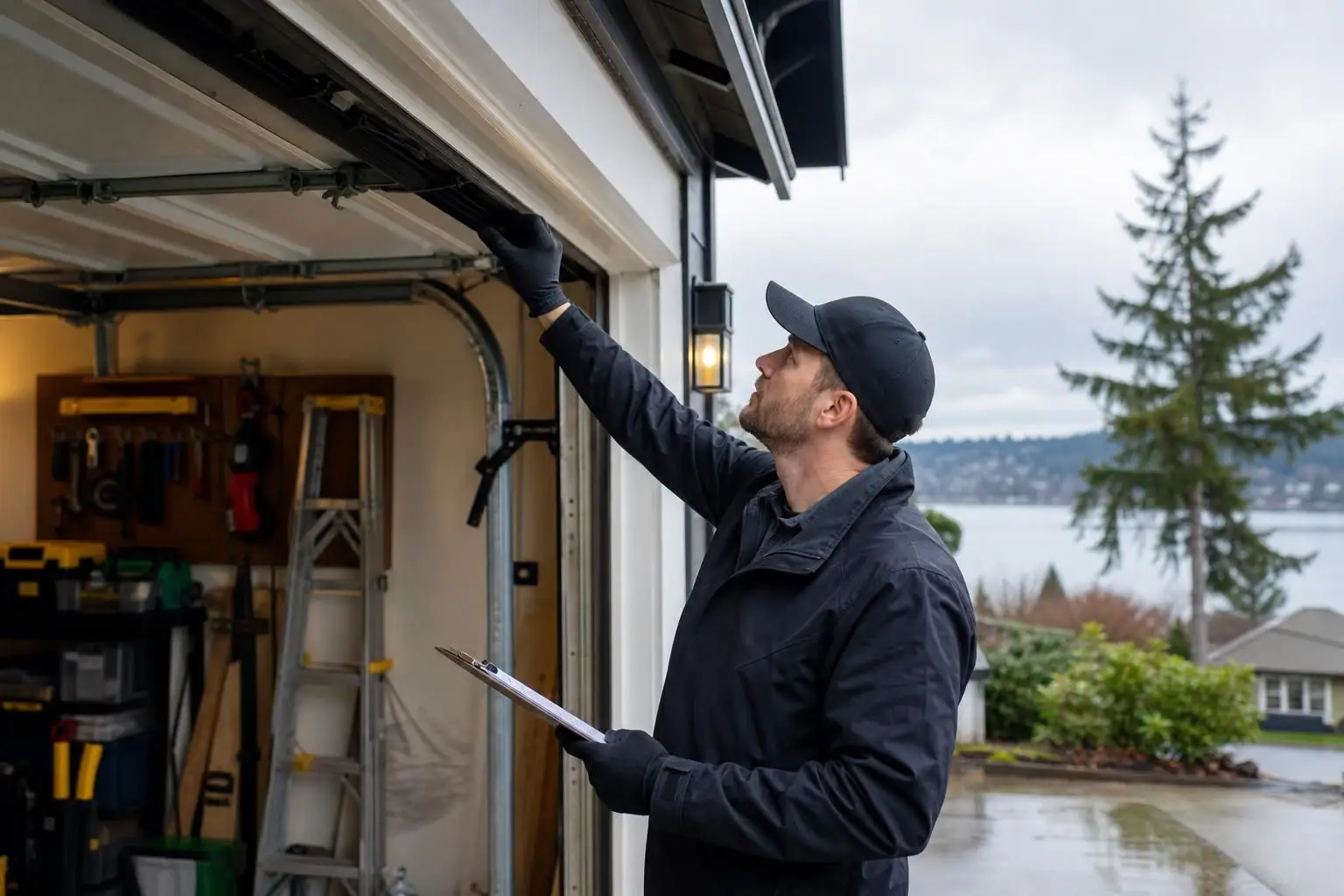
You don’t need to touch springs, cables, tracks, or opener wiring to spot warning signs. Just stand inside the garage while the door runs and watch from a safe distance. Does the door jerk? Does one side rise faster? Does the opener strain, slow down, or shake the rail? Those clues matter more than the brand name on the box.
| What you notice | What it may mean | Opener choice impact | Best next step |
|---|---|---|---|
| Door moves smoothly, little vibration | Opener is likely the main noise source | Belt drive or DC motor may help | Compare quiet opener types |
| Door thumps, jerks, or rubs | Roller, hinge, or track issue | New opener won’t solve it | Repair hardware first |
| Opener strains or door looks heavy | Possible balance problem | Quiet model may wear out early | Have springs checked by a pro |
| Noise comes from ceiling vibration | Mounting or rail transfer | Wall-mount may help if door fits | Inspect layout before buying |
Think of the opener as the driver, not the engine. If the door is heavy, crooked, or grinding, even a premium belt drive will still sound rough. And if the springs are out of balance, the opener can be overworked from day one.
For Seattle attached garages, this diagnosis step is especially worth doing before buying because small vibrations can travel straight into bedrooms, nurseries, or shared townhome walls.
Belt Drive, DC Motor, and Wall-Mount Options
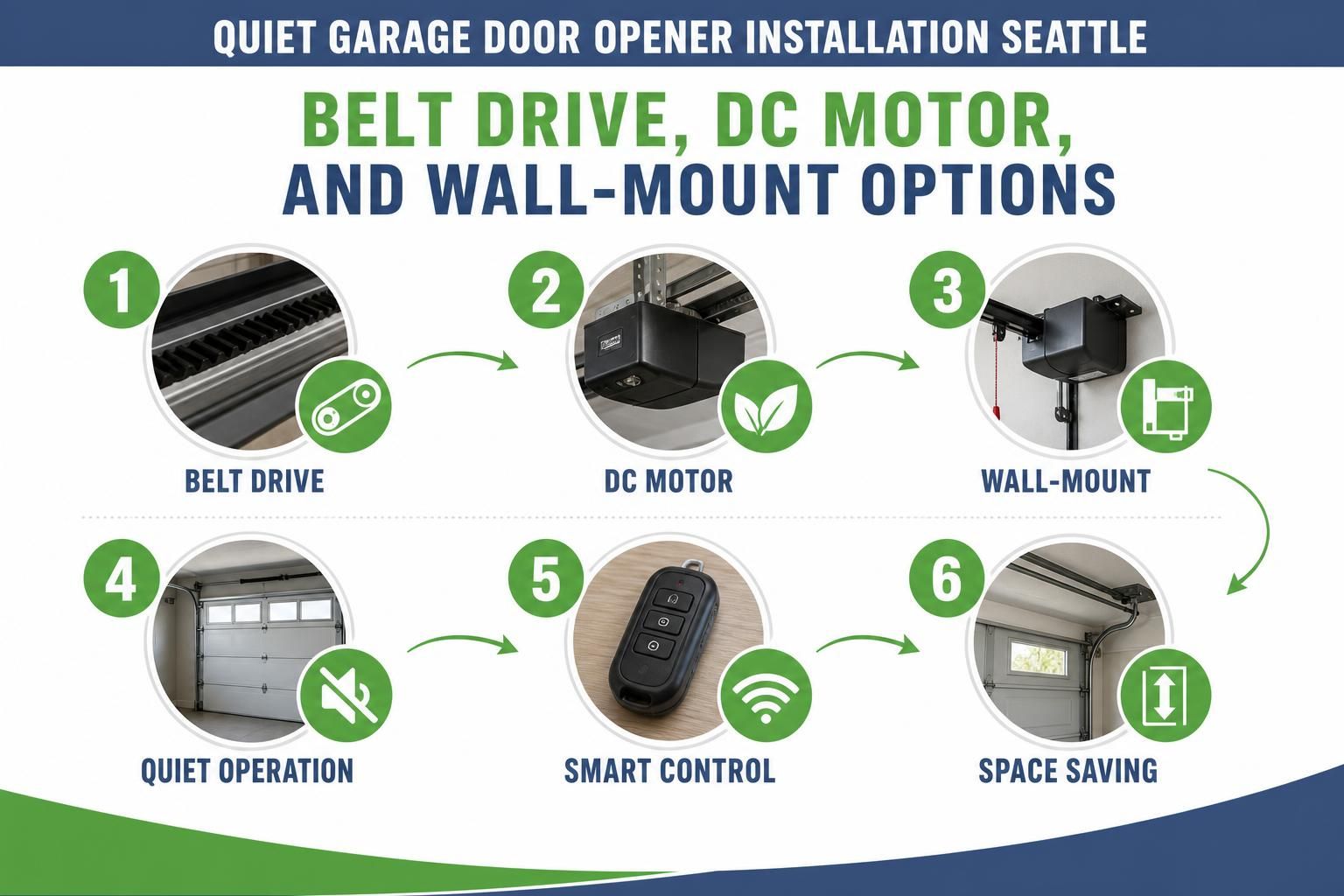
For most attached garages, a belt drive opener is the safest “quiet first” choice. Instead of a metal chain pulling the trolley, it uses a reinforced rubber-style belt. The belt usually creates less rattling through the ceiling, helping when there’s a bedroom or nursery above the garage.
A direct current motor, or DC motor, makes movement smoother. DC motors start and stop gradually instead of jerking the door into motion. That soft start and stop matters in townhomes, where vibration can travel through a shared wall.
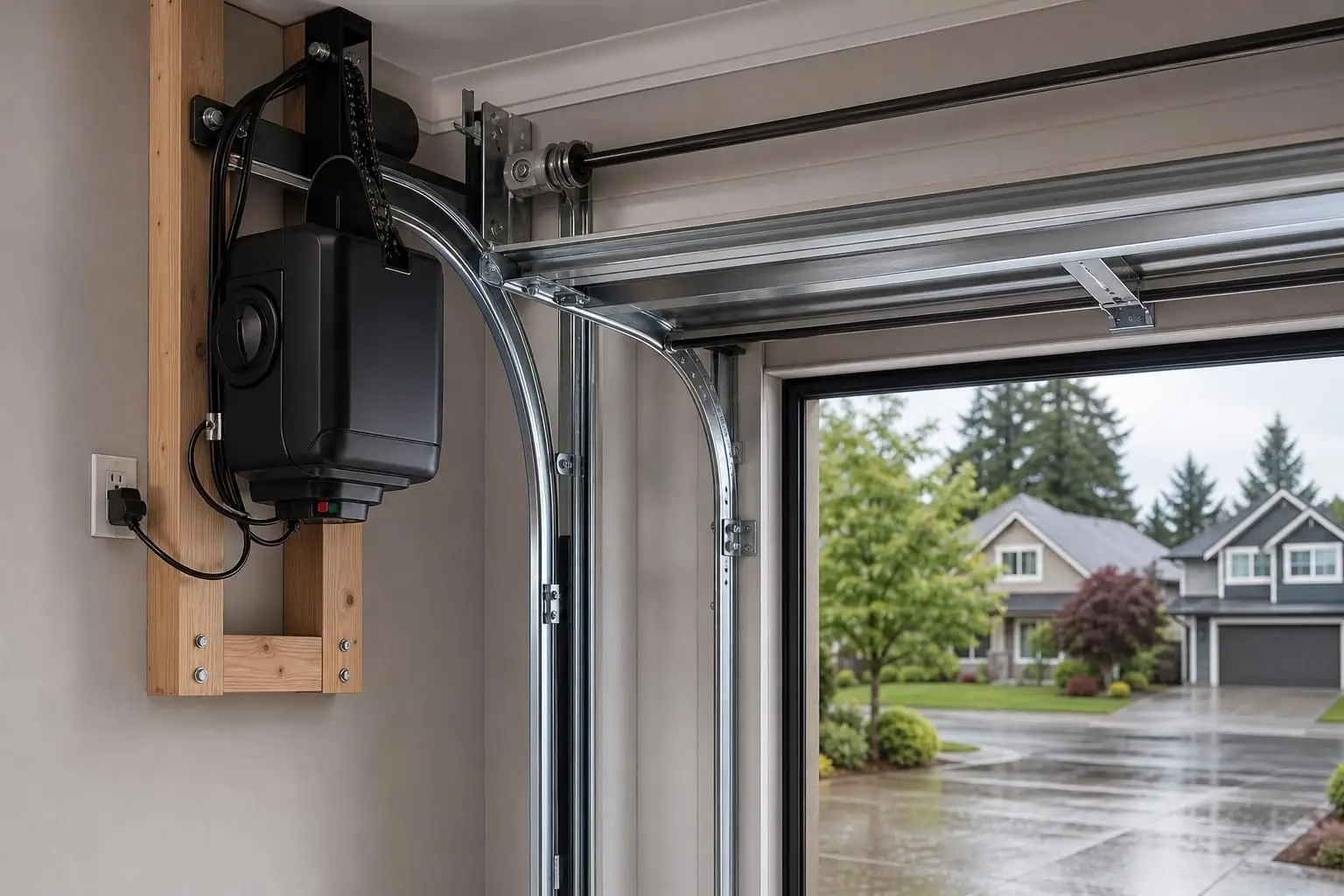
Wall-mount openers sit beside the garage door instead of hanging from the ceiling, which can reduce ceiling vibration because there’s no long rail overhead. But they don’t fit every setup. Your door needs the right side clearance beside the torsion tube, a compatible torsion spring setup, a safe nearby outlet, and enough room for the opener body and cable tension monitor. The door also needs to be balanced and in good condition, because a wall-mount opener will not correct a binding or damaged door.
A simple decision rule helps: choose belt drive with a DC motor when the ceiling layout is normal and the main complaint is motor rumble; consider wall-mount when overhead space is limited, ceiling vibration is a major issue, and the door setup meets the required clearances.
When a New Opener Will Not Fix the Noise
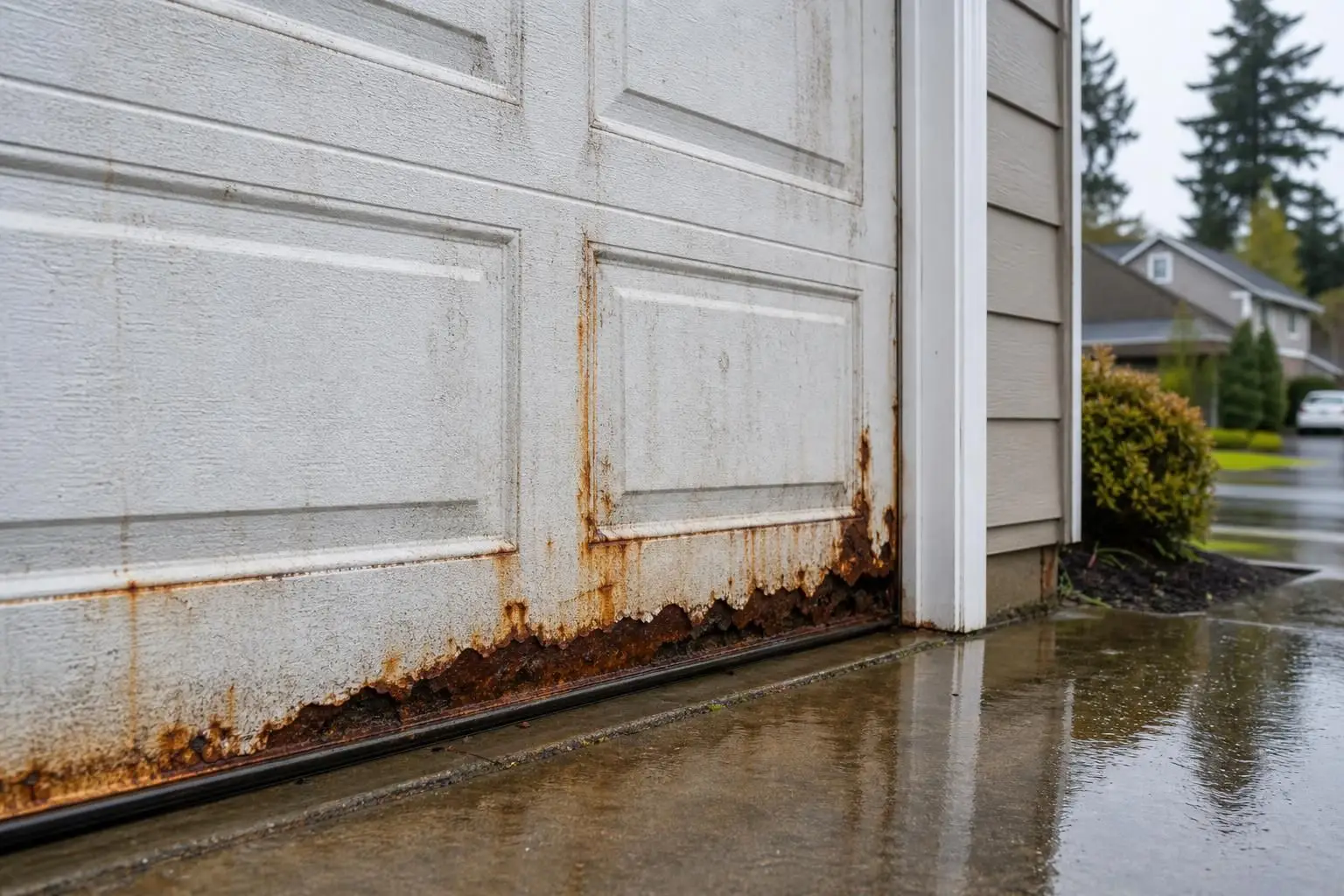
A new opener mainly reduces motor noise and vibration. It won’t make a rough, heavy, or worn garage door glide quietly. Think of the opener like a quiet motor connected to a noisy moving door: if the rollers, hinges, or tracks are worn, the system can still rattle.
Here’s the simple split:
- Opener noise: motor hum, chain slap, rail vibration, gear noise, or vibration transferring into the ceiling.
- Door movement noise: squeaking rollers, popping hinges, scraping tracks, banging panels, or a door that jerks as it moves.
That second group usually won’t disappear just because you install a quieter belt drive or wall-mount opener.
A common example: a Seattle homeowner replaces an old chain drive opener because it wakes up the nursery above the garage. The new belt drive is much quieter, but the door still clatters. Why? The rollers are worn, the hinges are loose, or the door is out of balance. In that case, the opener helped one noise source, but the door hardware was the real problem.
Safe checks you can do before buying:
- Stand inside the garage and listen while the door runs.
- Note whether the noise comes from the opener rail or the door itself.
- Stop using the door if it looks crooked, heavy, or unstable.
Don’t adjust springs, cables, tracks, or opener wiring yourself. Those parts can be dangerous under tension. If you’re unsure, start with a professional opener installation and repair inspection so the real noise source gets fixed before you spend money on the wrong solution.
Smart Features and Battery Backup Considerations
Smart features are about control and safety, not silence. A smart opener connects to Wi-Fi so you can use an app to check whether the garage door is open, close it remotely, get alerts, or give temporary access to a neighbor, cleaner, or delivery helper.
For an attached garage in Seattle, that can be useful if you leave early and don’t want to wonder, “Did I close the door?” Common examples include app systems like LiftMaster myQ and Genie Aladdin Connect, depending on the opener brand. Before choosing one, check two simple things: whether your Wi-Fi reaches the garage and whether you want shared access for more than one person in the home.
Battery backup is different. It’s a built-in or add-on battery that lets the opener run during a power outage. That matters if the garage is your main entry, your car is parked inside, or you don’t want to lift the door manually during a storm. Our opener battery backup guide is a helpful next read if that’s on your list.
A few planning questions help narrow the choice:
- Do you want phone alerts when the door opens?
- Is the garage Wi-Fi signal reliable?
- Do you use the garage as your main entrance?
- Would a power outage trap a vehicle inside?
If you’re comparing smart belt drive, DC motor, and battery backup options, Dan’s Garage Door Services can help match the opener to your door, garage layout, and noise concerns without overselling features you won’t use.
Get Help Choosing a Quiet Opener
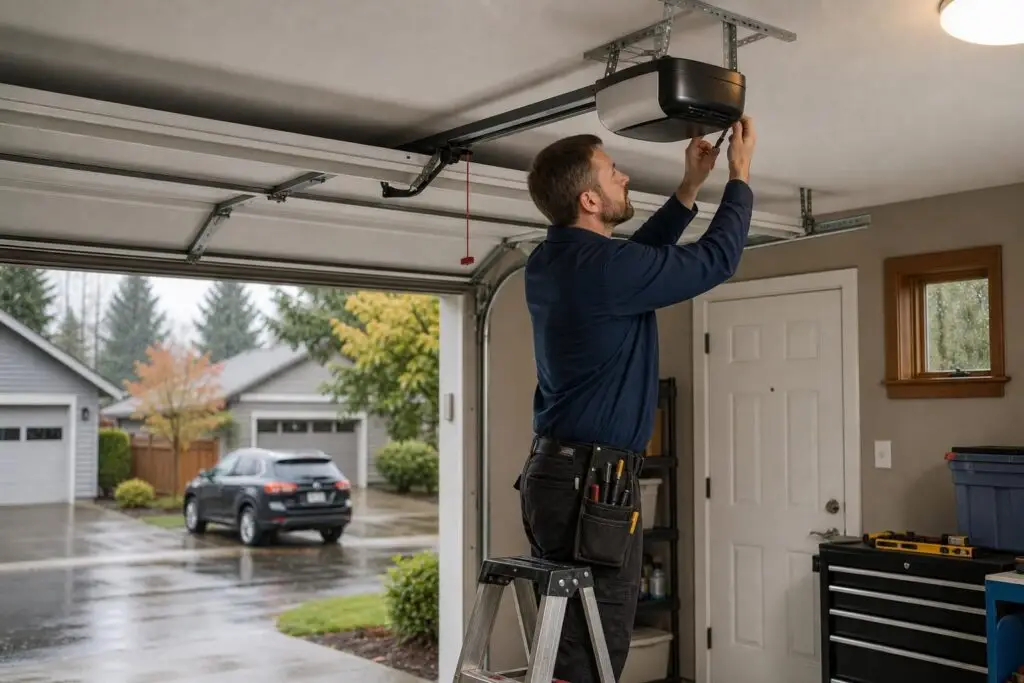
The best next step is a short noise diagnosis before you buy anything. A pro can separate opener noise from door noise, then recommend an opener that actually fits your attached garage, ceiling height, wall space, and daily routine.
Use this quick checklist to frame the conversation:
- If the main complaint is motor rumble above a bedroom or nursery, ask about a belt drive opener with a DC motor.
- If you’re replacing an older chain drive opener, compare belt drive versus wall-mount options before choosing.
- If the door jerks, squeaks, scrapes, or feels heavy, ask for door repair before opener replacement.
- If you use the garage as your main entrance, consider smart controls and battery backup for convenience during outages.
You can also review related resources on garage door opener installation and repair, the chain vs belt drive opener comparison, and garage door opener battery backup before your appointment.
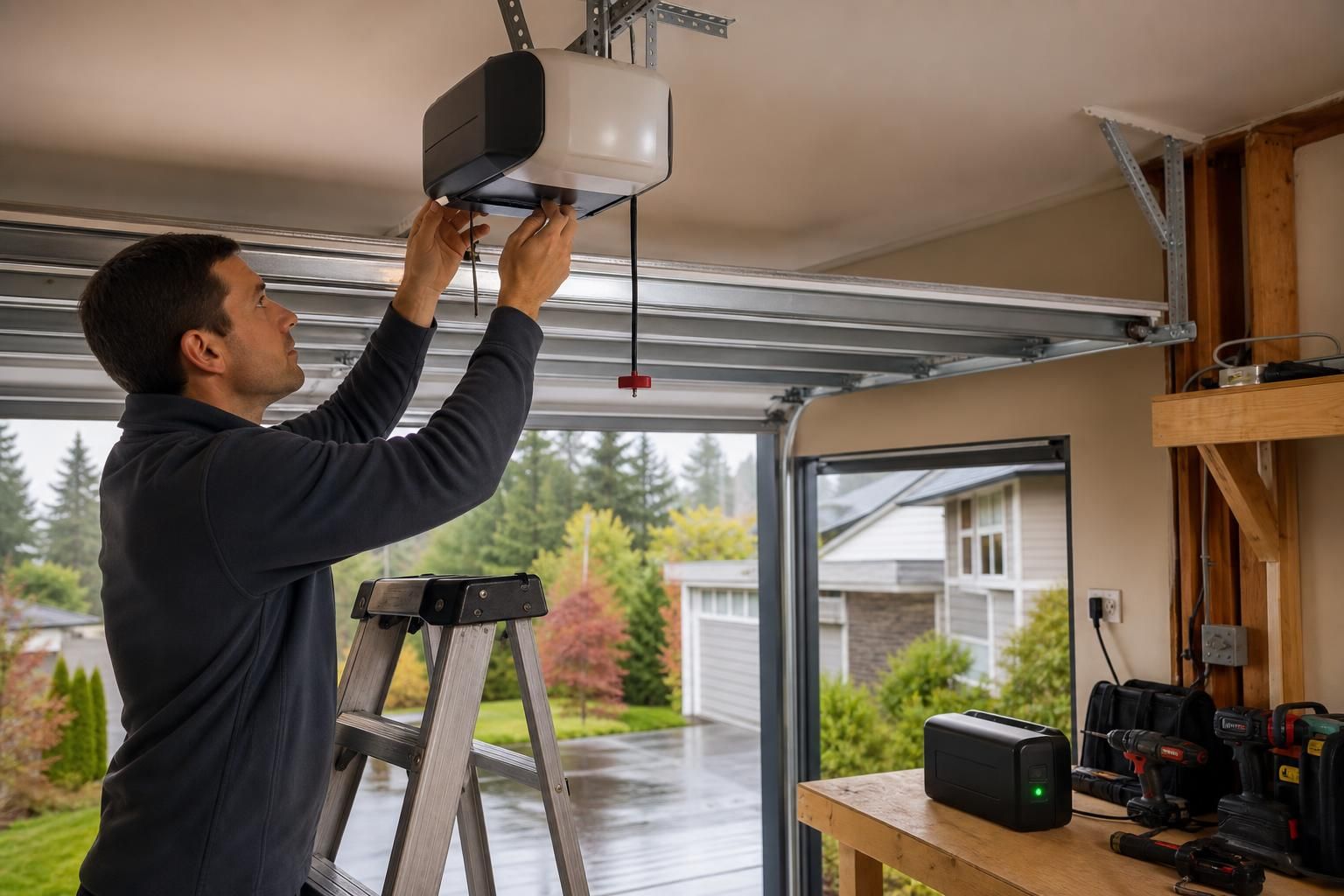
For quiet garage door opener installation in Seattle, Dan’s Garage Door Services can inspect the full system, explain realistic noise improvements, and install the right opener safely. If available, look at Dan’s real installation or social photos too. They’re helpful for seeing how belt drive and wall-mount openers look in actual attached garages, not just product brochures.
Conclusion
A quieter attached garage starts with the whole system, not just the opener box. Before you choose belt drive, direct current motor, or wall-mount installation, make sure the door is balanced, the rollers and hinges are healthy, and the noise is actually coming from the opener.
For quiet garage door opener installation in Seattle, the smartest next step is a professional noise check before you buy. Dan’s Garage Door Services can inspect your setup, explain what a new opener will realistically improve, and install the right option safely for your garage layout.