Introduction
Glass garage doors have moved from niche architectural detail to a mainstream option for homeowners who want a brighter, more modern exterior. If you are considering glass garage doors, the decision usually comes down to balancing looks and daylight with practical realities like privacy, cleaning, and insulation. This guide walks through what full-view doors are, the styles you can choose, and the most common full view garage door pros and cons. You will also learn about glass garage door privacy options, what affects the cost of full view garage doors, and how to think about efficiency and comfort in different climates.
- Full-view doors trade a solid panel for a frame with multiple glass lites
- The biggest benefits are modern curb appeal and more natural light
- The main downsides are privacy, cleaning, and higher upfront cost
- Privacy can be improved with frosted, tinted, or layered solutions like blinds
- Efficiency depends on the glass type, frame, seals, and insulation choices
What Are Glass Garage Doors?
A full-view garage door is built around visibility and light transmission. Instead of raised steel panels or traditional wood sections, the door uses a sturdy frame that holds multiple window-like panes. The result is a clean grid pattern that can match modern architecture or add contrast to more traditional homes.
Because the design is modular, homeowners can dial the look up or down by choosing clear, tinted, frosted, or insulated glass, plus different frame colors and finishes. This flexibility is why full-view doors show up on everything from new builds to remodels, and why they are commonly used for garages that double as workshops, gyms, or entertaining spaces.
Definition
A glass garage door, often called a full-view garage door, is a sectional overhead door constructed with an aluminum or steel frame and a series of glass panels (lites) set into that frame. Like other sectional doors, it rides on tracks and uses rollers, hinges, and springs to open overhead.
The “full-view” name refers to the proportion of the door that is glazed. Many designs are predominantly glass from top to bottom, though some homeowners choose a mixed layout with solid panels at the bottom and glass above. The glass itself can be standard, tempered, laminated, insulated, tinted, or frosted, depending on safety, comfort, and privacy goals.
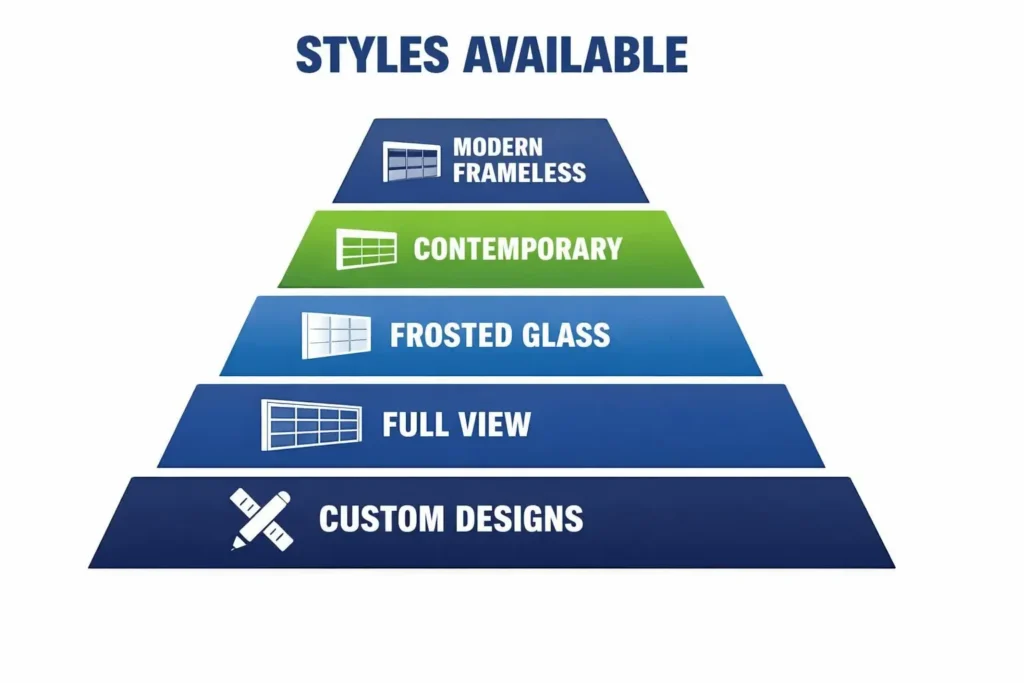
Styles Available
Full-view doors are not one-size-fits-all. The most common style differences come from the frame profile, the grid pattern, and how transparent the glass is. Some homeowners prefer a minimal, modern look with larger panes, while others like a tighter grid that echoes traditional window proportions.
You will also see variation in the way the door “reads” from the street. Clear glass looks crisp but reveals more inside the garage. Frosted or tinted glass softens reflections and reduces visibility. Frame finishes can coordinate with trim, windows, or front door hardware, helping the garage door feel intentional rather than like an add-on. If you want a warmer aesthetic, some frames mimic wood tones while still using metal for structure.
Pros of Full-View Garage Doors
The appeal of full-view doors is easy to understand: they can dramatically change how a home looks and how the garage functions. For homeowners who use the garage as more than storage, the added daylight and modern feel can make the space more comfortable and motivating to use.
Still, the benefits are not only visual. Depending on your layout and privacy strategy, a full-view door can make a garage feel more connected to the outdoors while keeping the convenience of an overhead door. The key is choosing glass and frame options that fit your climate, orientation, and how you actually use the space.
Aesthetic Appeal
Full-view doors often become a focal point, especially on homes where the garage dominates the facade. The clean lines and reflective surface can make the exterior look newer and more architectural, even without major renovations elsewhere.
They also pair well with a range of design styles. Modern homes benefit from the minimal geometry, while transitional homes can use a darker frame and a tighter grid to blend with existing windows. If you are updating exterior finishes, a glass door can tie together elements like black window frames, metal railings, or contemporary lighting. The overall effect tends to be streamlined and deliberate, which is why many people start their research with full view garage door pros and cons focused heavily on curb appeal.
Natural Light
One of the most practical advantages is daylight. A bright garage is easier to work in, safer to move around, and more pleasant for hobbies, workouts, or projects. Natural light can also reduce the need to turn on overhead fixtures during the day, especially when the garage faces the right direction.
How much light you get depends on glass selection and what is outside the door. Frosted glass still transmits light while obscuring detail, and tinted glass can reduce glare. If your garage is used as a workshop, consider how sunlight will land on benches and tool walls. Thoughtful placement of storage can keep harsh light off sensitive items while still benefiting from a brighter space.
Space Perception
Glass changes how a garage feels, even when the square footage stays the same. Visibility and reflections can make the room feel larger and less enclosed, which matters in single-car garages or spaces with low ceilings. If the garage is connected to the home and used frequently, the psychological shift from “storage room” to “usable room” can be significant.
This perceived openness can be especially helpful if you are planning a flexible space. A garage gym, studio, or family hangout area often feels more inviting with a lighter, more open atmosphere. Even if you keep the garage primarily for parking, a brighter interior can make daily routines feel less cramped.
Customization Options
Customization is one of the strongest reasons people choose full-view designs. You can tailor the door to your privacy needs, climate, and the look you want from the street. Common choices include glass type, frame color, grid layout, and hardware that matches the rest of the home.
Here are a few customization paths homeowners often consider:
- Glass transparency: clear, tinted, frosted, or opaque
- Performance upgrades: insulated glass, improved weather seals, wind-load reinforcement where needed
- Frame and finish: aluminum or steel frames in light, dark, or custom finishes
- Panel layout: full glass, or a mix of solid panels and glass for added privacy at eye level
Cons of Full-View Garage Doors
The trade-offs are real, and they are worth thinking through before you commit. Full-view doors can require more attention to cleaning and more planning for privacy. They can also cost more than many standard steel sectional doors, especially when you add insulated glass or higher-end frames.
Still, the benefits are not only visual. Depending on your layout and privacy strategy, a full-view door can make a garage feel more connected to the outdoors while keeping the convenience of an overhead door. The key is choosing glass and frame options that fit your climate, orientation, and how you actually use the space for garage door windows.
The good news is that most drawbacks have workable solutions. The goal is to identify which downside matters most for your home. For some households, visibility into the garage is the deal-breaker. For others, it is climate comfort or the idea of constantly wiping fingerprints and dust from glass.
Privacy Concerns
Privacy is the most common hesitation. With clear panels, anyone walking by may see vehicles, tools, storage, or entry doors into the home. At night, interior lights can turn the garage into a display window.
Privacy can also affect security perceptions. While the door itself is typically strong, a visible interior can advertise what you keep in the garage. If you want the look but not the visibility, start your planning with glass choice. Many owners find that frosted, tinted, or obscured glass provides the right balance: it keeps the bright, modern aesthetic while limiting detail from outside.
Maintenance Requirements
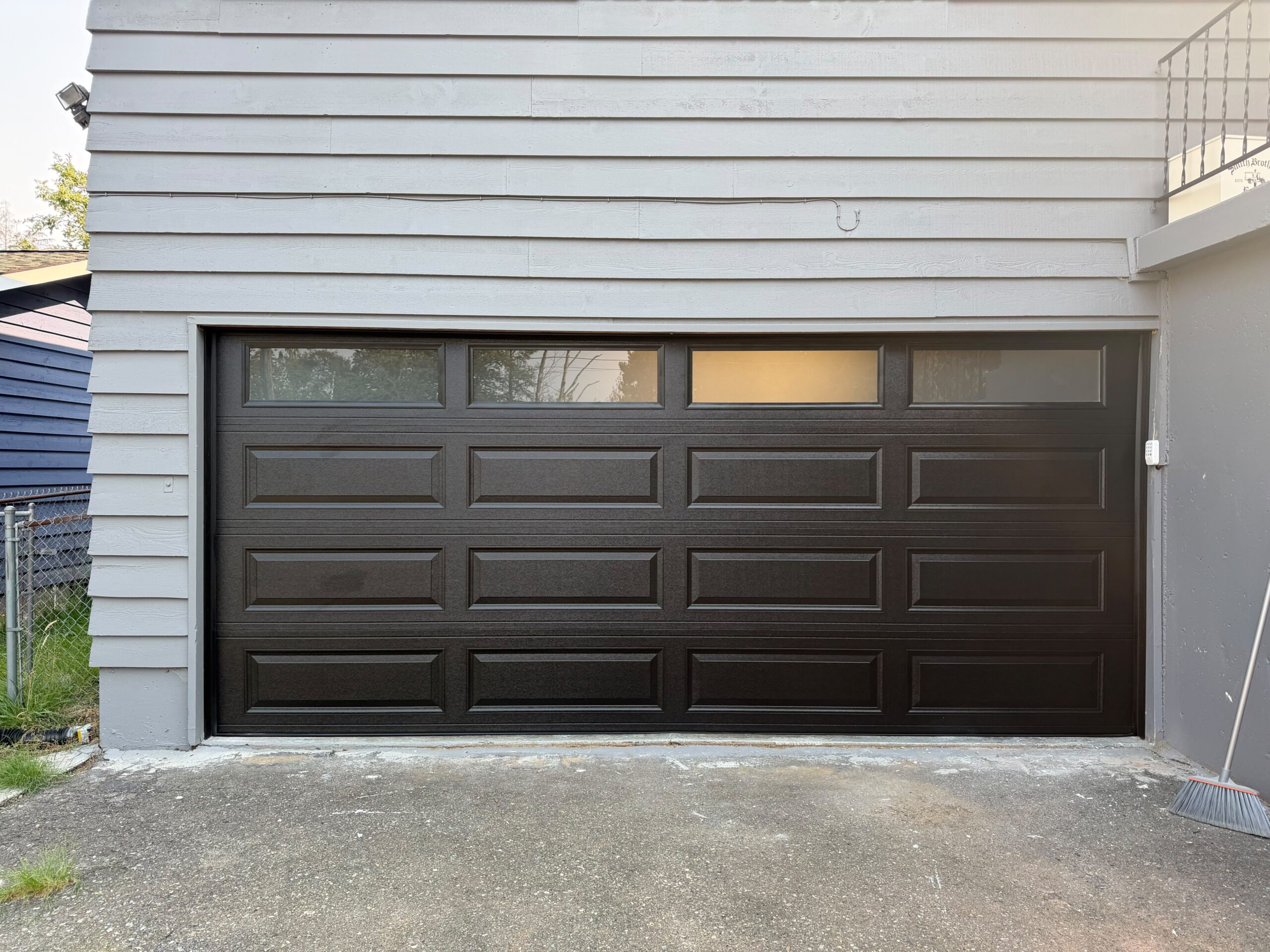
They also pair well with a range of design styles. Modern homes benefit from the minimal geometry, while transitional homes can use a darker frame and a tighter grid to blend with existing windows. If you are updating exterior finishes, a glass door can tie together elements like black window frames, metal railings, or contemporary lighting. The overall effect tends to be streamlined and deliberate, which is why many people start their research with black garage doors with windows focused heavily on curb appeal.
Glass shows dirt, pollen, water spots, and handprints more than painted steel panels. If your driveway is dusty, or if sprinklers hit the door, you may notice buildup faster. Frames and tracks also still require the usual garage-door maintenance: lubrication where appropriate, keeping tracks clear, and checking weather seals.
Cleaning is not complicated, but it can be more frequent than with solid doors. Plan for safe access to the exterior, especially if your driveway slopes. On the interior, storage placed too close to the door can make it harder to wipe down. If you prefer a low-maintenance exterior, a full-view door may feel like an added chore.
Cost Considerations
Upfront cost is often higher than a typical non-glass sectional door. The materials, the frame construction, and the glass options all add complexity. Installation can also be more involved if the opening needs reinforcement, if you are upgrading tracks and springs, or if you choose heavier insulated glass.
It is also smart to consider long-term costs. If you want improved comfort, you may add insulation upgrades or weather sealing. If privacy becomes an issue after installation, you may pay for film or interior coverings. None of these are necessarily deal-breakers, but they should be part of your initial budget planning.
Glass Garage Door Privacy Options
Privacy does not have to mean giving up the full-view style. The best approach depends on how your garage faces the street, how close neighbors are, and whether you want privacy all the time or only at night. Some solutions are built into the glass itself, while others are add-ons you can change later.
It helps to test your needs in real life: stand on the sidewalk and look toward your garage at different times of day. Also check visibility with interior lights on after dark. That simple test often clarifies whether you need full privacy, partial privacy at eye level, or just glare reduction.
Frosted and Tinted Glass
Frosted and tinted panels are the most common built-in privacy options. Frosted glass blurs details while still allowing a lot of light through. It is a strong choice if your priority is privacy without making the garage feel dark.
Tinted glass reduces visibility and can cut glare, which is helpful if your garage faces strong afternoon sun. The darker the tint, the more it changes the look from the street and the more it can limit daylight. Some homeowners mix approaches, using more obscured glass on lower sections and clearer glass higher up. Among glass garage door privacy options, these choices are often the most seamless because they do not add layers or moving parts.
Blinds and Curtains
Interior blinds or curtains give you adjustable privacy. You can keep the door open and bright during the day, then close coverings at night or when you want the garage hidden. This flexibility can be ideal if you sometimes use the garage as a social space and other times as storage.
The trade-off is maintenance and aesthetics. Fabric curtains can collect dust in a garage environment, and blinds can rattle if the door vibrates. If you go this route, consider moisture resistance and how the coverings will be mounted so they do not interfere with door operation. Some homeowners prefer simple roller shades for a clean look and straightforward operation.
Smart Glass Technology
Smart glass, sometimes described as switchable privacy glass, can change from clearer to more opaque with a control. It offers a sleek look because there are no blinds or films visible. This can be appealing if you want an always-modern appearance and quick privacy at night.
However, it adds complexity. You will need to think about wiring, controls, and what happens if a component fails. It also may not be necessary for many homes if frosted or tinted panels already solve the problem. As a premium option, it makes the most sense when you want instant privacy changes and you value a minimalist, integrated solution.
Cost of Full View Garage Doors
The cost of full view garage doors is influenced by the same basics that affect any garage door: size, materials, and installation requirements. With full-view doors, glass type and frame quality can move the price significantly. Add-ons like upgraded seals, insulated glass, or wind reinforcement can also change the final number.
The cost of full view garage doors is influenced by the same basics that affect any garage door, including average costs by size, materials, and installation requirements. With full-view doors, glass type and frame quality can move the price significantly. Add-ons like upgraded seals, insulated glass, or wind reinforcement can also change the final number.
When you compare options, make sure you are comparing similar specifications. A non-insulated full-view door with clear glass is not the same product as an insulated full-view door with high-performance glazing and heavier hardware. Ask for clarity on what is included so you can align the quote with your comfort and privacy priorities.
Average Pricing
Average pricing varies widely based on door size, frame material, glass selection, and the level of hardware included. In general terms, full-view doors tend to be positioned above many standard steel doors because there is more material cost and more fabrication detail.
Instead of focusing on a single number, treat pricing as a range that depends on your choices. If budget is tight, you can often control cost by choosing non-insulated glass, selecting a simpler frame finish, or using glass only on the upper portion. If comfort and quiet operation matter most, you may lean toward insulated glass and upgraded components, which usually raises the total.
Factors Influencing Cost
Several variables can raise or lower the cost of full view garage doors, sometimes more than homeowners expect. Understanding these drivers helps you decide where to spend and where to simplify.
Key cost factors include:
- Door size and configuration: single vs double openings, and overall height
- Frame material and thickness: aluminum vs steel, and the strength of the frame profile
- Glass type: clear vs frosted vs tinted, and insulated or laminated upgrades
- Hardware and operation: track type, spring system, opener compatibility, and noise-reducing rollers
- Installation conditions: opening adjustments, structural reinforcement, and weather sealing needs
Potential Savings and ROI
Savings are usually indirect. Some owners save on daytime lighting use because the garage is brighter, particularly in spaces used as workshops or home gyms. Others see value in improved curb appeal, which can make the exterior feel more updated and cohesive.
ROI is personal and depends on how long you plan to stay and how much you use the garage. If the garage is a core part of your daily routine, the comfort and usability benefits may justify the expense. If it is mostly storage and you rarely open the door, the value may be more about appearance than function. A practical approach is to list your goals in order, then choose glass and insulation options that support those goals without paying for features you do not need.
Are Glass Garage Doors Energy Efficient?
Are glass garage doors energy efficient? They can be, but efficiency depends on the total system, not just the fact that the door contains glass. The biggest influences are the type of glazing, whether the frame has thermal breaks, and how well the door seals to the opening. A leaky door with poor seals will feel uncomfortable regardless of material.
Are glass garage doors energy efficient? They can be, but efficiency depends on the total system, not just the fact that the door contains glass. The biggest influences are the type of glazing, whether the frame has thermal breaks, and how well the door seals to the opening, which is crucial for garage door insulation. A leaky door with poor seals will feel uncomfortable regardless of material.
Climate and garage use matter too. A detached garage used for parking has different comfort needs than an attached garage with a room above it or a space you use as a studio. If you are heating or cooling the garage, insulation and air sealing become much more important, and your glass choice should support that.
Insulation Options
Insulation options range from basic to high-performance. The most common efficiency upgrade is insulated glass, which uses multiple panes with a sealed airspace. This can reduce heat transfer compared to single-pane glass and can also improve comfort near the door.
Frame design matters as well. Some frames transfer heat and cold more readily than others, so features like thermal breaks can improve overall performance. Weather stripping at the perimeter and a quality bottom seal can reduce drafts. If your garage is attached to your home, it is also worth ensuring the surrounding walls and ceiling are insulated appropriately, because the door is only one piece of the comfort puzzle.
Energy Efficiency Ratings
Efficiency ratings can help you compare doors, but the most meaningful comparison is between similar configurations. A door with insulated glass, tighter seals, and a well-designed frame will typically perform better than a basic configuration with single-pane clear glass.
Also consider real-world conditions: wind exposure, sun direction, and how often the door opens. Frequent opening lets conditioned air escape, which can matter more than small differences between glass options. If you want better comfort, ask about sealing details, glass construction, and how the door is intended to manage temperature swings. For many households, the most noticeable improvement comes from better seals and insulated glazing rather than any single “magic” rating.
Conclusion
Choosing a full-view door is ultimately about matching your priorities to the right configuration. The strongest benefits are modern curb appeal and a brighter, more usable garage, while the biggest trade-offs are privacy, cleaning, and a higher upfront investment. If you are comparing full view garage door pros and cons, start by deciding how much visibility you are comfortable with and select your glass accordingly, then evaluate insulation and sealing based on your climate and how you use the space. Get clear quotes that reflect the same features so you can compare fairly. With the right glass, frame, and privacy strategy, glass garage doors can be both practical and visually striking.
Choosing a full-view door is ultimately about matching your priorities to the right configuration. The strongest benefits are modern curb appeal and a brighter, more usable garage, while the biggest trade-offs are privacy, cleaning, and a higher upfront investment. If you are comparing full view garage door pros and cons, start by deciding how much visibility you are comfortable with and select your glass accordingly, then evaluate insulation and sealing based on your climate and how you use the space during a garage door consultation. Get clear quotes that reflect the same features so you can compare fairly. With the right glass, frame, and privacy strategy, glass garage doors can be both practical and visually striking.