
A garage door keypad is the small number pad outside your garage that lets you open the door with a code. When you have a garage door keypad not working, it can feel like the whole system failed. Often, though, the fix is simple. A dead battery, sticky button, lost code, or rainy Seattle weather can stop the keypad before anything serious is wrong. In this guide, you'll learn the easiest checks first, when garage door keypad reprogramming helps, and when the issue points to the opener, wiring, or door itself.
Best for: Homeowners who want safe, simple checks before paying for a keypad or opener repair visit.
Not ideal when: The door is jammed, off track, or the opener makes harsh grinding noises.
Good first step if: The keypad lights up, but the garage door doesn't move after entering the code.
Call a pro if: The keypad, remote, and wall button all fail or the door moves unevenly.
Quick Summary
- A weak garage door keypad battery is one of the most common causes of keypad failure.
- Dirty, cracked, or worn buttons can stop the keypad from reading your code correctly.
- A garage keypad stopped working after a power outage may need reprogramming.
- Rain, moisture, and cold can affect outdoor keypads, especially around Puget Sound homes.
- If every control fails, the opener or garage door may be the real issue.
Start With the Simplest Keypad Checks
Most keypad failures come from simple issues you can check in a few minutes without touching springs, cables, or opener parts. Start by entering the code slowly. Press each number firmly, then press the enter button. If you rush, the keypad may miss a digit.
For example, a homeowner in Ballard may think the keypad failed because the door won't open after school pickup. But if one number wasn't pressed fully, the opener never received the full code. Also check that the garage door isn't locked from the wall control inside the garage.
Look for these quick clues:
- Does the keypad light up?
- Does any button feel stuck?
- Does the opener click or hum?
- Does the remote still work?
- Does the wall button open the door?
If the remote works but the keypad doesn't, the problem is probably with the keypad itself. If nothing works, read the opener signs carefully before blaming the keypad. You can compare symptoms with opener failure signs if the whole system seems unresponsive.
Battery and Power Issues
A weak or dead battery can make the keypad light up faintly, work sometimes, or stop responding completely. Most outdoor keypads use a small replaceable battery behind a cover. The garage door keypad battery powers the buttons and sends the wireless signal to the opener.
For example, in a Queen Anne home with a keypad exposed to damp winter air, the battery contacts may corrode or loosen. Remove the battery, check for white or green buildup, and wipe the contacts gently with a dry cloth. Then install a fresh battery in the correct direction.
After replacing it, test the keypad from normal standing distance. Don't stand far down the driveway yet. If the keypad works near the garage but not from the usual spot, the battery may have been only part of the problem. The signal or opener antenna may also need attention.
Dirty or Worn Keypad Buttons
Dirty or worn buttons can stop the keypad from reading the right numbers, even when the battery is fine. Outdoor keypads collect dust, pollen, road grit, and moisture. Around Seattle, wet leaves and damp air can make grime stick around the button edges.
For example, if your code includes the number 7 and that button has to be pressed twice, the keypad may send an incomplete code. Clean around the buttons with a soft cloth. Don't soak the keypad. A little mild cleaner on the cloth is safer than spraying liquid directly onto the unit.
Worn buttons are a different problem. If the numbers are faded, cracked, or mushy, the keypad may be near the end of its useful life. You can keep the door system healthier with routine checks like those in regular garage door maintenance, but a badly worn keypad often needs replacement.
Lost Programming or Code Problems
A keypad can stop working when it loses its connection to the opener or when the code no longer matches what the opener expects. This is where garage door keypad reprogramming comes in. Reprogramming means teaching the opener to recognize the keypad and its code again.
For example, a LiftMaster keypad not working after a power interruption in West Seattle may not be broken. It may simply need to be paired again with the opener. Most systems use a “learn” button on the opener motor unit. The exact steps depend on the model, so use your opener manual if you have it.
A simple reprogramming process usually looks like this:
- Find the learn button on the opener.
- Press it once.
- Enter your chosen code on the keypad.
- Press the enter button.
- Test the keypad after the opener light blinks or clicks.
If the keypad accepts the code but the door still doesn't move, don't keep repeating random steps. Too many attempts can create confusion, especially if several remotes are connected. If your handheld remote is also acting up, this guide on garage door remote issues may help narrow it down.
Weather and Moisture Problems
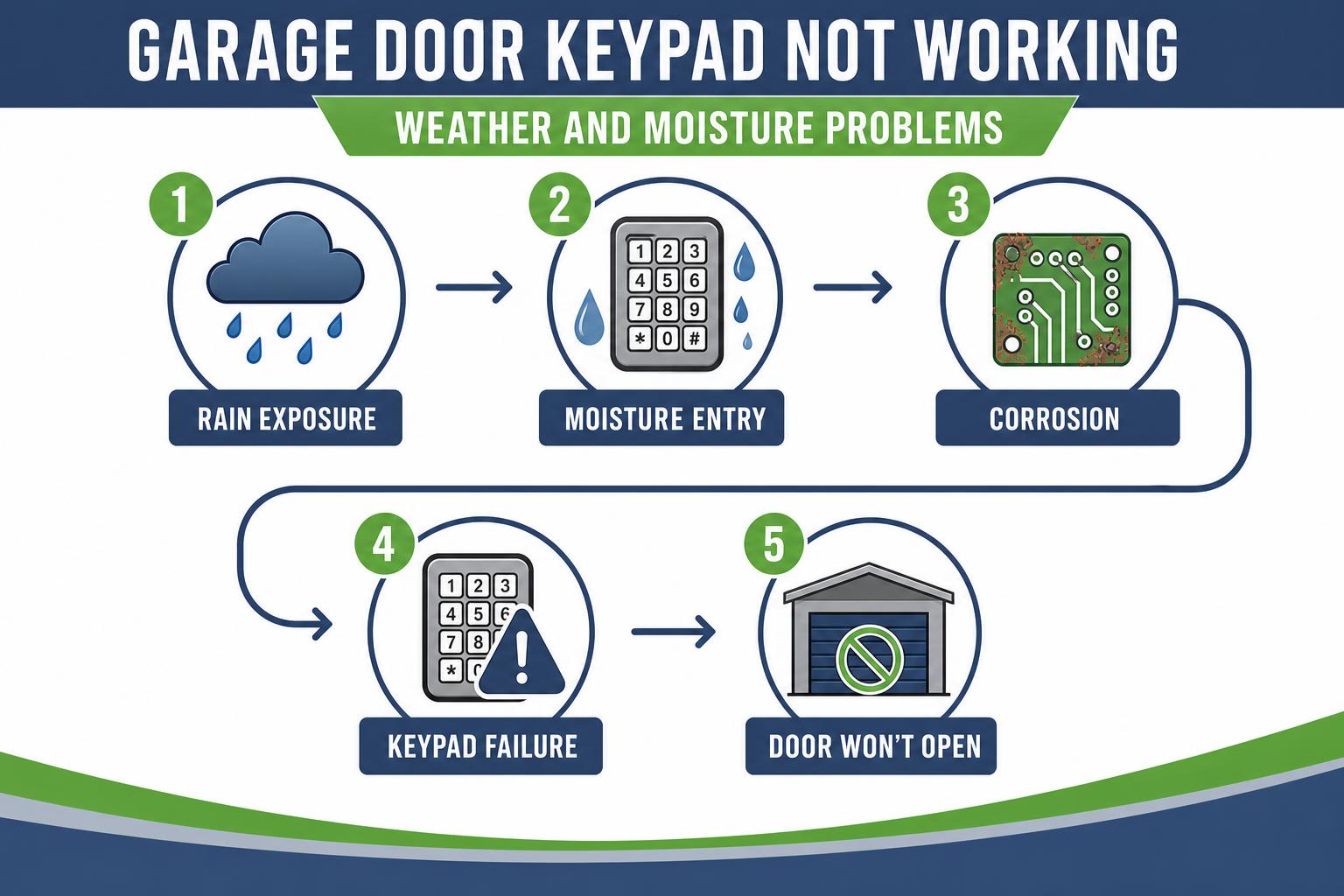
Weather can affect a keypad because it sits outside and handles rain, cold, sunlight, and temperature swings. In the Puget Sound area, steady moisture is a common troublemaker. Water can get behind a cracked cover, fog the inside, or corrode the battery contacts.
For example, a keypad on a detached garage in Fremont may work on dry afternoons but fail after a rainy night. That pattern points toward moisture, not a bad code. Open the cover and look for dampness, rust-colored marks, or cloudy plastic. Let it dry with the cover open if conditions are safe.
Placement matters too. A keypad mounted where roof runoff splashes it will wear faster. Weatherstripping and garage protection can also reduce moisture around the door opening. If your garage gets a lot of wind-driven rain, Seattle weather protection is a helpful topic to review.
Signal Interference or Opener Issues
A keypad may work poorly when its wireless signal can't reach the opener clearly. Wireless means the keypad sends a small radio signal through the air, similar to a remote control. Metal siding, thick walls, nearby electronics, or a damaged opener antenna can weaken that signal.
For example, if a garage keypad stopped working after new storage shelves were installed near the opener, a metal rack may be blocking the antenna. Try testing the keypad with the garage door open and the opener antenna hanging straight down. Don't pull on the antenna. Just make sure it isn't tucked behind the motor housing.
The opener itself can also be the issue. If it hums, clicks, or flashes lights but doesn't move the door, the keypad did its job by sending the command. The problem starts after that point. Smart opener upgrades can help some homes, and you can learn more about WiFi garage door openers if remote access is part of your goal.
When the Keypad is Not the Real Problem
The keypad is not the real problem when the door, opener, wall button, and remote all show signs of trouble. In that case, the keypad may be working, but the garage door system can't respond safely. Think of it like a TV remote pointing at a television that's unplugged.
For example, if your door in Capitol Hill starts to rise, jerks, then drops back down, don't blame the keypad first. The door may be too heavy, the opener may be struggling, or the track may be blocked. If the door looks crooked, stop using it.
Watch for these warning signs:
- The door is uneven in the opening.
- The opener strains or grinds.
- The door reverses for no clear reason.
- The wall button also fails.
- The door is off track or stuck.
An off-track door isn't a keypad repair. It's a safety issue because the door's weight isn't moving correctly. If you see rollers outside the track, read about off-track garage door repair and avoid forcing the opener.
When to Schedule Professional Repair
You should schedule professional repair when simple keypad checks don't restore normal, reliable operation. A technician can test the keypad, opener receiver, wiring, safety sensors, and door movement as one system. That matters because replacing only the keypad won't help if the opener can't receive signals.
For example, in a Shoreline home, the keypad may fail on rainy days, the remote may work only close to the door, and the opener light may flash. Those clues point to more than one possible cause. A trained technician can test each part without guessing.
Professional help is also smart when the door is heavy, crooked, noisy, or stuck. Springs and cables are under strong tension, which means they can cause serious injury if handled incorrectly. If you're comparing repair choices locally, Seattle repair costs can help you understand what affects service pricing without guessing.
FAQ
Most keypad questions come down to power, programming, weather, or opener communication. If you work through the checks in order, you'll avoid replacing parts too early.
For example, if your keypad stopped after a storm in North Seattle, begin with battery and moisture checks before assuming the opener failed.
Why Did My Garage Keypad Stopped Working Suddenly?
A sudden failure often comes from a dead battery, lost programming, or moisture inside the keypad. If the keypad doesn't light up, start with the battery. If it lights up but won't open the door, reprogramming or signal troubleshooting may be the next step.
Why is My LiftMaster Keypad Not Working After Changing the Battery?
The battery may be installed backward, the contacts may be dirty, or the keypad may need to reconnect to the opener. Check the battery position first. Then clean the contacts gently. If it still doesn't work, follow the model's programming steps.
Can Cold or Rain Make a Garage Door Keypad Fail?
Yes, cold and rain can affect outdoor keypads. Moisture can reach the battery contacts or buttons, especially if the cover is cracked. Cold can also make weak batteries worse. Dry the keypad, replace the battery, and check whether the cover seals well.
Do I Need a New Keypad or Just Reprogramming?
You may only need reprogramming if the buttons feel normal and the keypad lights up. You may need a new keypad if buttons are cracked, numbers don't respond, or moisture has damaged the inside. Test the simple fixes first.
Conclusion
A garage door keypad not working doesn't always mean you need a new opener. Start with the battery, buttons, code, weather exposure, and signal range. Then check whether the remote and wall button still work. If the whole system struggles, stop guessing and schedule repair. A careful diagnosis keeps your Seattle-area garage safer and helps you fix the right problem first.