A garage door that still opens but gets louder every month is easy to ignore. In Seattle’s wet weather, that noise can point to worn rollers, dry hinges, debris in the tracks, or hardware that’s starting to loosen.
A professional annual inspection is an early-warning visit. The technician checks moving parts, safety items, and weather protection: springs, cables, rollers, tracks, opener, sensors, balance, seals, brackets, and fasteners. If the door feels heavy, reverses randomly, hangs unevenly, or won’t stay partly open, don’t keep testing it. That can mean a spring, cable, balance, or track issue that needs a pro.
Quick Summary
- Annual inspection helps catch wear before the door gets stuck, noisy, crooked, or unsafe.
- A pro checks springs, cables, rollers, tracks, hinges, brackets, fasteners, opener operation, safety sensors, and door balance.
- Safe homeowner red flags include louder operation, slow response, visible cable fraying, uneven movement, seal gaps, and random reversing.
- Seattle moisture, leaves, grit, and daily garage use can speed up seal, roller, and hardware wear.
- If inspection finds worn cables, bent track, failing springs, or balance problems, stop using the door until it’s professionally evaluated.
Why Annual Inspection Prevents Surprise Repairs
An annual inspection is a once-a-year professional checkup that looks for early wear before it turns into a stuck door, a damaged opener, or a safety issue. Think of it like a dental cleaning for your garage door: the door may still “work,” but small problems can be building quietly.
A common example is a door that opens every day but sounds louder each month. That noise may point to dry rollers, worn hinges, track friction, or loose hardware. None of that automatically means a major repair is coming, but it’s the kind of early warning a technician can evaluate before parts strain each other.
Preventive garage door service doesn’t guarantee you’ll never have a breakdown. But inspection helps you catch risk earlier: adjust what can be adjusted, lubricate what needs lubrication, tighten what’s loose, and flag unsafe parts.
For homeowners, the safest role is observation. Notice changes in sound, speed, smoothness, gaps around the door, or anything that looks frayed or crooked. Don’t try to correct spring tension, cable position, track alignment, or opener wiring yourself. Those are professional-only items because the door is heavy and under tension.
Springs, Cables, Rollers, and Tracks
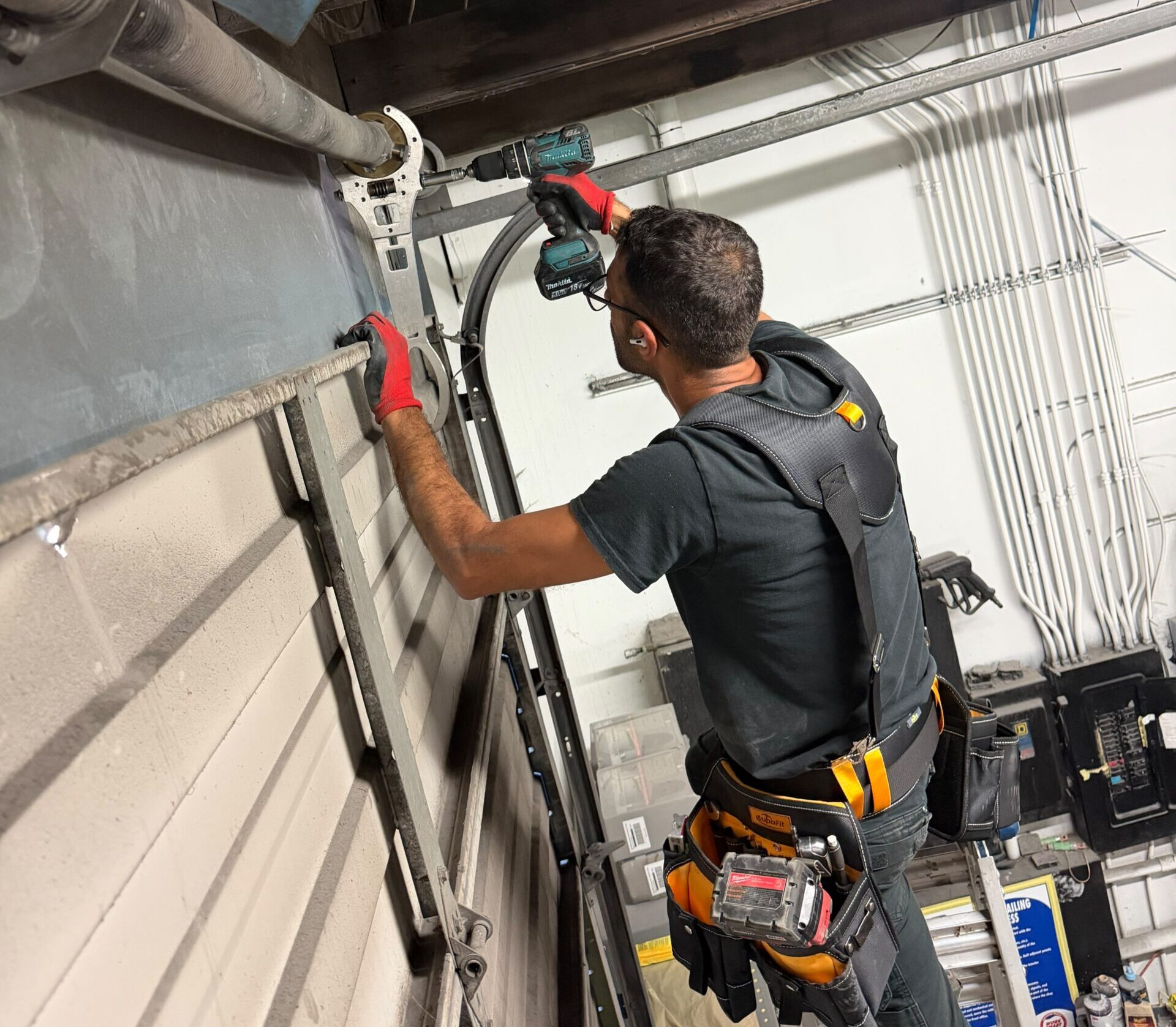
Springs do the heavy lifting, even though the opener gets the credit. A spring is the tightly wound metal part that helps counterbalance the door’s weight. Cables are the steel lines that help lift the door evenly. Rollers are the small wheels that move inside the tracks. Tracks are the metal rails that guide the door up and down.
During an inspection, a technician isn’t just asking, “Does it open?” They’re looking for signs the lifting system is uneven, noisy, strained, or unsafe.
| Part | What the pro checks | Why it matters | Priority if found |
|---|---|---|---|
| Springs | Rust, gaps, uneven tension signs | Door may feel heavy or drop | High |
| Cables | Fraying, slack, worn strands | Cable failure can jam the door | High |
| Rollers | Cracks, wobble, rough movement | Causes noise and track wear | Medium |
| Tracks | Bends, rubbing, loose brackets | Door can bind or come off path | High |
Monthly noise increases often point to roller wear, dry hinges, track rubbing, or loose hardware. Seattle moisture and grit can speed that wear, especially on doors used as the main household entry, so an inspection can separate normal track and roller lubrication from parts that are worn, loose, or unsafe to keep cycling.
If the technician sees worn cables, a bent track, or failing brackets, don’t keep cycling the door “just one more time.” That’s when a small finding can become a stuck-door repair.
Opener, Sensors, and Door Balance
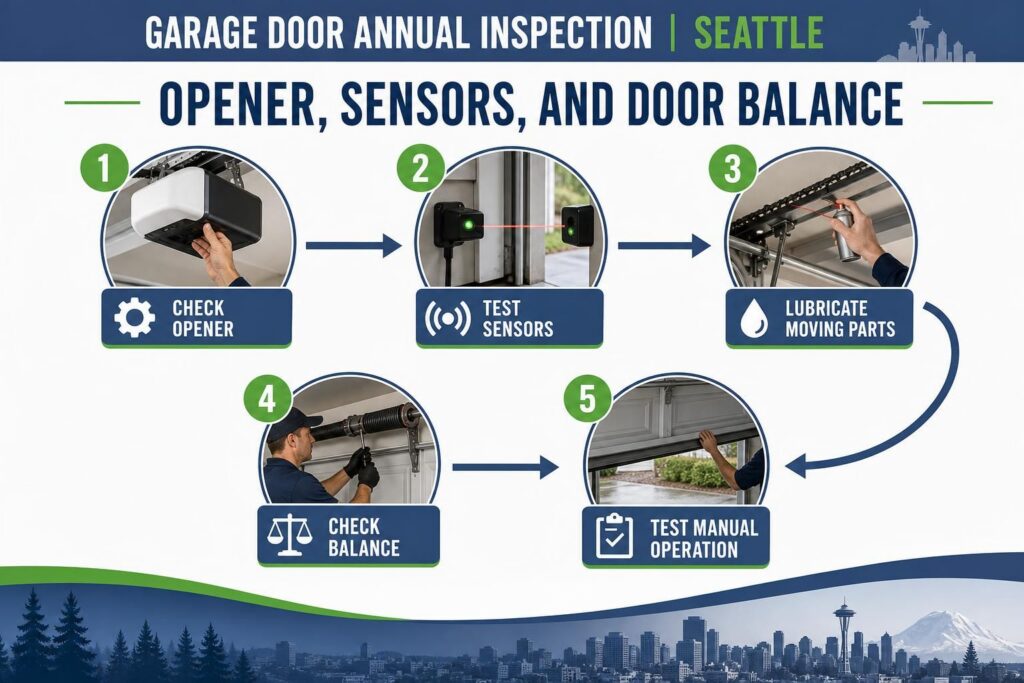
The opener is the motorized unit that moves the door, but it shouldn’t be doing the door’s heavy lifting by itself. During an inspection, the technician listens for grinding, hesitation, chain or belt noise, and delayed response from remotes, wall buttons, and keypads.
Safety sensors are the small “photo-eye” devices near the bottom of the tracks. They send an invisible beam across the door opening. If that beam is blocked, the door should reverse instead of closing. If your door sometimes goes down, reverses, and comes back up, common garage door sensors problems can involve alignment, dirt on the lenses, an obstruction, or wiring trouble. You can safely look for leaves, storage bins, or cobwebs in the sensor path, but wiring and opener adjustments belong to a pro.
A technician also checks force settings, which control how much resistance the opener allows before reversing. Think of this like pressure sensitivity. Too much force can be unsafe. Too little can make the door reverse for no clear reason.
Door balance means the springs are carrying the door’s weight evenly. A garage door that feels heavy or won’t stay partially open can point to a spring or balance problem. Don’t keep using it. For a deeper explanation, see a garage door balance test guide, then have Dan’s Garage Door Services inspect the system safely during a Seattle service visit.
Weather Seals and Hardware Wear
Weather seals are the rubber or vinyl strips that close the gaps around the garage door. During an inspection, a technician looks for cracks, flattening, missing pieces, and daylight showing at the bottom or sides.
That matters more in Seattle than many homeowners expect. Wet weather, wind-blown leaves, and grit can collect near the threshold, and worn garage door weatherstripping can leave the bottom and side gaps exposed. Once the bottom seal stops sitting flat, water, drafts, leaves, and pests have an easier path into the garage.
You can safely check for obvious gaps from inside the garage with the door closed. You can also look for brittle rubber or corners that no longer touch the floor. But if the door itself sits crooked, don’t assume the seal is the only issue. That can point to track, roller, or balance trouble.
Hardware wear is the next quiet trouble spot. Hinges, brackets, bolts, and fasteners hold the door sections together as the door bends and moves. A pro checks for loose hardware, elongated screw holes, rust, cracked hinges, and metal fatigue.
If your door opens but rattles more each month, the cause may be worn hinges, dry moving parts, loose brackets, or rollers shaking in the track. Regular garage door maintenance helps catch those small wear points before they strain the opener or damage connected parts.
When Inspection Finds a Bigger Problem
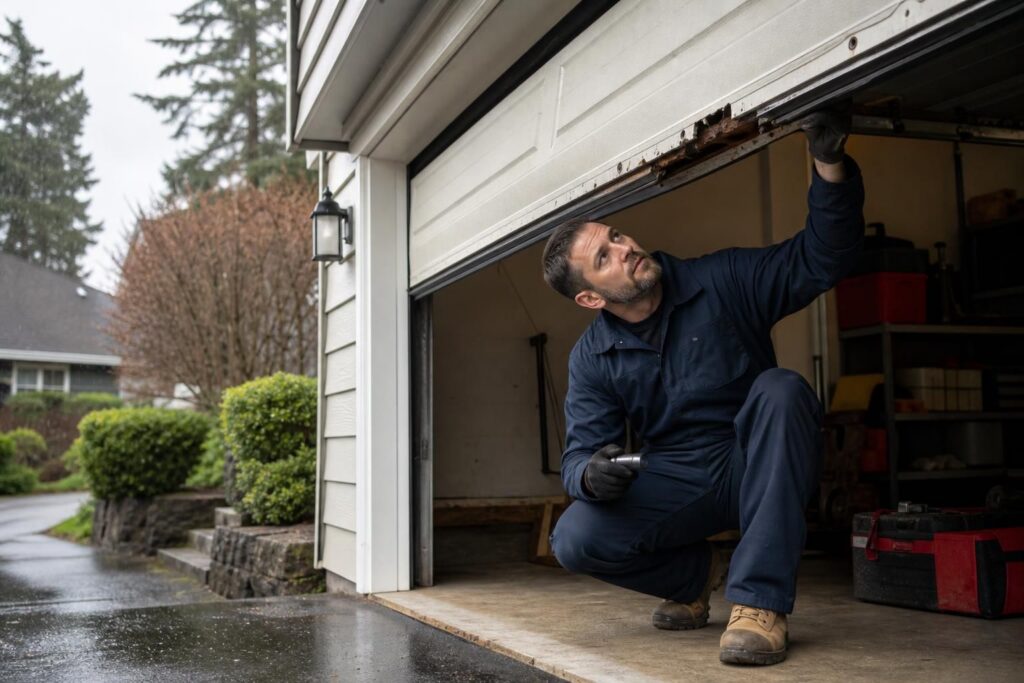
If an inspection turns up a larger issue, the goal shifts from “tune it up” to “keep the door from causing more damage.” A worn cable, bent track, cracked hinge, failing spring, or badly unbalanced door can turn one repair into several if you keep using the opener.
The technician should explain what they found, why it matters, and whether the door is safe to operate. For example, if a door feels heavy or won’t stay partly open, that points to a balance or spring problem. That’s not a homeowner adjustment. Springs and cables hold a lot of stored tension, so this is professional-only work.
A repair-vs-replace conversation usually considers door and opener age, whether damage is isolated or widespread, section condition, parts availability, and whether a planned upgrade would be wiser than repeated repairs.
One common scenario: an inspection finds frayed cables and a slightly bent track before the door gets stuck halfway open. That’s when you stop using the door and schedule garage door repair, not when you “try it one more time,” because continued cycling can turn a contained repair into damage to connected parts.
If you’re unsure, Dan’s Garage Door Services can inspect the door in Seattle and explain the safest next step without turning the visit into a guessing game.
Schedule a Seattle Garage Door Inspection
Schedule an inspection before the door becomes unreliable, not after it refuses to move. A good time is once a year, or sooner if your garage door is one of the main ways your household enters the home.
- The door opens, but it’s getting louder month by month
- It moves unevenly or shakes more than usual
- The opener hesitates, reverses, or needs several remote clicks
- The door feels heavy or won’t stay partly open
- You see frayed cables, cracked seals, loose hardware, or a bent track
- Water, leaves, drafts, or pests are getting through gaps around the door
You can safely observe these warning signs from the ground. Don’t adjust springs, cables, tracks, opener wiring, or force settings yourself. Those parts can create real injury risk or make the door harder to repair.
If you’re comparing preventive options, pair this visit with a regular garage door maintenance plan, review how a garage door balance test works, and look at the top benefits of regular maintenance so you know what ongoing care actually does.
To schedule a garage door annual inspection in Seattle, contact Dan’s Garage Door Services and ask for a professional inspection before small wear turns into a bigger repair.
Conclusion
If your door is getting louder, moving unevenly, reversing for no clear reason, or letting in water and debris, don’t wait for it to fail completely. A garage door annual inspection in Seattle gives a pro a chance to check the springs, cables, rollers, tracks, opener, sensors, balance, seals, and hardware before small wear becomes a bigger repair.
You can safely watch for noise, gaps, slow response, and visible fraying, but leave spring, cable, track, wiring, and balance problems to a technician. To plan preventive service, schedule an inspection with Dan’s Garage Door Services.