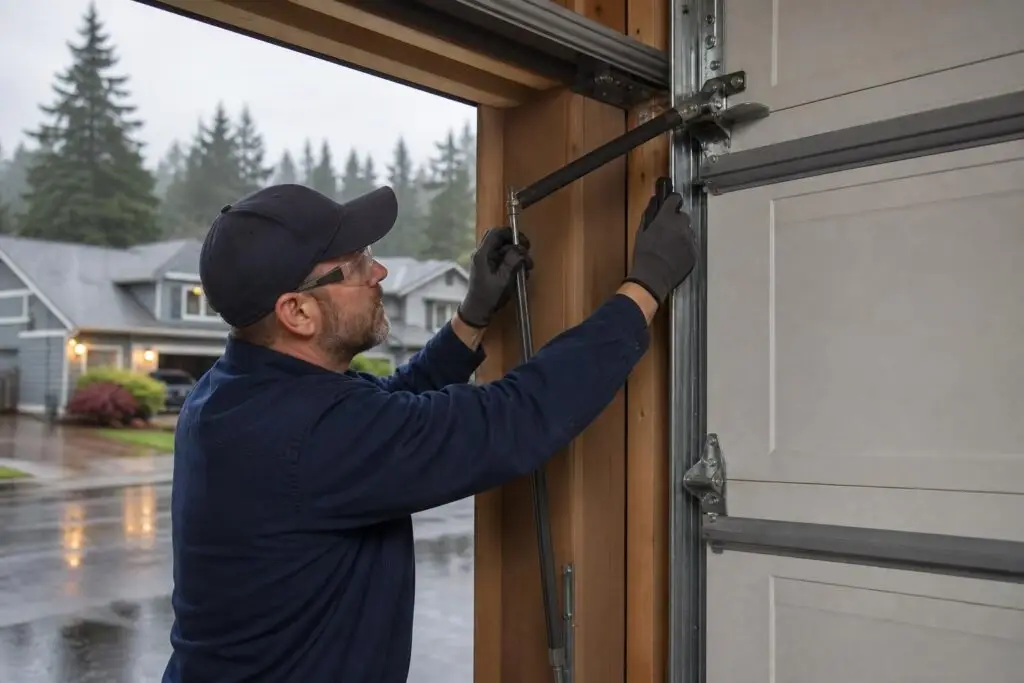
If your Seattle garage door bends inward, shakes, or reverses when the opener runs, the problem may be the panel, the opener, or missing reinforcement. The practical verdict: reinforce a mostly straight but weak section, replace a creased or cracked panel, and adjust the opener only after the door itself is moving correctly.
A garage door strut is a horizontal metal brace that spreads pulling force across a door section. Think of it like a splint. For garage door strut repair in Seattle, Dan’s Garage Door Services usually looks at three things first: is the panel still structurally sound, is the door balanced, and is the opener pulling cleanly instead of twisting the top section?
Quick Summary
- Choose strut repair when the door flexes but the panel isn’t badly bent, cracked, or creased.
- Choose panel reinforcement repair for minor weakness around one section or opener bracket area.
- Choose panel replacement when a bent garage door panel has a hard crease, split seam, or crushed edge.
- Don’t blame the opener first; a weak or unbalanced door can make the opener jerk, reverse, or pull at an angle.
- Don’t work on springs, cables, tracks, or opener wiring yourself. These parts can be dangerous.
What a Garage Door Strut Does
A garage door strut is a horizontal metal brace that runs across the inside of a door section. Think of it like a backbone for that panel. Instead of letting force hit one weak spot, the strut spreads that force across the full width of the door.
This matters most on wide doors, lightweight steel doors, older panels, and doors with an automatic opener. For example, the top section can bend inward when the opener arm pulls if that section doesn’t have enough reinforcement. Over time, that pulling can crease the panel, loosen the opener bracket, or make the door shake as it moves.
Struts don’t “fix” every damaged panel. They’re best when the section is still mostly straight but flexes under load. If the panel has a sharp crease, cracked seam, crushed edge, or separated skin, reinforcement may not restore enough strength.
For garage door strut repair in Seattle, the goal is simple: make the door section stable enough to move smoothly without making the opener fight the door.
Signs the Door is Flexing or Bowing
A flexing door usually shows itself before it fully fails. The easiest safe check is a visual inspection from inside the garage while the door is closed. Don’t loosen brackets, touch springs, adjust cables, or move tracks. Just look.
- The top section bends inward when the opener starts pulling.
- One panel looks bowed, wavy, or pushed in compared with the others.
- You see a horizontal crease across a panel.
- The seam between two sections is cracked, split, or separating.
- The opener jerks, reverses, or pulls the door at a slight angle.
- The door shakes more than usual during travel.
- Hinges or the opener bracket look loose or stretched.
- The door rubs, binds, or sounds louder in one part of the opening.
A single bent garage door panel may still be a reinforcement candidate if the damage is minor and the section is mostly straight. But if the panel has a sharp crease or the metal skin is separating, a strut may only hide the problem for a while.
In cold, wet Seattle weather, existing weakness can become more obvious because swollen trim, worn rollers, or strained hardware can make the door work harder.
Why Openers Can Damage a Weak Door
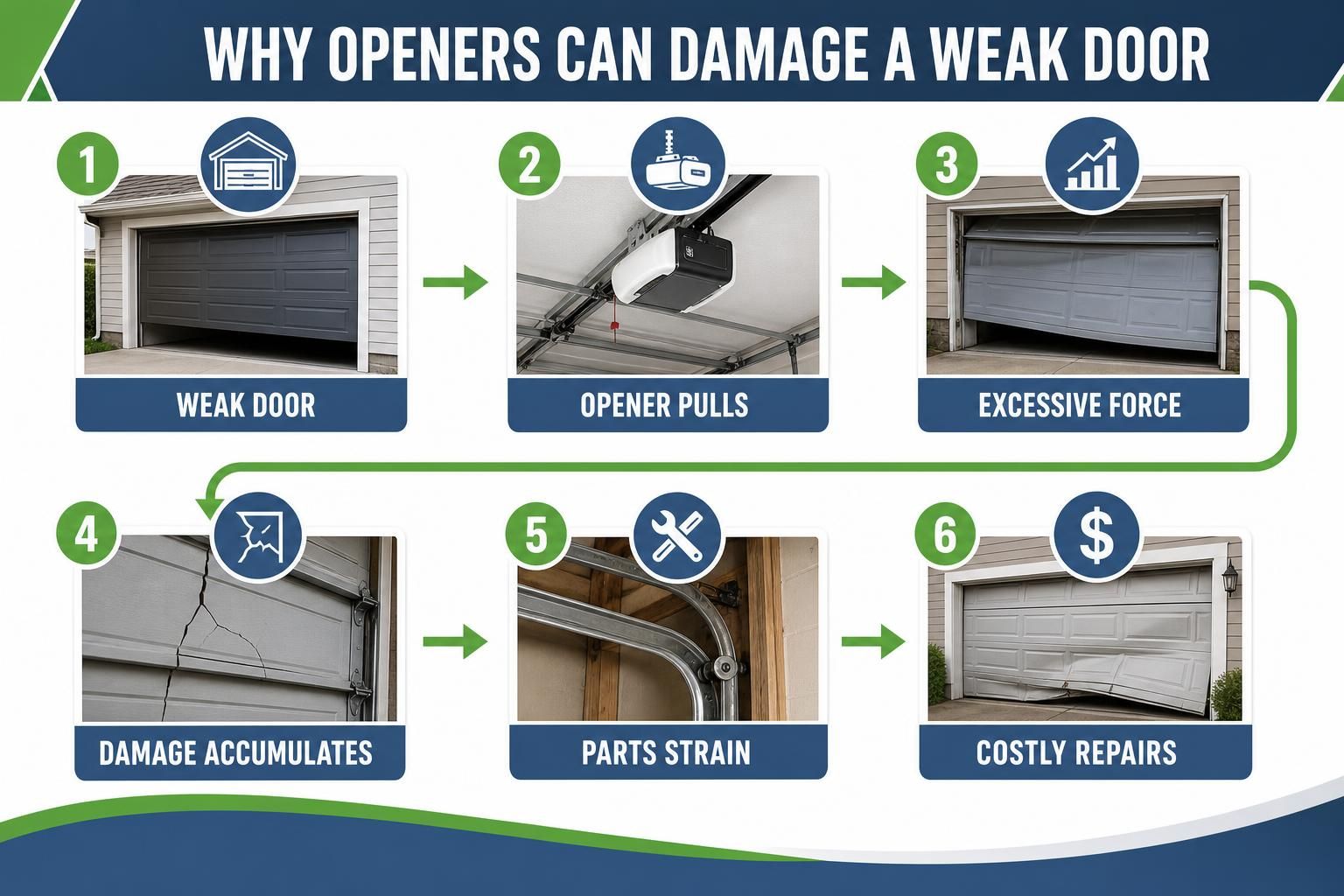
An automatic opener doesn’t “lift” the door the way your arms do. It pulls or pushes from one attachment point, usually near the top section. If that section is weak, the opener can concentrate force in one spot instead of letting the whole door move evenly.
Think of pulling a cardboard box by one flap. If the box is solid, it moves. If the flap is soft or creased, it bends first. The same thing can happen when a top garage door section lacks enough reinforcement. The opener arm pulls, the panel bows inward, and the door may jerk, reverse, or pull at a slight angle.
This doesn’t always mean the opener is bad. The door may be heavier than it should be because of worn rollers, poor balance, damaged hinges, or a bent section. Door balance means the spring system is helping carry the door’s weight. Don’t adjust springs or cables yourself; they’re under high tension.
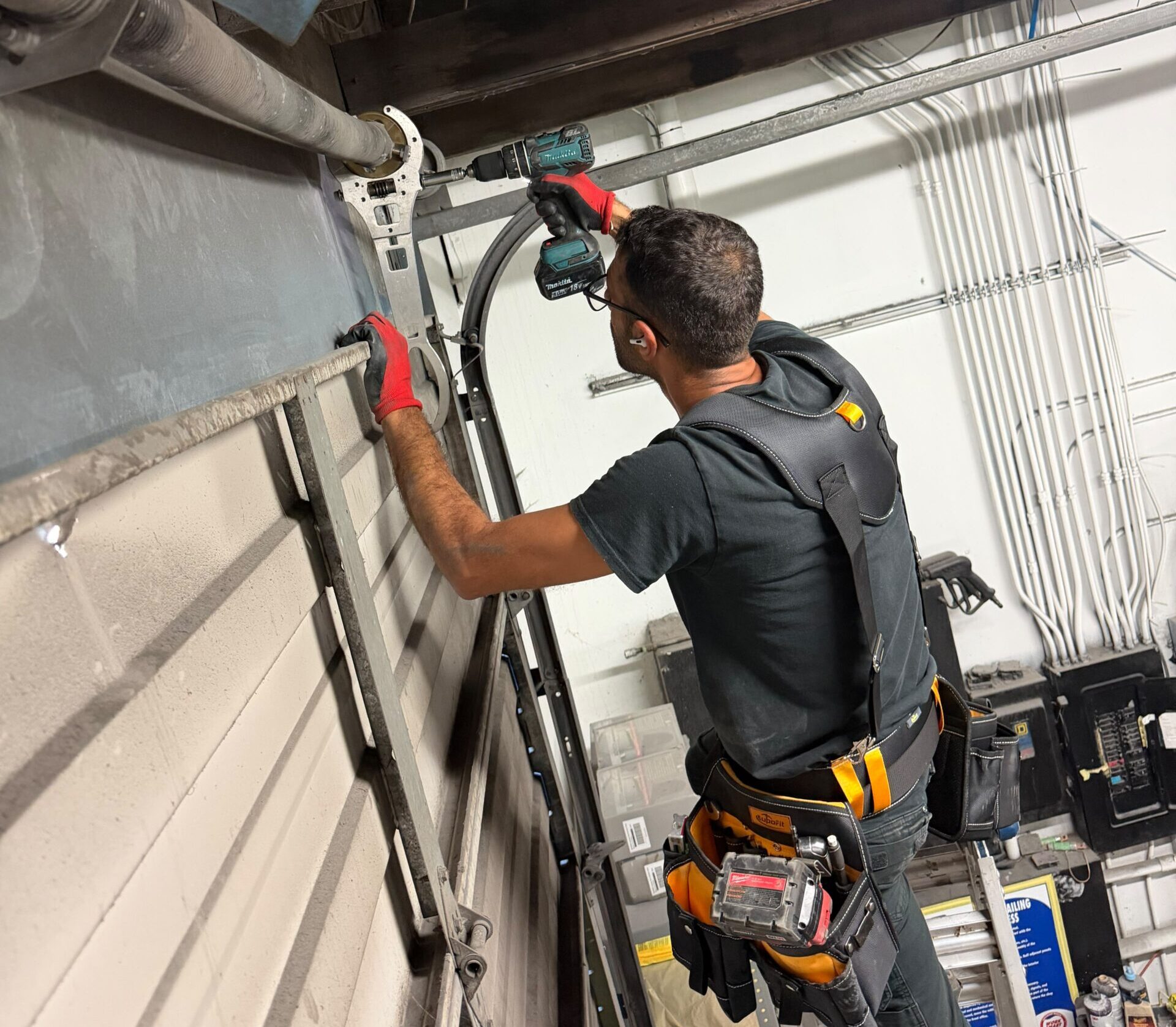
If your opener strains while the door flexes, have the door and opener checked together. Dan’s Garage Door Services can inspect Seattle doors for strut repair, garage repair, and opener installation repair before the damage spreads.
Repair vs Panel Replacement
A strut repair makes sense when the door section is still basically straight but needs help staying rigid. Think of it like adding a splint to a weak board. The splint spreads the opener’s pulling force across the section instead of letting one spot bend.
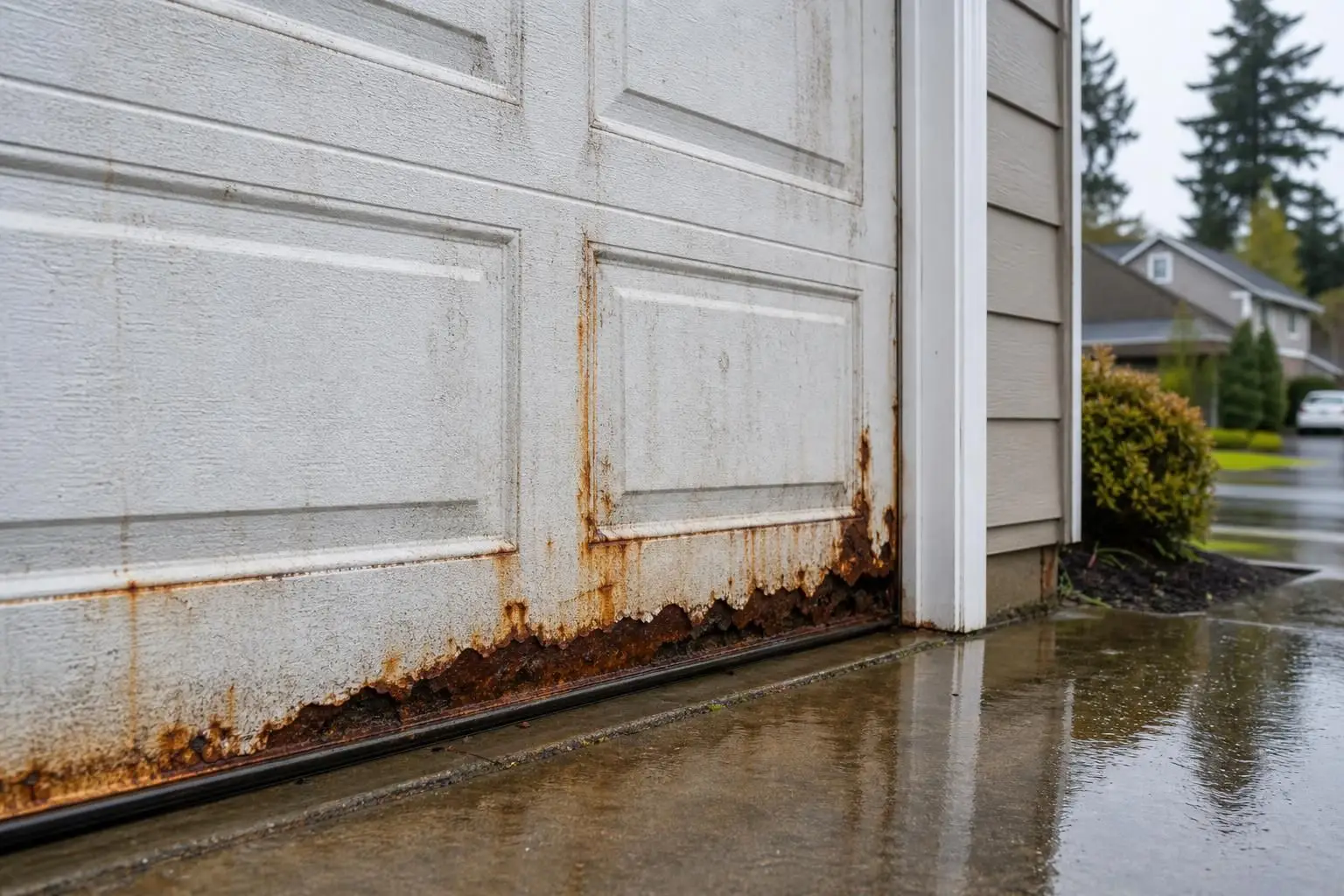
Panel replacement is better when the section has lost its shape. A light bend near the top of one panel may be reinforced. But a deep crease, cracked seam, split metal skin, or buckled center stile usually means the panel can’t reliably carry load anymore.
| Situation | Best option | Why |
|---|---|---|
| Top section flexes when opener pulls | Add or replace strut | Reinforces the opener attachment area |
| Minor single-panel bend, no crease | Panel reinforcement repair | May restore stiffness without replacing the section |
| Creased, cracked, or buckled panel | Panel replacement | Structure is compromised, not just weak |
| Door jerks, reverses, or pulls crooked | Door and opener adjustment check | Balance or opener force may be wrong |
If your Seattle door flexes more during cold, wet stretches, the weather probably isn’t the root cause by itself. More often, existing damage, worn hardware, or poor balance has reached the point where the door can’t stay square under movement.
A homeowner comparing strut repair with panel replacement should look at three things: the panel’s shape, the opener’s pull point, and whether the door moves evenly by hand. Don’t remove hardware, loosen hinges, or test springs yourself. If the door is already bending or binding, that inspection should be done with the system supported safely.
When Reinforcement is a Safety Issue
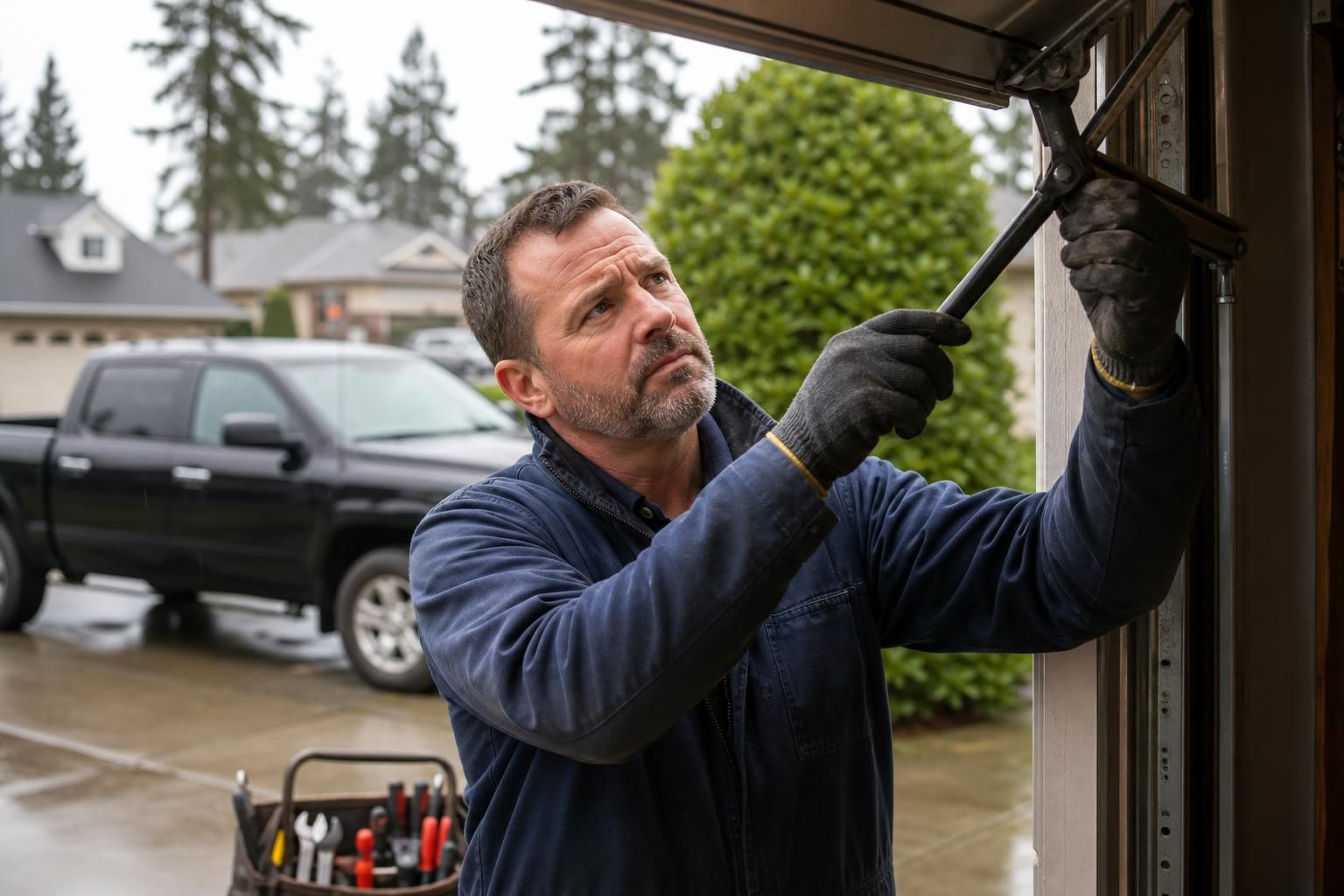
Reinforcement becomes a safety issue when the door no longer stays square as it moves. Think of the door like a folding wall. If one section bends, the rollers, hinges, opener arm, and tracks all start fighting each other.
From inside the garage, with the door closed, you can safely look for warning signs without touching hardware:
- One side of the door sits lower than the other.
- The door binds, meaning it sticks or twists instead of moving smoothly.
- A panel has a sharp crease, cracked seam, or torn hinge area.
- The opener jerks, reverses, or pulls at an angle.
- The door drops unevenly or feels unstable when disconnected by a professional.
Cold, wet Seattle weather can make existing strain more obvious because metal parts contract, lubrication thins, and already-weakened sections may flex more under load.
Don’t loosen springs, cables, tracks, hinges, or opener wiring to “see what happens.” Those parts can release stored force quickly. If the door is sagging, binding, or visibly damaged, stop using the opener and schedule a garage repair inspection with Dan’s Garage Door Services. Reinforcement may still be possible, but the door needs to be supported and checked safely first.
Ask About Door Reinforcement Service
Before you approve reinforcement work, ask for a clear diagnosis of the door section, the opener, and the hardware together. A strut can help a weak section spread pulling force, but it won’t fix a crushed panel, a badly unbalanced door, or damaged hinges.
Use this quick decision check during the inspection:
- One bent garage door panel with a crease or cracked seam: ask whether panel replacements are safer than reinforcement.
- Opener jerks, reverses, or pulls at an angle: ask whether opener installation repair or adjustment is needed too.
- Door sags, binds, or drops unevenly: stop using it and schedule garage repair before more damage happens.
If Dan’s Garage Door Services has recent project or social photos of similar reinforced doors, struts, bent panels, or opener-related damage, ask to see them. Real examples make the repair-versus-replace choice easier to understand.
For a flexing or bowed garage door in Seattle, have Dan’s Garage Door Services inspect it before the opener turns a repairable section into a bigger safety problem.
Conclusion
A strut can be the right fix when the door section is still mostly straight, the panel seams aren’t cracked, and the opener is pulling on a door that simply needs better reinforcement. But if the panel is creased, sagging, binding, or dropping unevenly, panel replacement or broader garage repair may be safer than adding more metal to a failing section.
Don’t guess while the opener keeps straining the door. For garage door strut repair in Seattle, contact Dan’s Garage Door Services to inspect the panel, reinforcement, balance, and opener before a small flexing problem turns into a bigger repair.