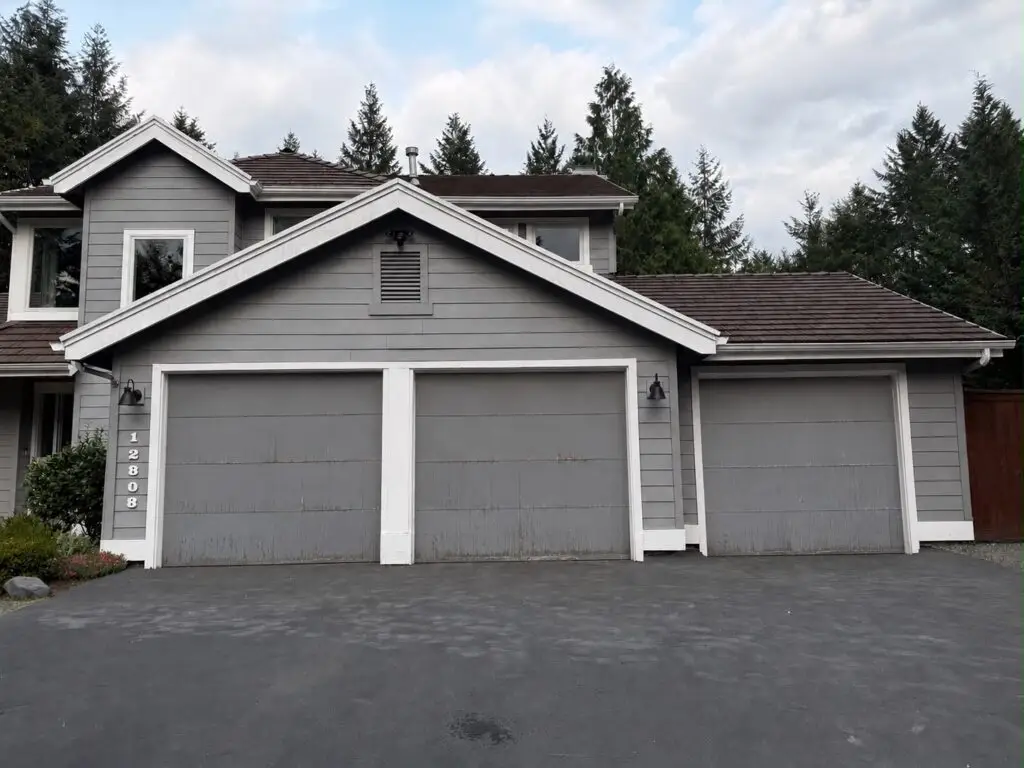
After months of Bellevue rain, it’s easy to notice bubbling paint, rusty garage door panels, or water stains along the bottom of your door and wonder, “Can this be fixed, or is it time to replace it?” Garage door rust in Bellevue is common because moisture can sit on metal, soak into damaged finishes, and collect around seals and lower sections.
This guide explains what rust usually means, what you can safely check from the floor, and how to compare garage door rust repair in Bellevue with full replacement. Call a pro if rust is spreading across hardware, bottom fixtures, tracks, or sections that affect door movement.
Quick Summary
- Bellevue’s wet weather can speed up rust when paint is scratched, seals are worn, or water pools near the door.
- Surface rust may be repairable if the door still moves smoothly and the metal underneath is solid.
- Structural damage may include holes, swollen sections, panel separation, or weakened bottom edges.
- Corroded hinges, brackets, rollers, and bottom fixtures can affect safety and shouldn’t be handled as a DIY repair.
- Replacement makes more sense when rust is widespread, water keeps returning, or matching old panels isn’t practical.
Why Rust Shows up on Garage Doors
Rust shows up when moisture reaches exposed metal and stays long enough to break down the surface. Paint works like a rain jacket for your door. Once it gets scratched, cracked, or worn thin, water can sneak underneath.
Bellevue weather makes this worse through repeated wet-dry cycles. Rain hits the door, moisture collects along the bottom edge, then the surface dries and gets wet again. Around shaded driveways, tree-lined streets, or sloped garage approaches, leaves and runoff can hold moisture against the lower door for hours longer than you might expect.
- Scratched paint from tools, bikes, or yard equipment
- Poor drainage near the garage opening
- Worn bottom seals that let water sit against the door
- Dirt and leaves holding moisture along the lower edge
- Older finishes that no longer protect the metal well
- Small gaps that allow wind-driven rain to reach the inside edge
If you see water marks near the floor, the opening may also be part of the problem. Dan’s Garage Door Services often looks at the whole opening because fixing only the visible mark may not stop the moisture source. If you’re noticing daylight or water around the edges, garage door gaps can help explain why those openings matter.
Surface Rust vs Structural Damage
Surface rust is usually a thin layer of corrosion on the outside of the door. Structural damage means the section itself has started to weaken. One is often cosmetic, while the other can affect safe, reliable operation.
Small rusty spots on one or two panels may be repairable if the door opens smoothly, hardware looks solid, and panels are not bent, soft, or separating. Cleaning, refinishing, hardware attention, or panel replacement may be options, depending on condition.
Structural damage looks different. Watch for spreading bubbling paint, rust along the lower edge, water staining, holes, swollen sections, or delaminating layers. Delaminating means layers peel apart, like wet cardboard separating at the edges.
Here’s a safe visual checklist you can do from the floor:
- Check whether rust appears in one spot or across several panels.
- Watch the door move from a safe distance.
- Notice whether it shakes, drags, or looks uneven.
- Look for gaps between panel layers.
- Check for water staining on the inside lower section.
- Avoid touching springs, cables, bottom brackets, or tracks.
A bottom section with bubbling paint, lower-edge rust, and water staining after repeated winter rain is more than a small blemish. That section takes splashback from rain and driveway runoff, and once it weakens, the door may lose stiffness.
Hardware, Bottom Sections, and Weather Exposure
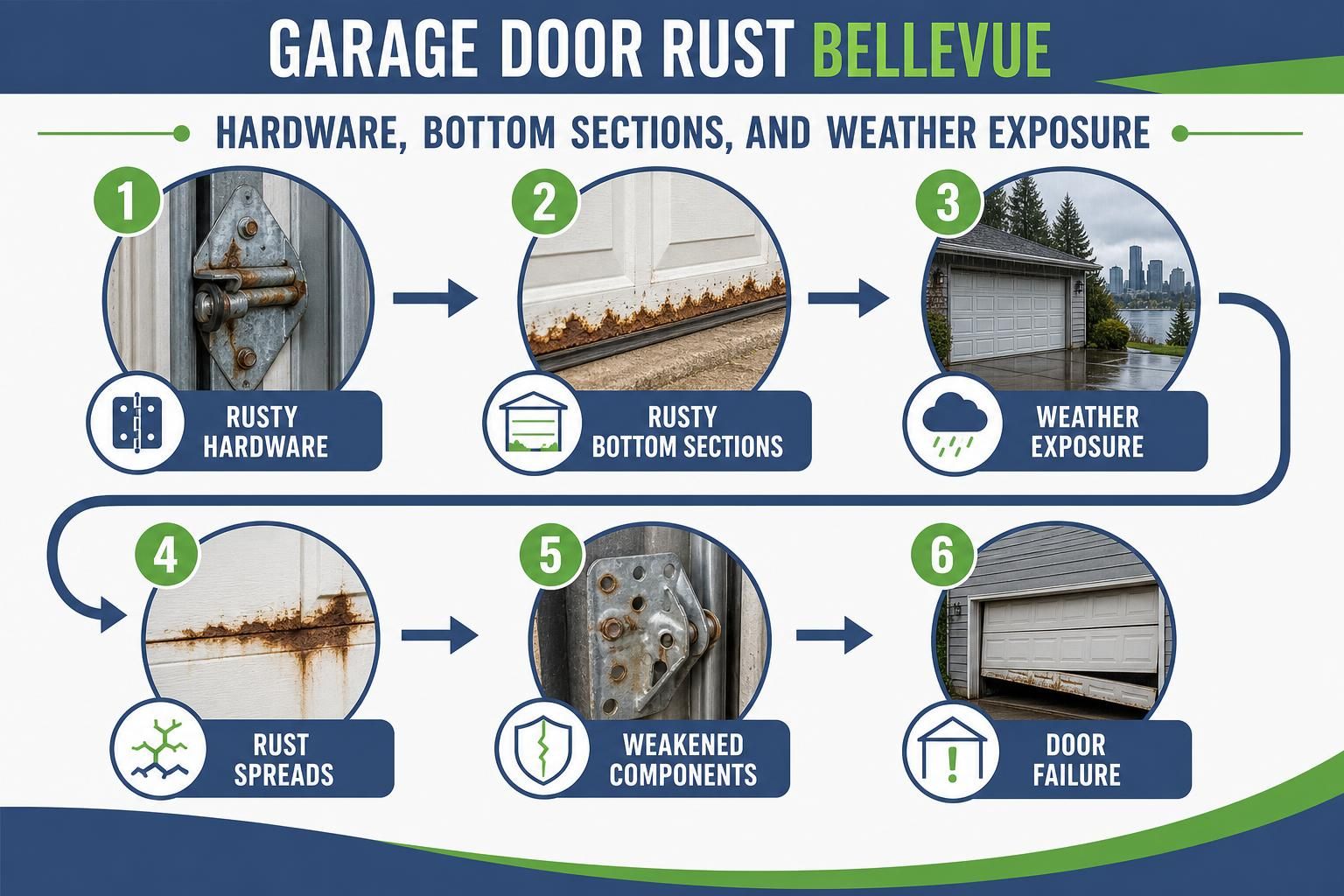
Garage door hardware corrosion is more concerning than cosmetic rust because hardware helps hold and guide the moving door. Hardware includes hinges, brackets, rollers, fasteners, bottom fixtures, and tracks. Rollers are the small wheels inside the tracks.
A rusty hinge or roller may start as noise, then cause uneven movement, shaking, or opener strain. The opener is the motor that lifts and lowers the door.
Be especially careful around bottom fixtures, cables, and springs. Cables help lift the door, and cables and springs are under tension, meaning they hold stored force. Don’t remove, loosen, or adjust them. If rust appears near these parts, call a trained technician.
Bottom sections need extra attention in Bellevue because they sit closest to standing water, wet concrete, leaves, and road grime. Weatherstripping is the rubber or vinyl bottom seal, but when it cracks or flattens, moisture can sit against the door. For broader wet-weather planning, Seattle weather impacts garage doors explains how local rain, wind, and exposure affect garage door materials.
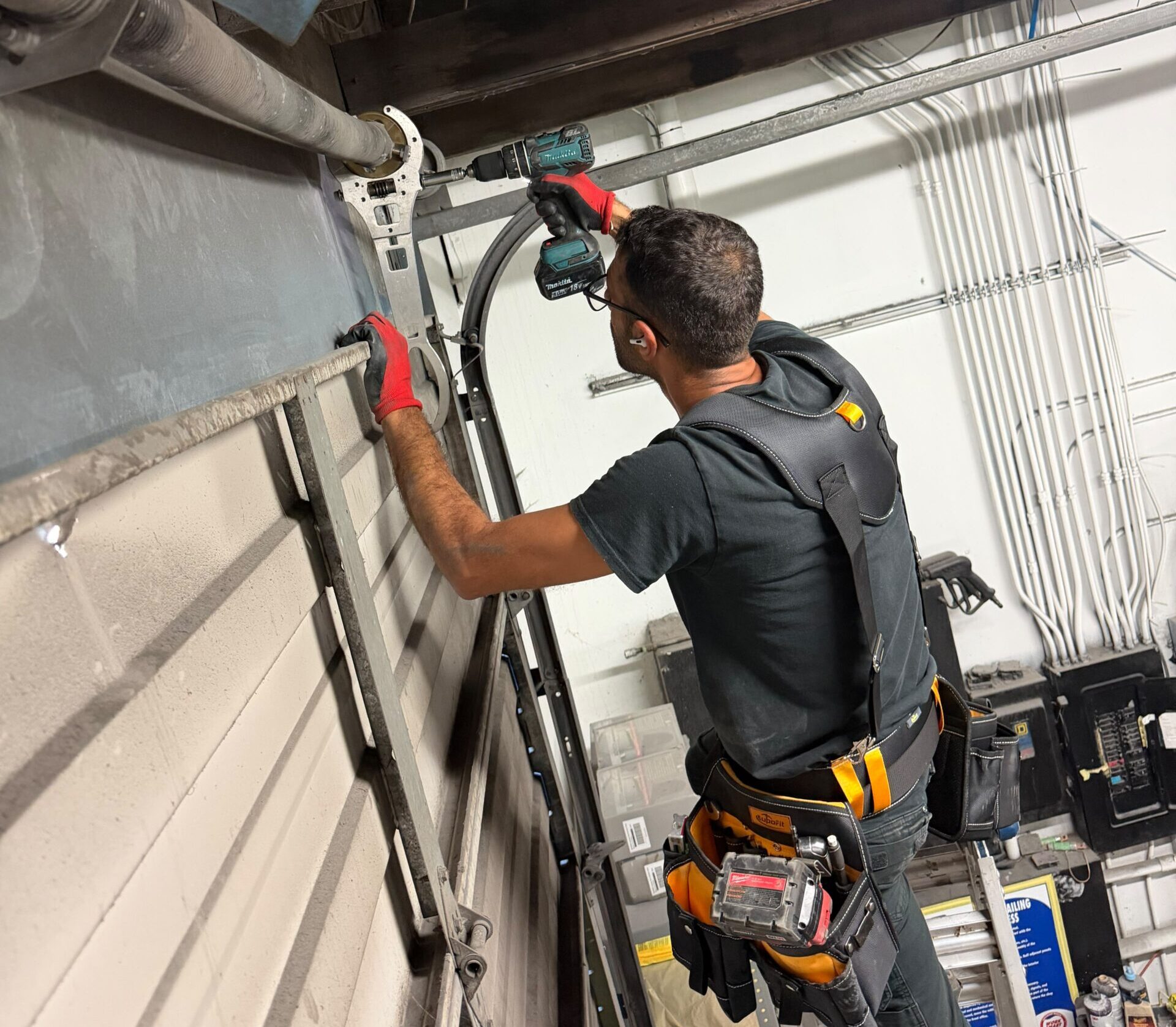
If rusty hinges, brackets, or rollers make the door noisy or uneven, stop running it. Dan’s Garage Door Services can inspect the hardware and explain whether targeted repair is still enough.
Repair vs Replacement Decision
Repair is usually better for limited surface rust. Replacement is usually better when rust, water damage, or hardware corrosion affects several sections or door operation. The choice depends on location, spread, safety, appearance, and water control.
Ask where the rust is, whether it affects one panel or several, whether the bottom edge is solid, whether the door opens smoothly, and whether hardware is intact. Also ask if a replacement panel can match, since older panels may fade, change texture, or become unavailable.
Repair can fit one or two panels with cosmetic surface rust when the door still moves smoothly. Panel replacement may work for isolated damage. If rust spreads across multiple sections, full replacement may be cleaner long term.
| Choice | Best fit | Limits | Key question |
|---|---|---|---|
| Repair | Small surface rust or one damaged section | May not solve repeated water intrusion | Is the door still solid and smooth? |
| Panel replacement | Isolated rusty garage door panels | Match may be difficult on older doors | Will the new panel blend well? |
| Full replacement | Widespread rust, water damage, or operation issues | Larger project than a repair | Is the whole door reaching the end of useful condition? |
Confirm current pricing with the professional who inspects the door. Final cost can depend on panel availability, labor, materials, hardware replacement, door size, insulation, finish, and whether the existing track and opener fit the new setup.
Appearance matters too. A swollen or delaminating section may be replaceable but hard to blend. If water keeps entering from the same place, one panel may only buy time. For a clear inspection, free garage door consultation is a practical way to ask Dan’s Garage Door Services about repair and replacement options.
How New Doors Handle Wet Weather Better
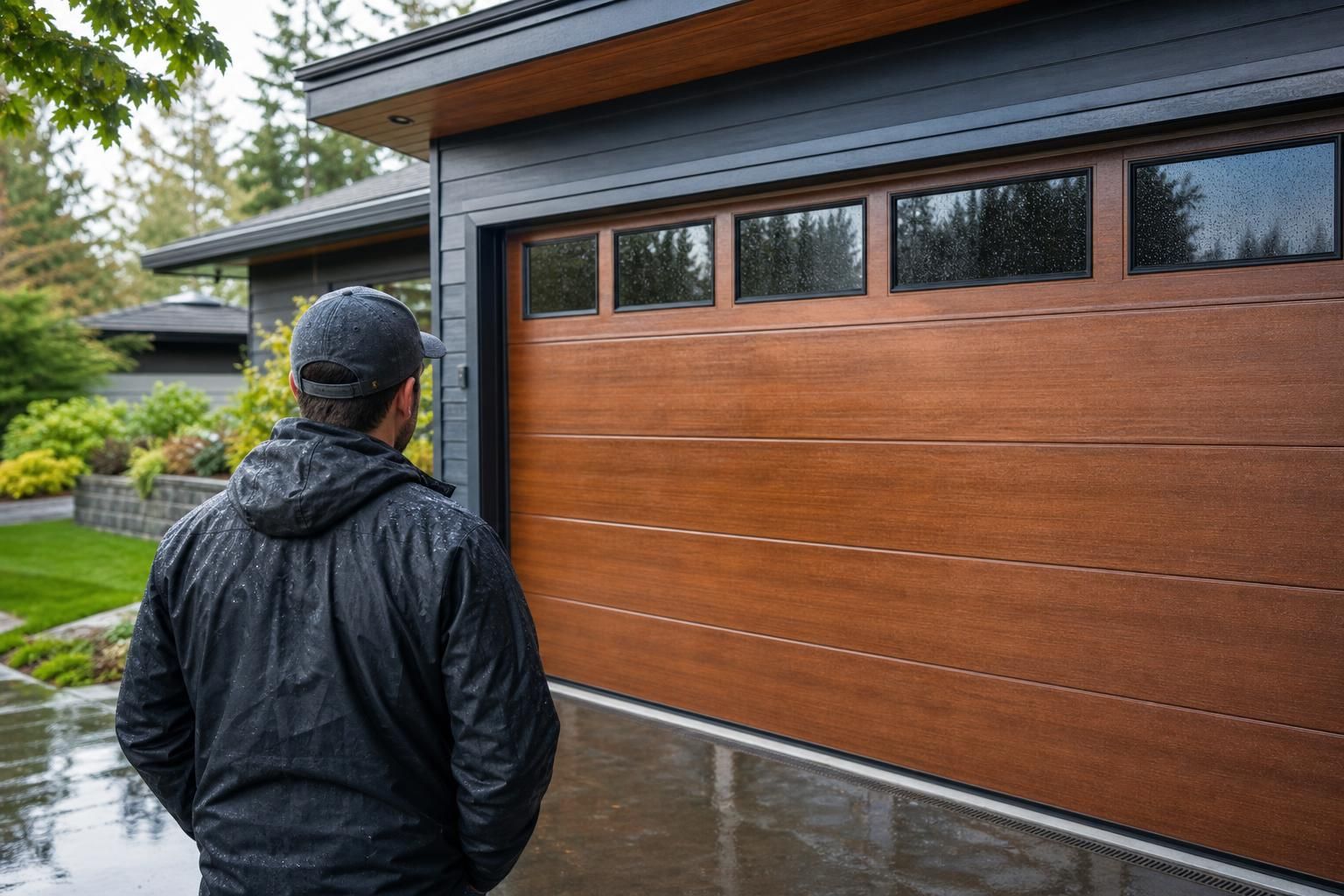
Newer garage doors can handle wet weather better when they combine improved finishes, better seals, suitable insulation, and corrosion-resistant components. That does not make a door waterproof. It means the system is designed to manage moisture more effectively.
A finish is the outer protective coating that helps keep rain from reaching the material underneath. Seals reduce water and air movement around the edges. Insulation reduces heat transfer and, depending on the design, can add stiffness.
New installation also allows for drainage awareness, or checking how water moves near the garage opening. If rain runs toward the door, even a new door faces extra stress, especially along the bottom section. A Bellevue home with a sloped driveway that drains toward the garage may need both a better seal and a drainage fix, not just a new panel.
Material and design choices matter too. Smooth doors, raised panels, and full-view options clean and shed water differently. If you’re also thinking about appearance, raised panel vs flush panel doors can help you compare panel styles before choosing a replacement.
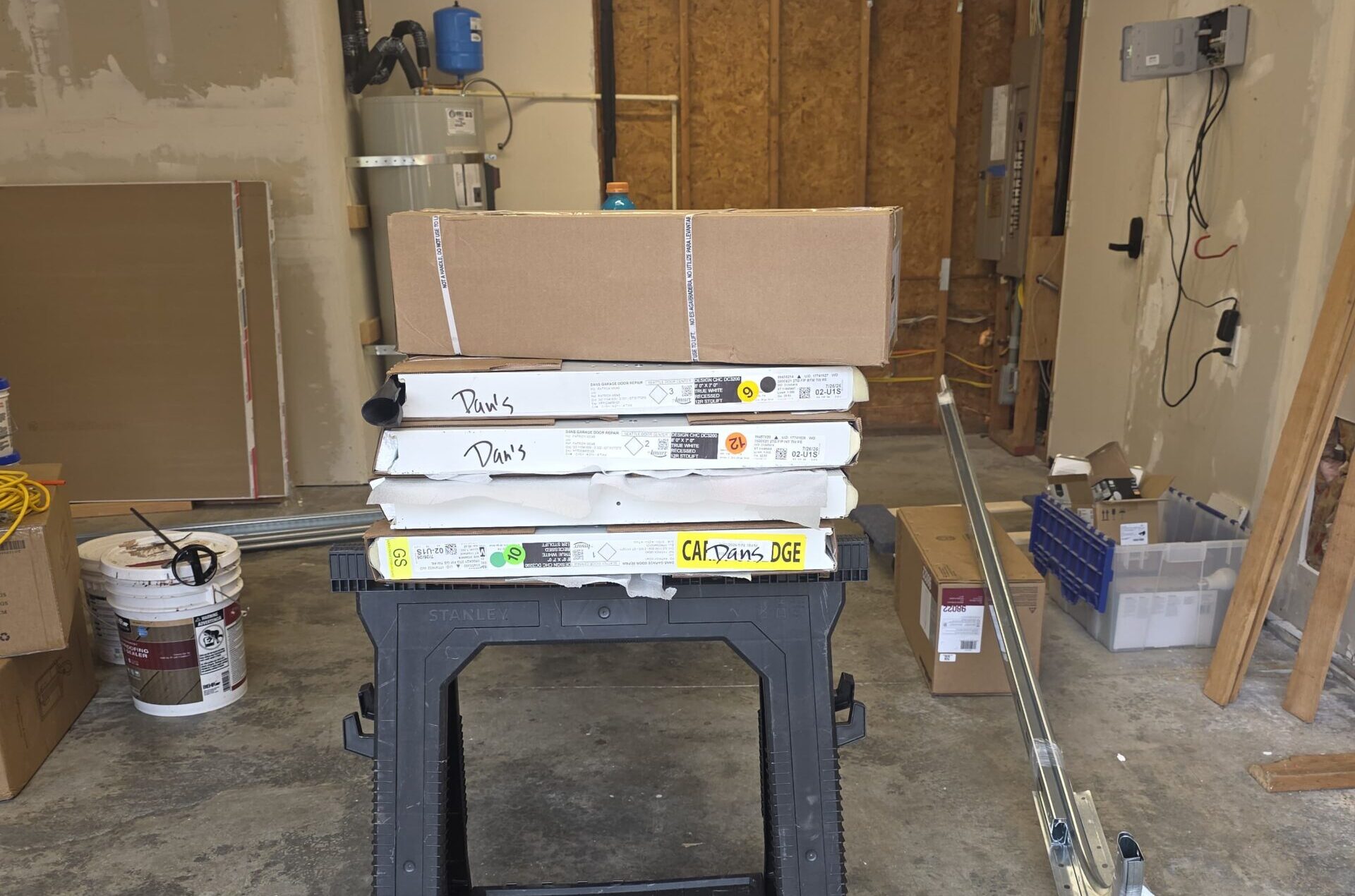
Real installation photos from Dan’s Garage Door Services can help, especially if they show finished doors in Bellevue or nearby wet-weather conditions. Look for clean bottom seals, even panel alignment, and a style that fits your home. If you’re still exploring buying paths, where to buy garage doors can help you understand what to compare before committing.
Ask About Repair or Replacement Options
Ask for an inspection when rust has spread, water damage is visible, or the door no longer moves normally. A trained garage door technician can separate cosmetic rust from safety issues, which is hard to do from photos alone.
Before you call, take simple notes from the floor. Do not touch springs, cables, brackets, tracks, or anything that looks damaged.
Helpful details to share include:
- Whether it’s on one panel or several
- Whether the bottom edge is bubbling or stained
- Whether the door sounds louder than usual
- Whether the door moves evenly
- Whether hardware looks rusty
- Whether water returns after each rain
Photos can also help. Include the full door, bottom section, close-ups of rusty areas, and the inside lower edge if it is safe to see. Don’t climb, remove covers, or reach near springs and cables.
If the door is stuck, crooked, or moving unpredictably, stop using it and keep people away. Unsafe movement, damaged cables, or corroded high-tension parts need professional handling. If you’re waiting for help and the door won’t operate safely, emergency garage door repairs covers what to do while avoiding further damage.
Dan’s Garage Door Services can review whether garage door rust repair in Bellevue is realistic or replacement is the better value for your situation.
Conclusion
Garage door rust in Bellevue doesn’t always mean you need a new door, but it does deserve attention before moisture spreads deeper. Small surface rust on one panel may be repairable. Rusty hardware, swollen sections, weakened bottom edges, or repeated water intrusion point to a bigger problem.
If you’re unsure whether repair or replacement makes sense, ask Dan’s Garage Door Services to inspect the door, explain your options, and help you choose the safest next step for your Bellevue home.