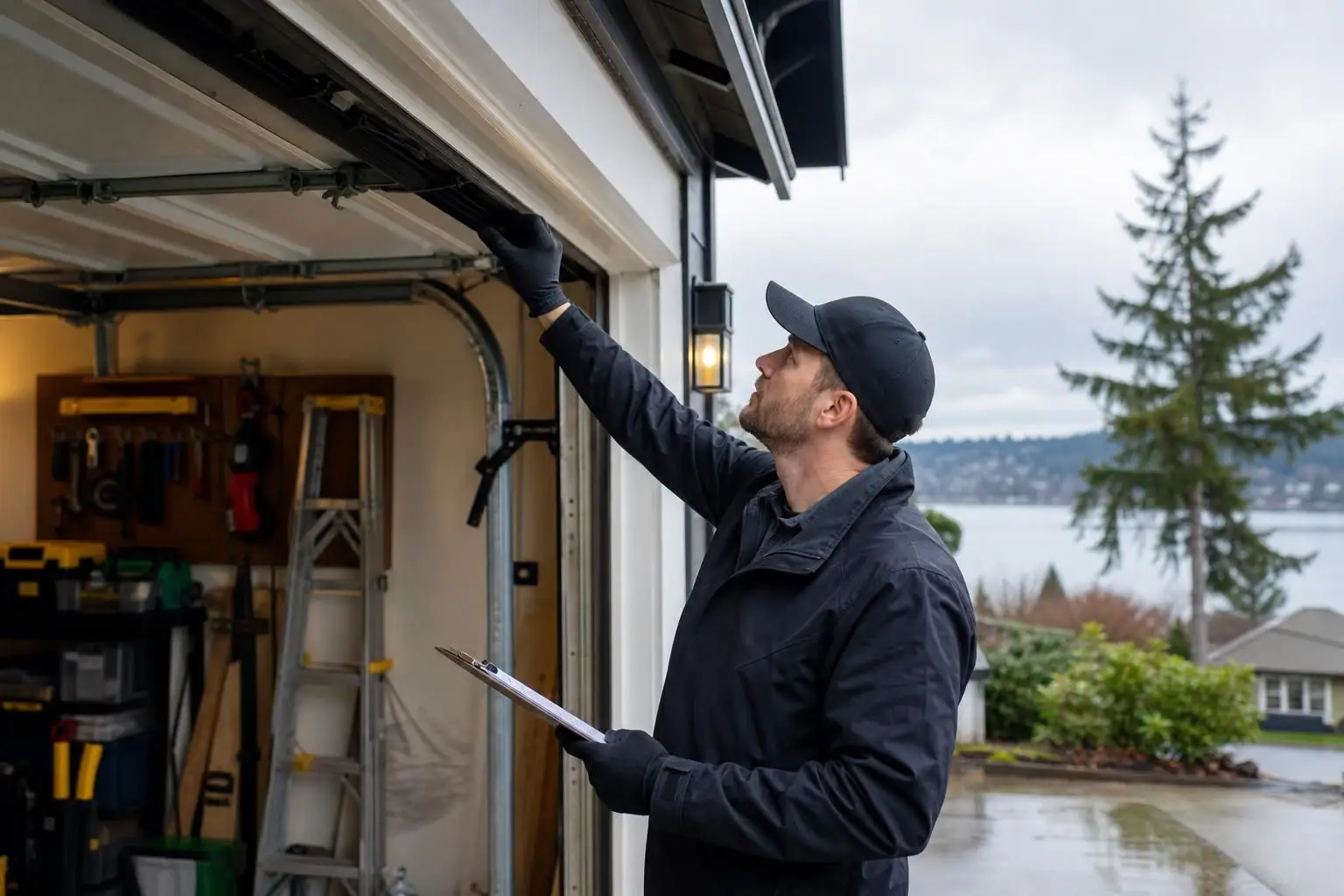
Garage door gaps are more than a small annoyance. They let in rain, cold air, leaves, pests, and street dust. In Seattle neighborhoods where garages often face sloped driveways, damp alleys, or wind-driven rain, even a narrow opening can create bigger problems over time. You might notice light under the door, water under garage door edges, or a garage door side gap that wasn't there before. This guide explains what causes gaps at the bottom and sides, when a simple seal helps, and when the door itself needs adjustment.
Best for: Homeowners who see daylight, drafts, leaves, or small water trails around a closed garage door.
Not ideal when: The door is crooked, jammed, hanging loose, or showing signs of damaged springs or cables.
Good first step if: You can safely inspect the seal, tracks, concrete, and door position without moving heavy parts.
Call a pro if: The door won't close evenly, rubs the frame, or looks shifted on one side.
Quick Summary
- Bottom gaps often come from worn seals, uneven concrete, or a door that doesn't close fully.
- Side gaps usually point to weatherstripping problems, track position, or alignment issues.
- A seal can help when the door is straight and the opening is fairly even.
- Water intrusion is common in rainy Seattle garages with sloped driveways.
- Crooked doors, cable issues, and track problems should be handled carefully.
Why Garage Door Gaps Should Not Be Ignored
Garage door gaps should be fixed because they let weather, moisture, pests, and debris enter a space that's supposed to be protected. Think of your garage door like the front edge of a raincoat. If the edge doesn't overlap correctly, water finds the opening.
In Seattle, this matters because garages often sit below living space, beside storage shelves, or near finished basement entries. A small garage door gap at bottom level can let damp air sit around cardboard boxes, tools, bikes, or stored furniture. For example, a homeowner in Ballard might see leaves and water blow in during a storm, then notice a musty smell near the back wall a few days later.
Gaps can also affect comfort. If your garage connects to your home, cold air from the garage can make nearby rooms feel chilly. And if pests can squeeze through a side gap, they'll treat the garage like an easy shelter.
Watch for these early signs:
- Daylight around the closed door
- Water trails after rain
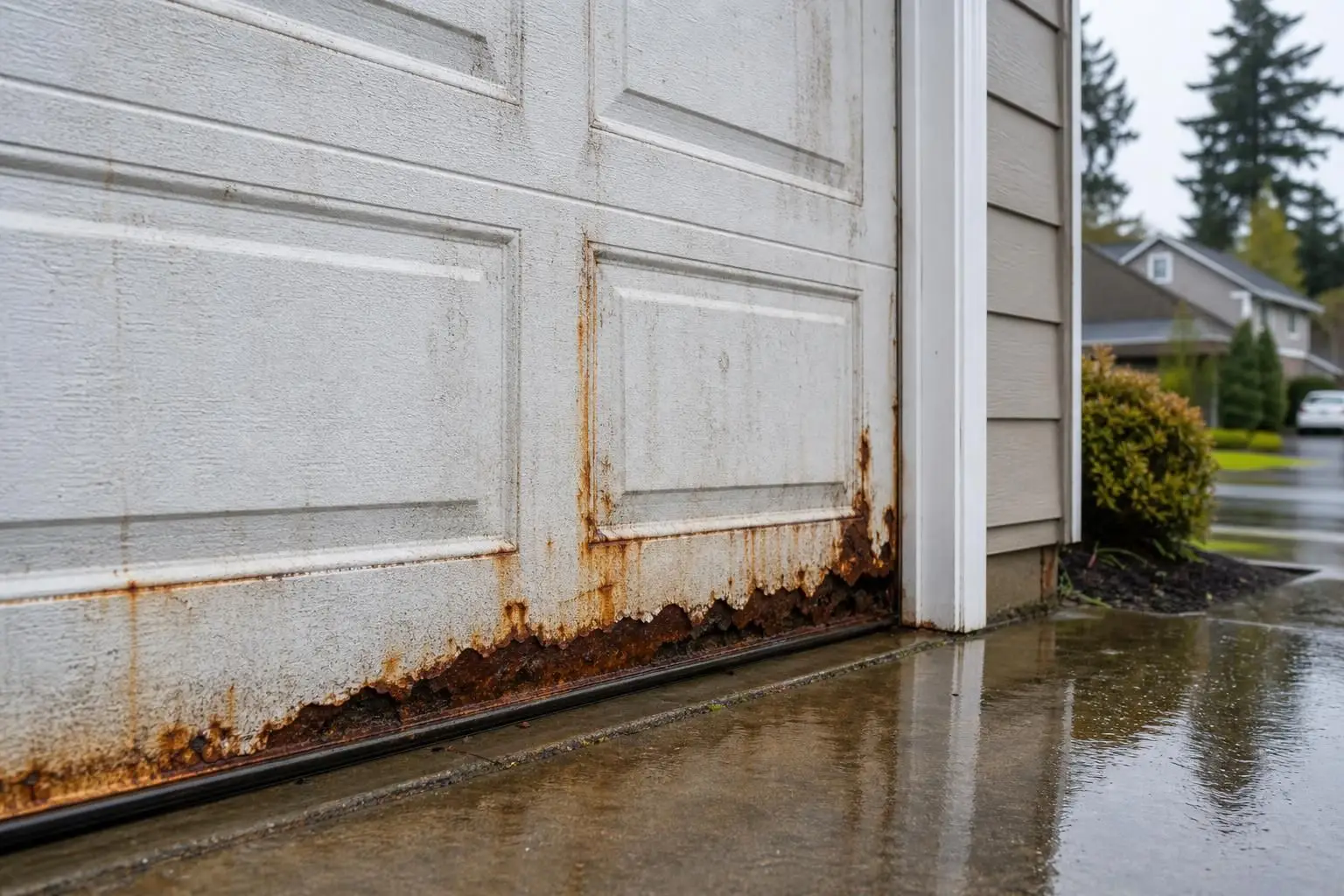
- A rubber seal that looks cracked or flat
- A door that touches the floor on one side but not the other
- Scraping, rubbing, or uneven closing
For simple prevention, regular inspection is your friend. Seasonal checks, especially before Seattle's wetter months, help you catch small problems before they spread. If you're already planning upkeep, regular garage maintenance can help you understand what to include.
Common Bottom Gap Causes
A bottom gap is usually caused by a worn bottom seal, uneven flooring, or a door that isn't closing squarely against the ground. The bottom seal is the flexible rubber or vinyl strip attached to the lower edge of the door. Its job is to compress against the floor.
For example, if your driveway slopes toward the street in West Seattle, one corner of the garage floor may sit slightly higher than the other. The door may close normally, but the seal can't touch the low side. That creates a visible opening where rain, pine needles, or cold air can enter.
The most common causes include:
- A flattened or cracked bottom seal
- Concrete that has settled or wasn't poured evenly
- A door that stops too high
- Loose hinges or worn rollers
- Track position that lets one side sit differently than the other
- Debris blocking the door from closing fully
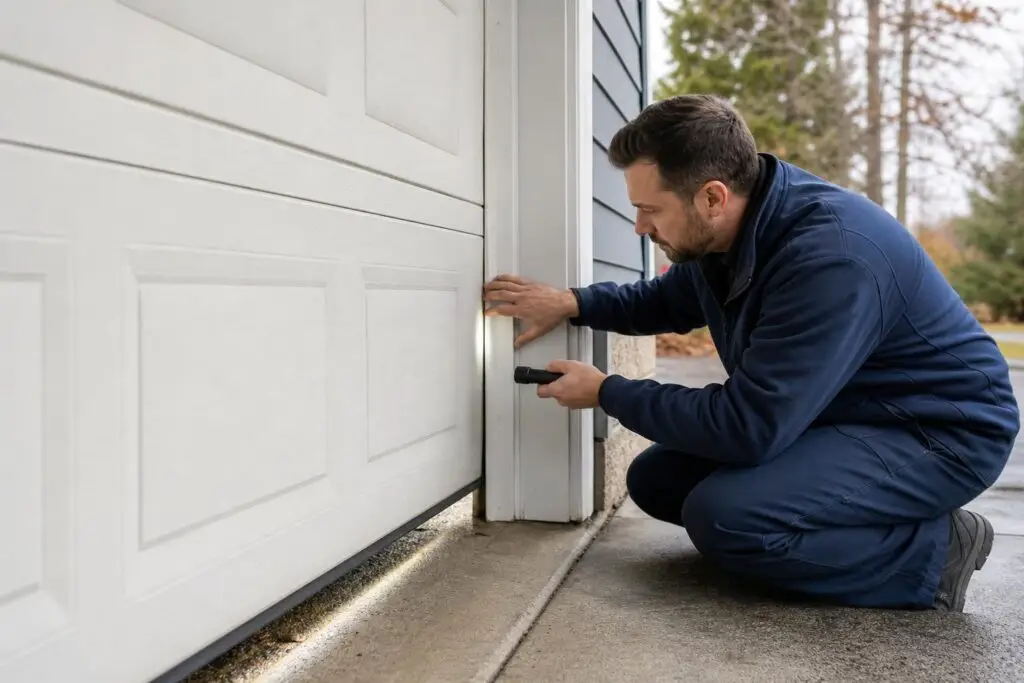
A quick test helps. Close the door and look from inside the garage during daylight. If light appears evenly across the bottom, the seal may be too short or worn. If light appears only on one side, the floor or door alignment may be uneven.
Don't force the opener to push the door harder. The opener is the motorized device that raises and lowers the door. It's not designed to crush the door into the floor. Forcing it can strain parts and make the gap problem worse.
Common Side Gap Causes
A garage door side gap is most often caused by worn side weatherstripping, shifted tracks, or a door that's no longer centered in the opening. Side weatherstripping is the flexible trim attached to the door frame. It brushes against the door to block wind and rain.
Side gaps can be tricky because the door may look closed from the driveway but still show daylight from inside. For example, a homeowner in Queen Anne might notice rain mist blowing through one vertical edge during a windy evening, even though the opener says the door is fully closed.
Before you assume the door needs major repair, look at the shape of the gap. A straight, narrow gap from top to bottom often points to old weatherstripping. A gap that's wide at the top and tight at the bottom may point to alignment. A gap that changes while the door moves can mean track, roller, or hinge trouble.
Worn Weatherstripping
Worn weatherstripping is the easiest side-gap problem to understand because the material simply stops touching the door. Over time, rubber and vinyl can harden, curl, split, or pull away from the frame.
For example, in a damp Ravenna garage, the side trim may look fine from a distance but feel stiff when you press it. If it no longer flexes against the door, wind and water can slip through. Replacing trim is often straightforward when the door itself is straight. For more detail on local sealing materials, garage door weatherstripping is a useful related guide.
Track or Alignment Issues
Track or alignment issues happen when the metal rails that guide the rollers no longer hold the door in the right position. Rollers are the small wheels on the door edges. They move inside the tracks as the door opens and closes.
For instance, if one track in a Capitol Hill garage gets bumped by a trash bin or storage rack, the door may start sitting slightly away from the frame on that side. You may hear rubbing or see the door wobble. If the door looks crooked or feels stuck, don't keep running it. A shifted door can become unsafe, and off-track garage door repair explains why this problem needs careful handling.
Uneven Concrete
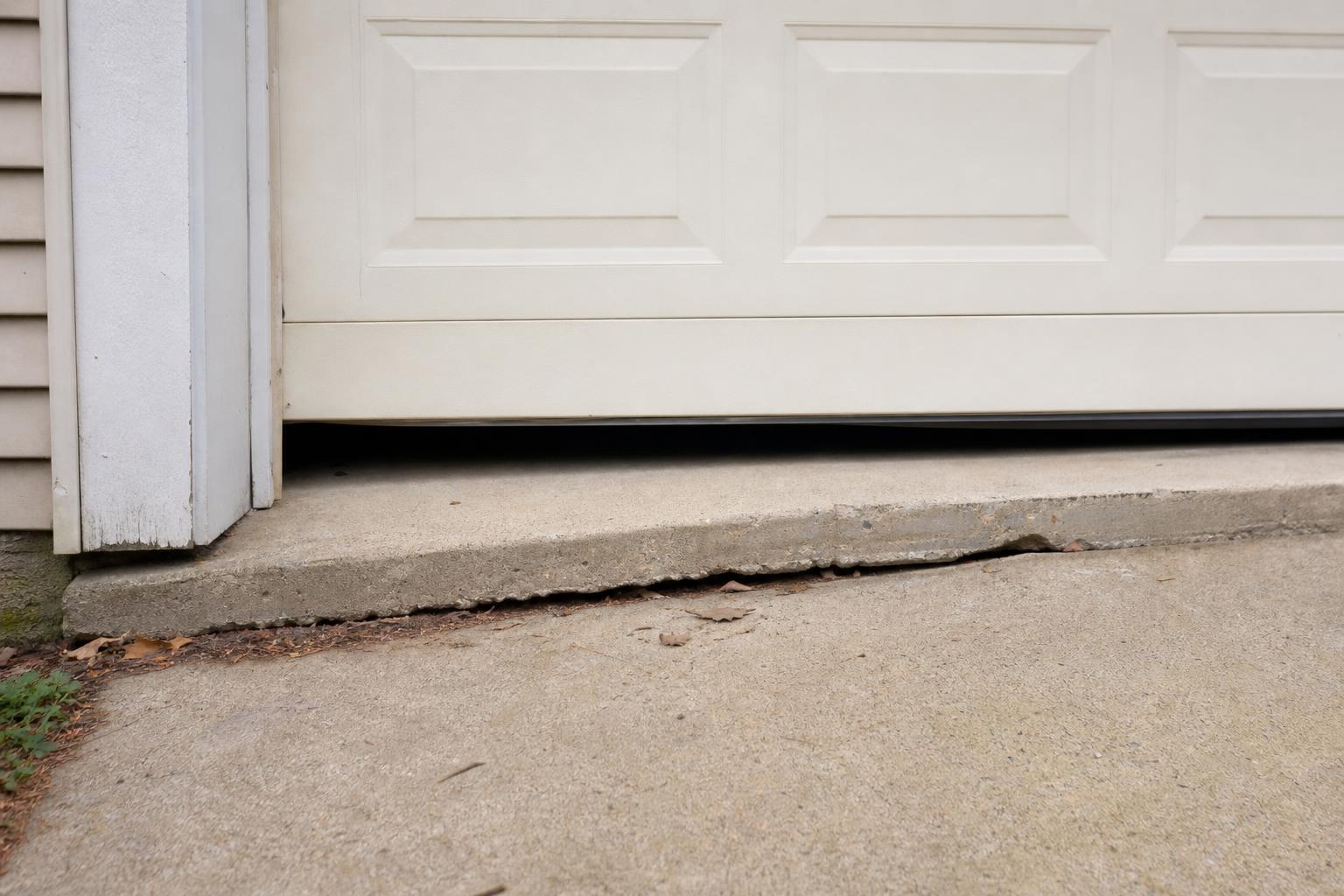
Uneven concrete creates gaps because the door is straight but the floor isn't. This is common in older garages, especially where soil movement, tree roots, or past patching has changed the slab.
For example, a garage near a sloped driveway in Magnolia may have a low corner where rainwater naturally collects. The bottom seal touches most of the floor, but one corner stays open. In this case, a larger bottom seal, threshold seal, or floor correction may help. A threshold seal is a raised strip attached to the concrete, not the door.
When a New Seal is Enough
A new seal is enough when the door is straight, closes smoothly, and the gap comes from old or undersized weatherstripping. This is the simplest repair path because you're replacing a soft barrier, not adjusting the moving structure of the door.
For example, if you close your garage door in Green Lake and see an even strip of daylight across the bottom, the bottom seal may have flattened with age. If the door isn't crooked and the opener isn't straining, replacing the rubber strip may solve the draft and reduce small water entry.
A new seal may help when:
- The old seal is cracked, brittle, or missing
- The gap is even across the bottom
- Side trim no longer touches the door
- The door closes without shaking or scraping
- The floor is mostly level
Measure before buying anything. Garage doors use different seal shapes, and not every bottom channel accepts the same insert. The channel is the metal groove that holds the rubber seal. If you're unsure, take a photo of the old seal's end shape before removing it.
For Seattle homes, choose materials with rain and temperature swings in mind. A very stiff seal may not compress well on a cool morning. A softer seal can conform better to small floor changes. If weather protection is a bigger concern, Seattle weather protection covers broader garage door choices.
When the Door Needs Adjustment or Repair
The door needs adjustment or repair when the gap changes from one side to the other, the door sits crooked, or moving parts look loose or damaged. In that case, a new seal may hide the symptom without fixing the cause.
For example, if a garage in Beacon Hill has a bottom gap only on the left side, and the right side presses tightly into the floor, the door may not be hanging evenly. Adding a thick seal might block light for a while, but it won't correct the stress on hinges, rollers, tracks, or cables.
Common repair clues include:
- The door reverses before closing
- One side closes before the other
- The door rubs the frame
- Rollers pop, grind, or wobble
- Cables look loose or uneven
- The opener sounds strained
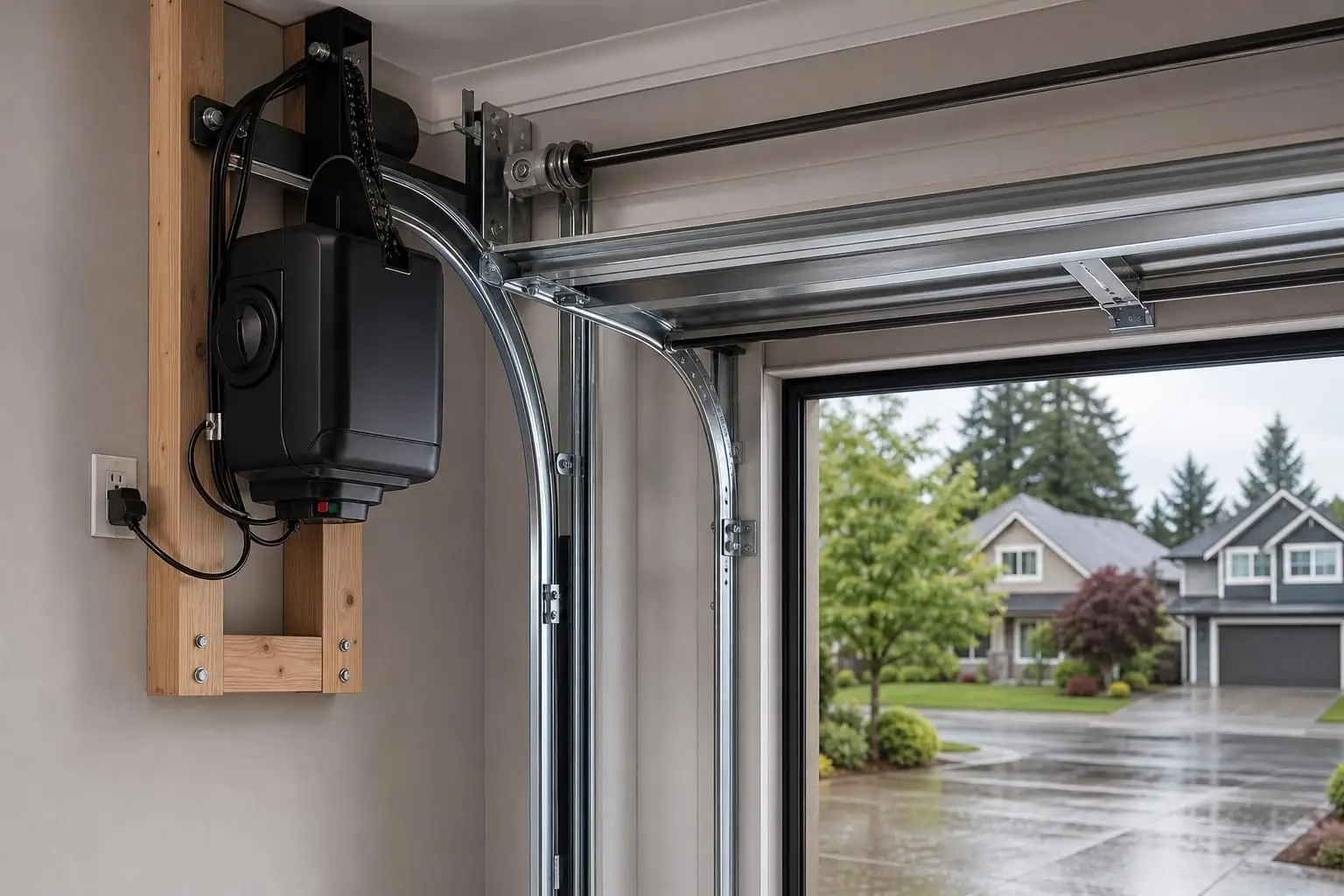
Springs and cables deserve extra caution. Springs are tightly wound metal parts that help lift the heavy door. Cables connect the door to the spring system. These parts can be dangerous if handled without training. If you see a crooked door or loose cable, stop using the door and get help.
Seattle Rain and Garage Water Intrusion
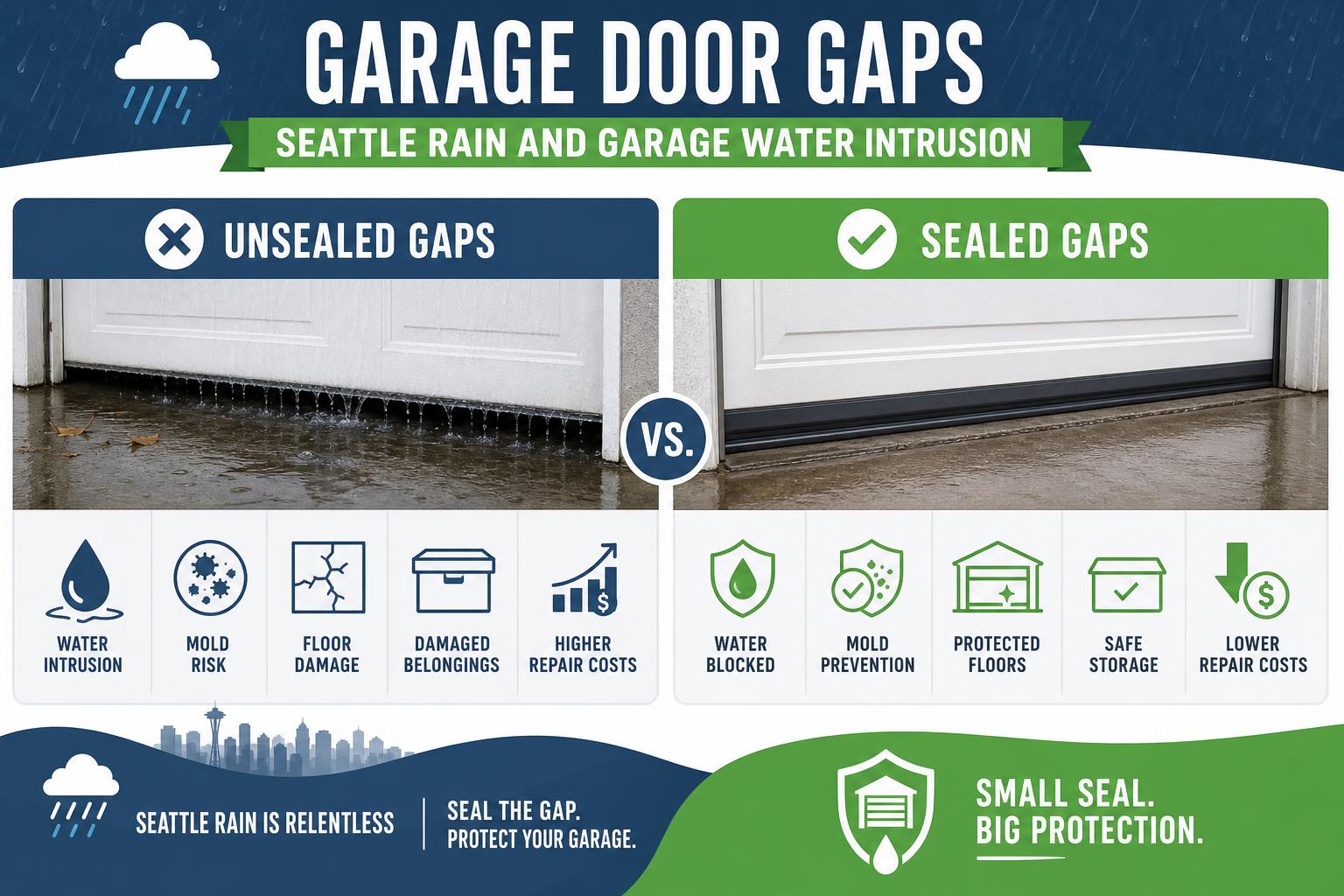
Seattle rain makes garage gaps more noticeable because wind, sloped driveways, and long wet periods push water toward weak spots. A gap that seems minor on a dry day can become a clear leak path during sideways rain.
For example, a garage in Fremont with a driveway sloping down toward the door may collect runoff at the threshold. If the bottom seal is worn or the concrete dips near one corner, water under garage door edges can move inside quickly. You might see a thin stream near the wall or wet storage bins near the entrance.
Start by figuring out whether water is coming through the door gap or flowing from somewhere else. After rain, look for the first wet point. If the wettest area is right at the bottom seal, the seal or threshold is likely involved. If water starts along a side wall, drainage outside the garage may be part of the problem.
Try these basic checks:
- Sweep debris from the threshold
- Inspect the bottom seal for tears
- Check side trim for curled edges
- Look for low spots in the concrete
- Watch how water moves down the driveway
- Keep stored items off the floor during wet months
Sometimes the best fix is a combination. You may need a new bottom seal, side weatherstripping, and better drainage outside the door. The goal isn't to make the garage airtight. It's to guide water away before it crosses the threshold.
FAQ
Garage door gap questions usually come down to whether the problem is sealing, alignment, or water flow. The right answer depends on what you see when the door is fully closed.
Use these answers as a starting point. If the door looks crooked, feels heavy, or has loose cables, don't treat it as a simple sealing job.
Why is There a Garage Door Gap at Bottom Level?
A garage door gap at bottom level usually means the bottom seal is worn, the floor is uneven, or the door isn't closing fully. For example, if daylight appears only in one corner, the concrete may dip there. If daylight runs evenly across the door, the seal may be flattened.
Can I Fix a Garage Door Side Gap Myself?
You can often replace worn side weatherstripping yourself if the door is straight and closes smoothly. But if the gap is wider at one end, or the door rubs the frame, the issue may be alignment. In that case, adjustment is safer than simply adding thicker trim.
Will a Larger Bottom Seal Stop Water Under Garage Door Edges?
A larger bottom seal can help when the floor is slightly uneven and the door is otherwise working well. It won't solve every water problem. For instance, if rainwater flows toward the garage from the driveway, you may also need drainage improvements or a threshold seal.
Is an Uneven Garage Door Seal Always a Serious Problem?
An uneven garage door seal isn't always serious, but it tells you something has changed. The seal may be worn, or the door may be sitting unevenly. If the door moves normally, start with inspection. If it jerks, tilts, or strains, stop using it and get help.
Conclusion
Garage door gaps are easiest to fix when you match the repair to the cause. Start by checking the seal, the shape of the opening, and where water or daylight appears. If the door is straight, weatherstripping may be enough. If it's crooked, noisy, or rubbing, get the door inspected. For Seattle homes, fixing garage door gaps before heavy rain can protect your garage and everything stored inside.