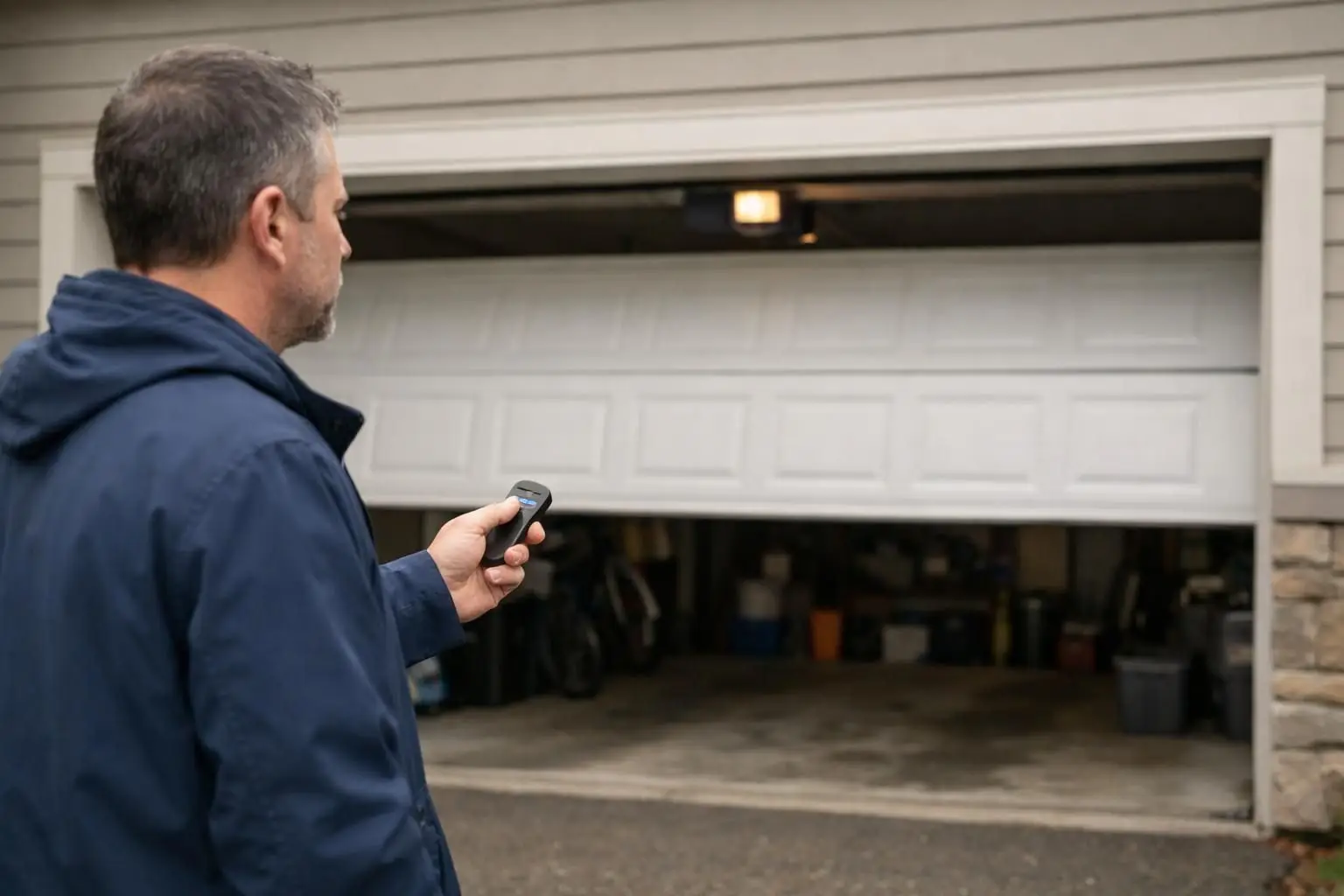
When your garage door won’t open, it usually comes down to one of three things: power, safety sensors, or a mechanical jam. And if you live in a damp, leaf-heavy area like the Pacific Northwest, grime on sensors and swollen wood trim can make small issues show up more often. The good news is you can do a few safe checks in minutes, without tools, to narrow down what’s happening. In this guide, you’ll learn simple garage door troubleshooting steps, what to try first, and the exact signs that mean it’s time to stop and call help.
Best for: Homeowners who need fast, safe checks to figure out why the door won’t move at all.
Not ideal when: The door is crooked, has a loud bang history, or feels unusually heavy to lift.
Good first step if: You want to rule out power, sensor, and lock issues before touching any moving parts.
Call a pro if: You suspect a spring, cable, or track problem, or the door won’t stay up once lifted.
Quick Summary
- Start by checking power, remote batteries, and the wall button to separate opener issues from door issues.
- Look at the safety sensors near the floor since dirt, bumps, and bright sun can stop closing or opening.
- If the door is stuck closed, check the manual lock and any ice, debris, or warped trim binding the bottom seal.
- Don’t force a heavy door upward since spring or cable damage can turn a small problem into a dangerous one.
- If the door is off-track, crooked, or making grinding sounds, pause and line up a repair visit.
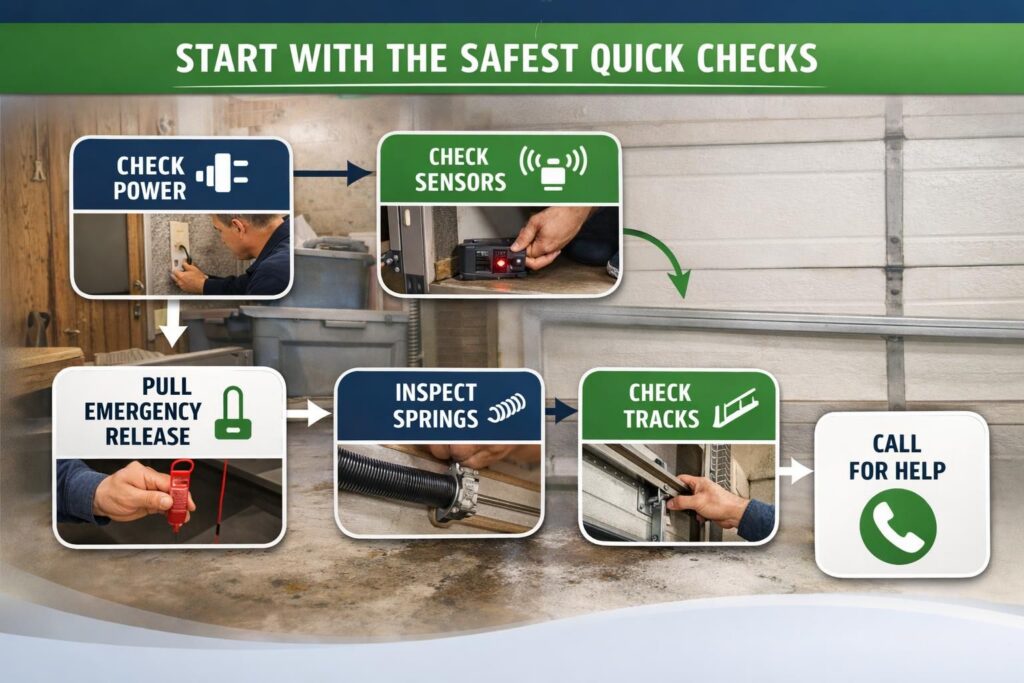
Start With the Safest Quick Checks (Power, Remotes, and Wall Button)
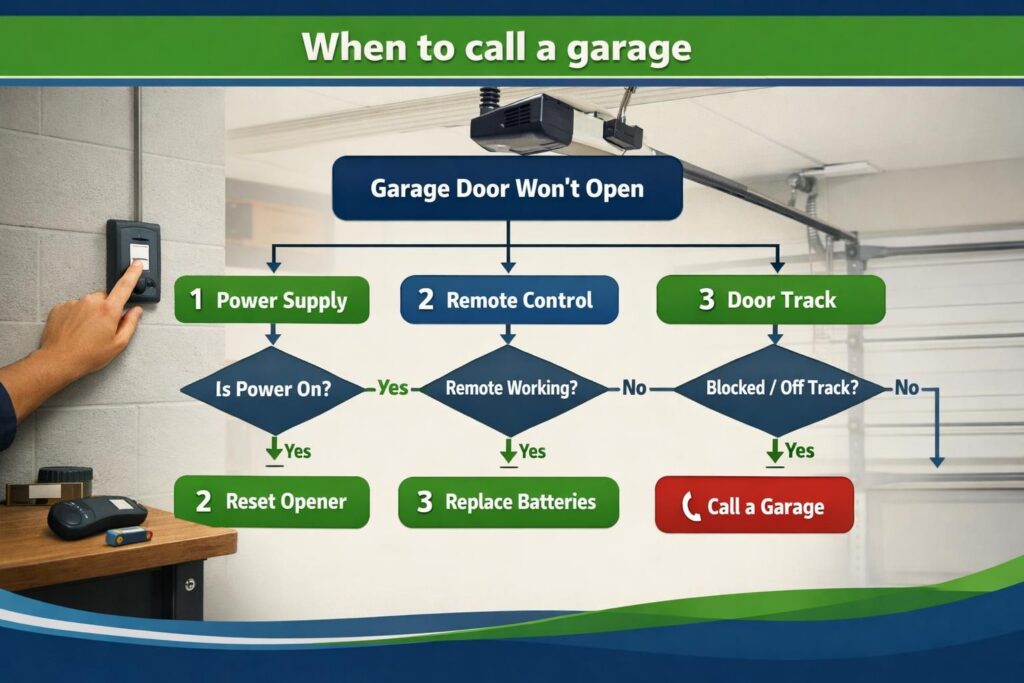
Confirm the opener has power and test the wall button first; jams and opener failures can look the same. Check: 1) the opener is plugged in, 2) the breaker/GFCI/reset (garages often share circuits), 3) the wall button, 4) the remote, then keypad. If the wall button works but the remote doesn’t, suspect a dead battery or re-pairing, not a broken door. A hum with no movement can mean the opener is pushing against a jam; silence points to power, wiring, or the opener. Prevent repeats with regular maintenance basics.
Check the Safety Sensors (They Stop the Door When Anything Looks “in the Way”)
If your opener has safety sensors, misaligned or dirty sensors are one of the most common reasons a garage door won’t open or won’t close correctly. Safety sensors are the small units near the bottom of the tracks that “see” each other with an invisible beam. If that beam is blocked, the opener refuses to move the door in a way that could crush something.
Do a quick sensor check:
- Look for blinking sensor lights. Many setups show a steady light when aligned and a blinking light when not.
- Wipe both sensor lenses with a soft, dry cloth.
- Make sure both sensors point directly at each other. A bumped trash can is enough to knock one out of line.
- Check for spider webs, mud, or wet leaves stuck near the sensor bracket.
For instance, after a windy night in a neighborhood with lots of street trees, a small leaf can land right where the sensor beam runs, and suddenly you’re asking, “why won’t my garage door open?” even though nothing is actually broken.
If Your Garage Door is Stuck Closed, Check Locks, Ice, and Bottom Seal Binding
If your garage door stuck closed, what to do first is check for simple holds at the bottom and confirm it isn’t manually locked. Look for a handle lock with slide bars engaged in the track. Inspect the bottom seal; it can stick to concrete after rain or cold. Clear ice, stones, or packed leaves along the threshold. Check for swollen wood trim pinching the door edge. If the seal is frozen, the opener may pull, sense resistance, and reverse; from inside, gently break the seal by hand. Don’t keep cycling the opener. For recurring drafts or water, see garage sealing and bottom seals.
Use the Manual Release to Separate an Opener Issue From a Door Issue
Use the manual release to test the door without the opener. The red cord disconnects the door from the trolley so you can lift by hand. Do it safely: start with the door fully closed, unplug the opener, pull the cord straight down, then lift slowly with both hands, clear of pinch points. If it lifts smoothly and stays about halfway open, the door hardware is likely fine and the opener is suspect. If it’s extremely heavy, won’t move, or slams down, suspect springs, cables, or track issues. Reduce future strain with extend opener lifespan.
When to Call a Garage Door Repair Company (and What to Tell Them)
You should call a garage door repair company when the door is heavy, crooked, off-track, or making harsh mechanical noises. Those clues usually mean a spring, cable, roller, or track problem, and that’s where injuries and bigger damage happen.
When you call, you’ll get faster, more accurate help if you share a few specifics:
- Does the opener run but the door doesn’t move, or is it silent?
- Is the door stuck closed or stuck open?
- Did you hear a bang, snap, or grinding sound?
- Are any cables loose, or is the door uneven?
- Can you lift it manually, and does it stay up?
For instance, saying “the motor hums, the door lifts two inches, then stops, and the left side hangs lower” paints a clear picture of a likely hardware problem, not a remote issue.
Related service and next steps
Read the battery-backup and reconnection safety guidance. Stop using a heavy, crooked or unstable door; do not adjust springs or cables.
Conclusion
If your garage door won’t open, start with power and controls, then check sensors, locks, and anything binding the bottom seal. Use the manual release to tell an opener issue from a door hardware issue. And if the door is heavy, crooked, off-track, or making sharp noises, stop troubleshooting and call a pro so the fix stays safe and controlled.