Garage door panel damage is one of those problems that looks “small” until the door won’t seal, starts rubbing, or gets loud. And if you’re trying to budget, the big question is garage door panel replacement cost, plus whether it’s even worth doing one section versus the full door. If you live around the Seattle area, the mix of moisture, temperature swings, and salty air near the water can also make older doors rust or swell in ways that change what “simple” means. In this guide, you’ll learn what drives cost, what labor usually includes, and how to decide between repair, one-panel replacement, or a full door swap.
Best for: Homeowners with a mostly solid door and damage limited to one or two matching sections with straight tracks.
Not ideal when: Your door is old, discontinued, rotting, badly rusted, or the frame is bent from an impact.
Good first step if: You can identify which panel is damaged and confirm the door still opens smoothly and evenly.
Call a pro if: The door is heavy, off-track, won’t close flat, or you suspect spring or cable problems.
Quick Summary
- Panel replacement is usually about restoring structure and alignment, not just looks, because one bent section can throw off the whole door.
- Whether you can replace one panel depends on the door style, whether the panel still exists, and if the hinges and tracks stayed straight.
- Labor often includes bracing the door, moving hardware, and adjusting the door so it seals and runs smoothly again.
- In wet coastal climates, hidden rust at hinges and end stiles can raise complexity even if damage looks minor.
- If multiple sections are compromised or mismatched, a full door replacement can be the cleaner, longer-term fix.
What “Panel Replacement” Actually Means (and What it Doesn’t)
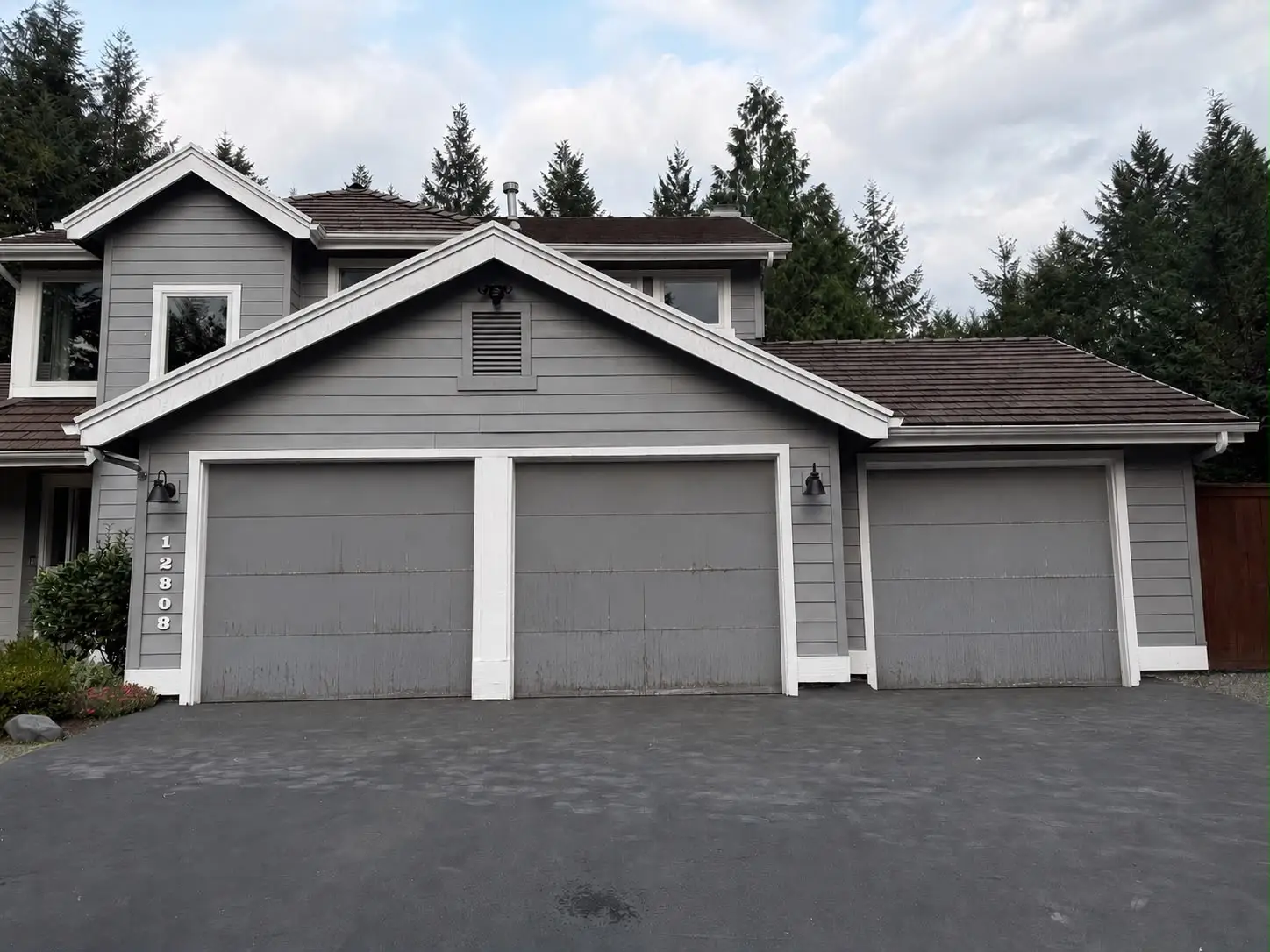
Garage door panel replacement means swapping one horizontal section of a sectional door while keeping the rest of the door and its moving parts. Most Seattle homes have sectional doors: stacked sections joined by hinges that roll on tracks. One “panel” is one of those structural sections.
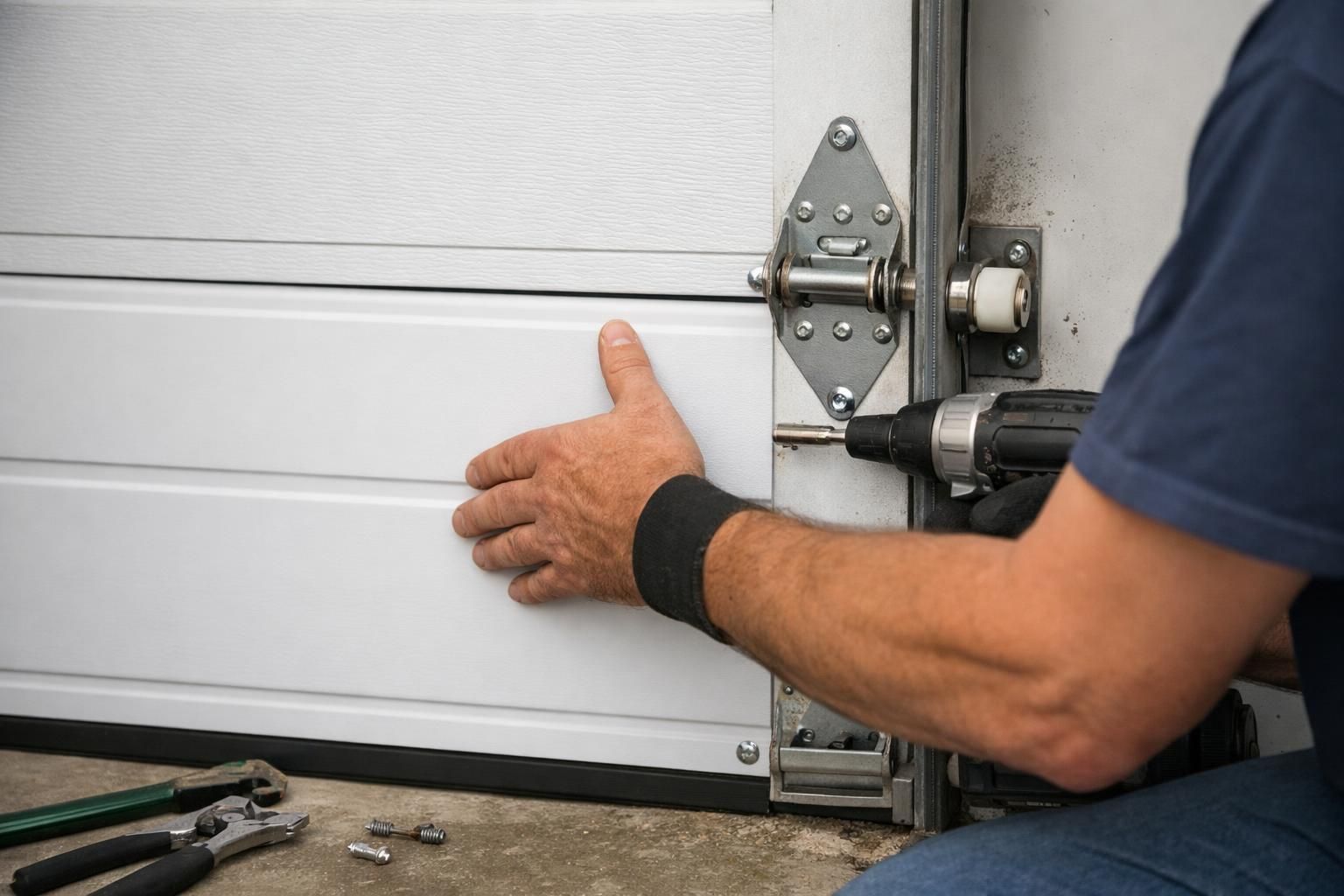
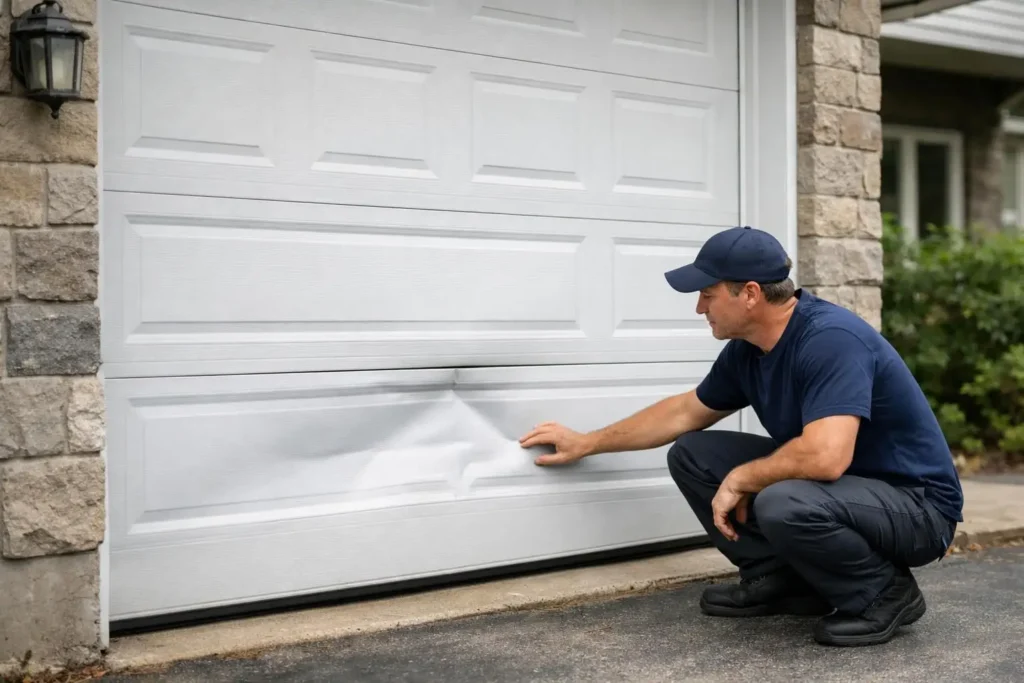
It does not mean simply “patching a dent.” If damage is purely cosmetic, reinforcement or reshaping might be possible. But once metal is creased, wood is split, or a section bows, replacement is usually the reliable fix because that section controls how rollers sit in the track and how the door seals.
A light bumper hit on the bottom section may still let the door open, yet the bottom seal may no longer contact the slab evenly, letting wind-driven water in. Windows, trim, and overlays are add-ons, not panels.
What Drives Garage Door Panel Replacement Cost in Real Life
Garage door panel replacement cost mostly comes down to compatibility, door condition, and the time needed to make the door run correctly again. The panel price matters, but the bigger issue is that similar-looking doors can have different hinge spacing, thickness, or insulation based on brand and age.
Main cost drivers include door age and model availability (discontinued sections are hard to match), material type (steel can rust, wood can swell or rot), insulation (thicker, heavier panels can affect balance), and finish/design details like grooves, overlays, or window cutouts. The severity of the hit also matters: a “dent” can still twist the hinge line or end stiles, adding adjustment work.
Hidden corrosion and stuck fasteners can increase labor during removal. To compare against a full swap, see what full replacement involves.
Can You Replace One Panel of a Garage Door (and When it Works)
Yes, you can replace one panel of a garage door if the other sections are straight, the tracks are true, and you can source a matching panel built for your exact door. That “exact” part matters because hinge locations, tongue-and-groove joints, and thickness must line up for the door to fold and roll smoothly.
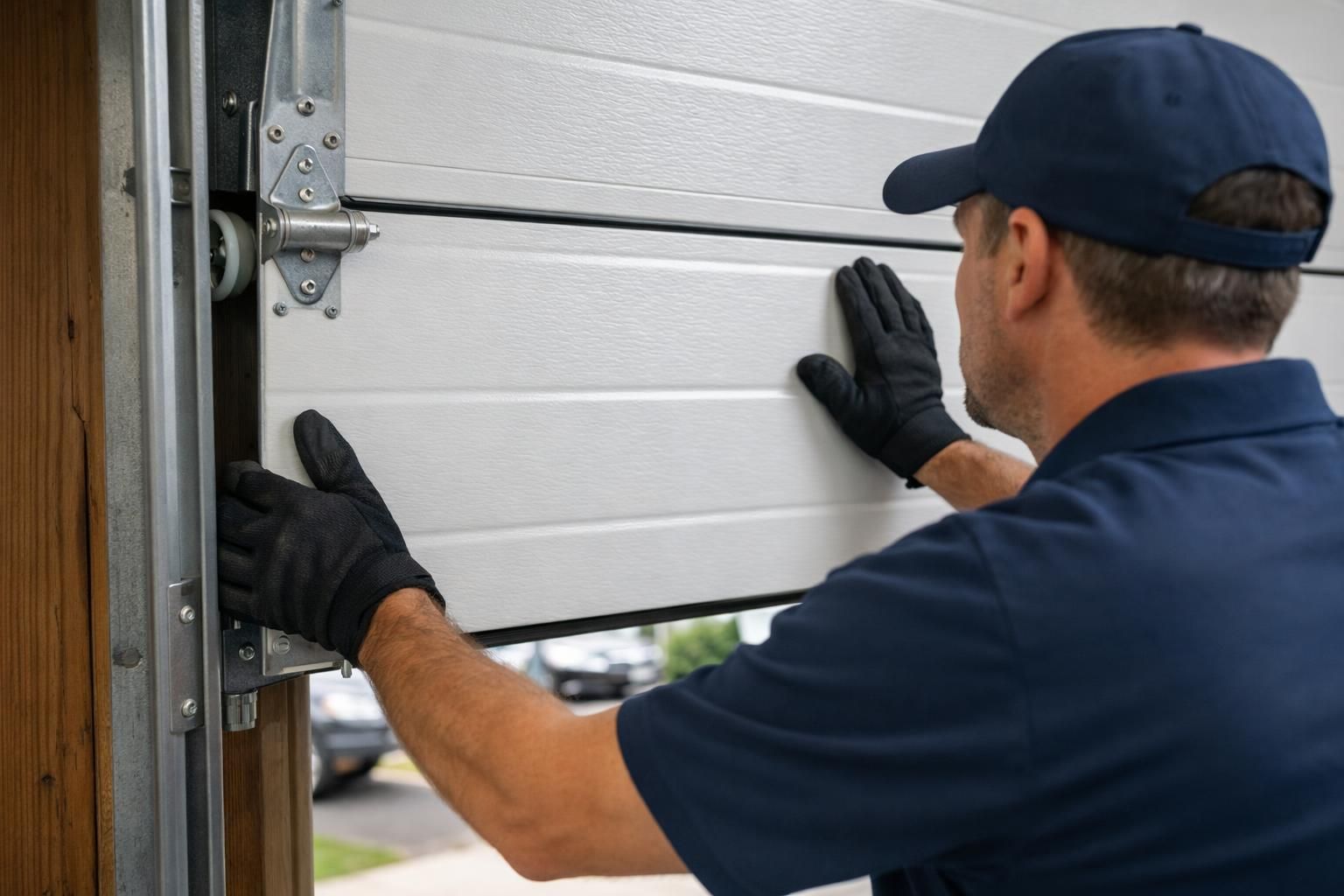
A one-panel replacement works best when the damage is limited to one section, the door is relatively new or still supported, and the impact didn’t bend tracks or the door’s side structure. If the door still opens without binding, that’s a good sign.
In Seattle, moisture can swell wood doors and rust steel hinges, so worn hardware you need to transfer can turn a “swap” into a tune-up. Different door styles also change the plan. For a baseline, see garage door types explained.
Is it Cheaper to Replace a Panel or the Whole Door?
Replacing one panel is usually cheaper when you can get a clean match and the rest of the door is solid. Replacing the whole door is often smarter when damage is spreading, the door is aging, or matching parts are hard to find. Think of a sectional door as linked boards: swapping one works if everything else is straight and tight.
Replace a panel if you have one damaged section, the door runs smooth and quiet, and the model is still supported. Replace the whole door if multiple sections are dented, rust is bubbling at seams, the door is sagging, or the design is discontinued. Consider upgrading if you want better insulation, quieter operation, or windows and the door is near end-of-life.
If you’re unsure, signs it’s time to replace helps.
Garage Door Panel Replacement Labor: What You’re Paying for
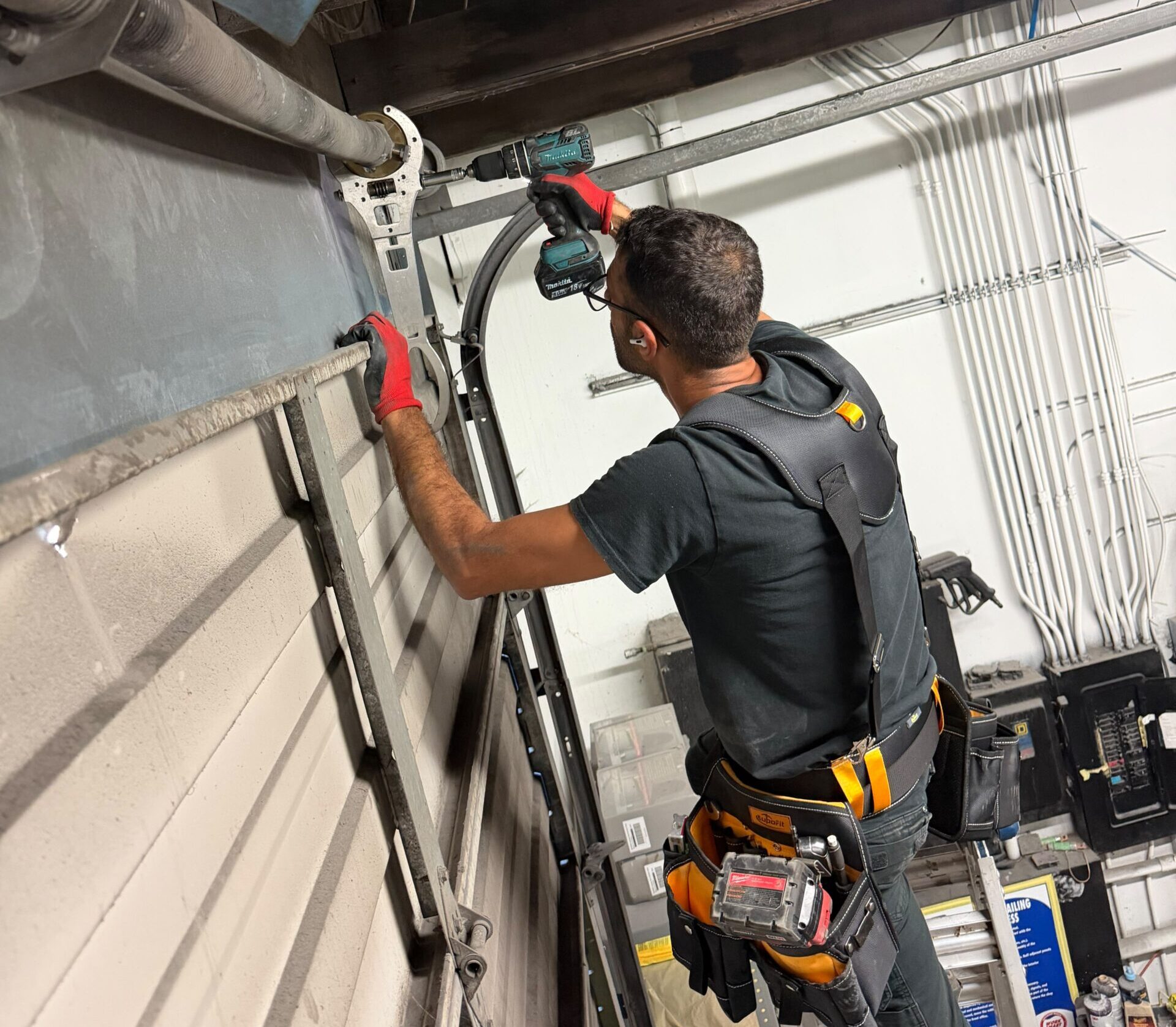
Garage door panel replacement labor is the skilled time needed to control a heavy door, transfer hardware, and restore alignment so the door seals and runs safely. A section doesn’t simply pop out. Hinges, rollers, struts, brackets, and sometimes bottom fixtures must be removed, moved, and reset precisely.
Typical steps: secure the door so it can’t move, disconnect the opener, remove hinges and rollers from the damaged section, install the new section, reattach hardware and any reinforcement struts, check track alignment and roller travel, then test and fine-tune so the door sits flat on the floor.
Bottom-panel work often includes resetting the bottom seal to match a slightly sloped Seattle driveway. Labor can jump if cables or springs are involved. Read dangers of spring DIY before tinkering.
Seattle-specific Factors That Can Change the Outcome
In Seattle, moisture, corrosion, and uneven settling can turn a panel replacement into more than a cosmetic fix. The door still has to seal against wind-driven rain, and small alignment issues can become drafts, mildew smells, or water lines.
Common local issues: rust at hinge points (especially near the bottom), swelling or rot on wood doors in shaded driveways, concrete that isn’t level (affecting the bottom seal), faster corrosion near salt air, and grit or tree debris in tracks that makes travel rough. Evergreens can pack needles along the threshold; if the seal sits uneven after a swap, debris can channel water under the door during hard rain.
If the main problem is gaps and leaks, how seals stop leaks is the next read.
Conclusion
The right fix depends on what’s damaged, what parts are available, and whether the door still runs straight. If you’re budgeting garage door panel replacement cost, focus on matchability, hardware condition, and the labor needed to re-align the door, not just the price of the section. Your best next step is to inspect the tracks, hinges, and bottom seal, then decide if one panel is realistic or if a full replacement is cleaner.