Before leaving for summer travel, your garage door should be part of your home security checklist. A weak opener code, visible remote, poor lighting, loose emergency release, or damaged door hardware can make the garage an easier target while the house is empty.
The goal is not to overcomplicate things. A few simple checks before you leave can help protect your garage, vehicles, tools, storage, and the interior access point to your home.
Quick Security Checklist Before You Leave
Before your trip, check these items:
- Close and fully latch the garage door.
- Remove garage remotes from parked cars.
- Turn on vacation mode or lock mode if your opener has it.
- Check that the door closes evenly without gaps.
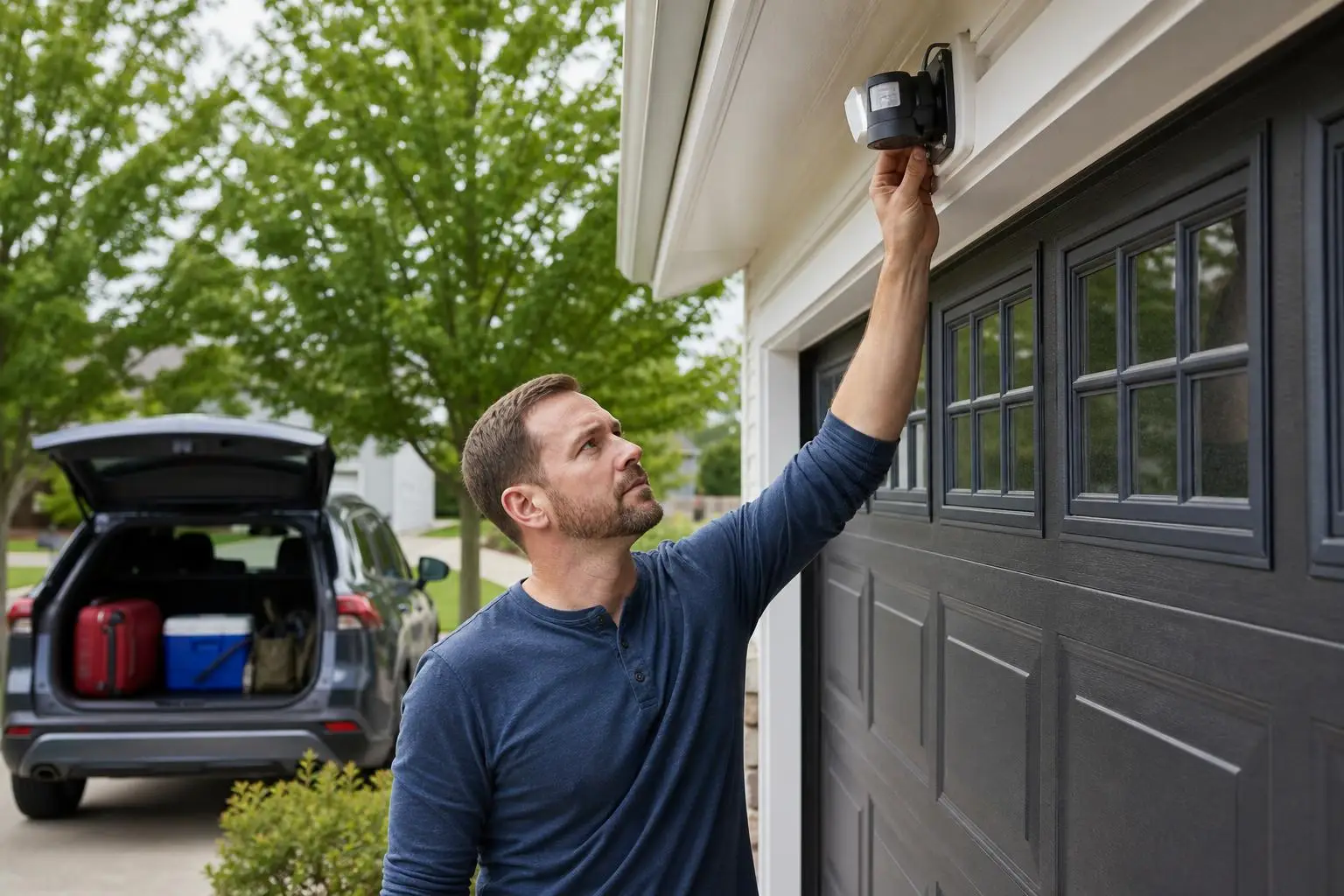
- Test exterior lighting around the garage.
- Confirm smart opener alerts are working.
- Lock the interior door between the garage and home.
- Ask someone you trust to check the property if you’ll be gone for a while.
Why Garage Doors Need a Vacation Security Check
A garage door needs a vacation security check because it’s one of the largest movable entry points in your home. If it doesn’t close flush to the ground, someone may see a gap, reach inside, or notice that the home is unattended. Around Seattle neighborhoods with alleys, detached garages, and older homes, this matters even more because garage access may be less visible from the street.
Before you leave, watch the door complete a full open and close cycle. A cycle is one full movement up and one full movement down. Listen for grinding, shaking, or a hard slam at the floor. Those sounds can mean the door is struggling. For example, if your garage in Ballard leaves a small gap on one side after closing, wind and rain aren’t the only concerns. That uneven gap may also show that the door isn’t secure. If weather exposure is part of the issue, read about Seattle weather protection before your next maintenance check.
Check the Opener and Remote Controls
Your opener and remote controls should work predictably before you leave, because unreliable controls can leave the door open without you realizing it. The opener is the motorized unit that lifts and lowers the garage door. The remote is the small handheld device that sends the open or close signal.
Test each remote from the driveway. Then test the wall button inside the garage. If one remote works only sometimes, replace the battery or stop using it until you know what’s wrong. For example, if a remote in your Queen Anne townhouse only works after several clicks, don’t toss it in a travel bag and hope for the best. A weak remote can make you think the door closed when it didn’t. You can also compare symptoms with remote troubleshooting basics if the problem keeps happening.
Also check the keypad if you have one. A keypad is the number pad outside the garage that opens the door with a code. Change old codes that former neighbors, contractors, dog walkers, or guests may know. Don’t use easy codes like repeated numbers or your house number. In dense Seattle blocks, where service people and visitors may come and go, a stale code is an avoidable risk.
Use Vacation Mode or Smart Alerts
Vacation mode is useful because it temporarily blocks normal remote access while keeping the garage door closed. Many openers have a lock button on the wall control. When it’s active, handheld remotes may not open the door. This is often called garage door vacation mode.
Smart alerts add another layer. A smart garage door opener connects to Wi-Fi, which is your home’s wireless internet, and can send a phone notification when the door opens or closes. For example, if you’re hiking near Mount Rainier and get an alert that the door opened at noon, you can ask a neighbor to check. If you’re comparing features, Wi-Fi opener benefits can help you understand what smart controls actually do.
Smart garage door opener security also depends on your account habits. Use a strong password. Turn on two-step verification if the app offers it. Two-step verification means the app asks for a second proof, such as a phone code, before allowing access. And don’t share app access casually. If someone only needs temporary entry, remove their access after the job is done.
Secure the Emergency Release
The emergency release should be protected because it lets the door disconnect from the opener during a power outage or mechanical problem. It’s usually a red cord hanging from the opener rail. Pulling it allows the door to move by hand.
That cord is important for safety, so don’t remove it. But make sure it isn’t easy to reach from outside through a top gap, broken window, or loose weather seal. For example, if your older garage in West Seattle has a flexible top panel and a visible release cord near a window, it’s worth asking a technician about safer positioning or shielding. Don’t tie the cord in a way that blocks emergency use. The goal is to reduce easy tampering while keeping the release functional.
If the door is hard to lift after you pull the release, stop. Heavy garage doors are balanced by springs, which are tightly wound metal parts that hold dangerous tension. Trying to adjust them yourself can cause serious injury. For spring-related concerns, review DIY spring repair risks before touching anything.
Do Not Leave Remotes in Parked Cars
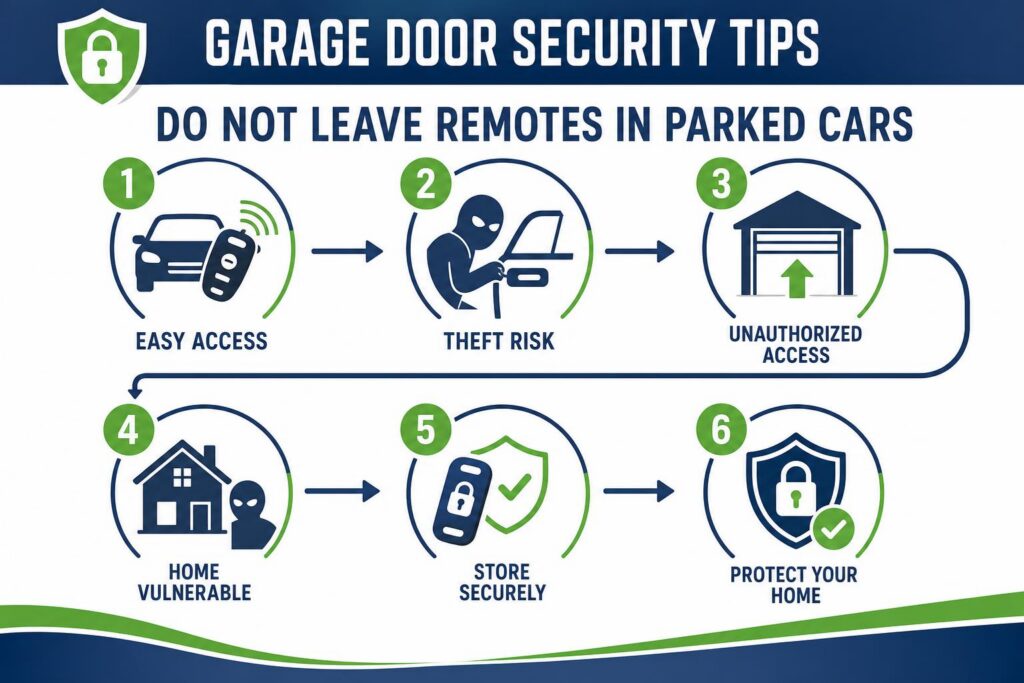
Leaving a garage remote in a parked car is risky because the remote can become a direct key into your home. This is especially true if the car is parked outside, at an airport lot, or in a driveway while you’re gone.
Before your trip, remove every remote from every vehicle. Put them inside the house in a drawer. If your car has a built-in garage button, check your opener manual or wall control settings to see whether vacation mode disables it. For example, if you park at Seattle-Tacoma International Airport with a registration card in the glove box and a garage remote clipped to the visor, someone could connect your address with access. That’s a simple risk to avoid.
If a remote is missing, erase old remote codes from the opener and reprogram only the remotes you still use. Reprogramming means teaching the opener which remotes are allowed to operate it. This sounds technical, but many openers use a simple learn button. If you’re unsure, ask for help instead of guessing.
Inspect Windows
Inspect garage windows before travel because they can reveal valuables and create an easy target if they are cracked, loose, or uncovered. Look from the outside during the day to see whether bikes, tools, storage bins, or entry doors are visible through the glass. Add curtains, privacy film, or simple coverings if someone can see too much.
Also check that each window locks securely and that the frame is not rotted or separated from the wall. These garage door security tips work best when windows are treated as access points, not just sources of light. If a pane is broken, repair it before leaving town.
Inspect Windows, Side Doors, and Lighting
Garage windows, side doors, and lighting matter because security isn’t only about the main overhead door. A weak side door or dark corner can make the garage easier to approach unnoticed.
Walk around the garage in daylight and again at night. Check whether windows reveal tools, bikes, ladders, or storage shelves. Close blinds or add simple coverings if valuables are visible. For example, a garage near Green Lake with street-facing windows may show paddleboards, e-bikes, or boxes stacked near the door. That’s an invitation you don’t need to send. If you’re considering a door style with glass, black garage doors with windows explains design tradeoffs to think through.
Look for these quick fixes:
- Replace burned-out bulbs near the garage.
- Aim motion lights toward walkways and side doors.
- Lock the service door between the garage and house.
- Move ladders away from windows and fences.
- Check that weatherstripping doesn’t leave wide gaps.
Weatherstripping is the rubber or vinyl seal around the door edges. It helps block rain, drafts, and visibility gaps. In Seattle’s damp climate, worn seals can crack or flatten over time.
When a Repair Improves Security
A repair improves security when a worn or damaged part keeps the garage door from closing, locking, or reversing correctly. Security starts with basic function. If the door can’t sit square in the opening, smart alerts and strong passwords won’t solve the core problem.
Common repair-related warning signs include a crooked door, frayed cables, loud popping, slow opener movement, or a door that reverses for no clear reason. For example, if your Capitol Hill garage door starts down, touches the floor, then pops back up, the opener may think something is blocking it. That can leave the garage open after you drive away. You can compare symptoms with opener failure signs if the opener seems inconsistent.
Don’t wait until the night before your flight to test the door. If you hear a new sound or see a loose part, schedule help early. For Seattle homes with older detached garages, small track or roller problems can get worse when the door sits unused for days.
Pre-trip Garage Door Checklist
A simple checklist helps you secure garage door before vacation without rushing or forgetting small details. Do it a day or two before you leave, then do one final door-close check when you head out.
Use this order:
- Close the garage door and confirm it touches the floor evenly.
- Lock any manual slide lock if your opener setup allows it safely.
- Remove remotes from parked cars.
- Turn on vacation mode if your opener has it.
- Confirm smart alerts are working on your phone.
- Change old keypad codes if too many people know them.
- Cover garage windows that show valuables.
- Lock the interior door from the garage into the home.
- Test exterior lights near the garage.
- Ask a trusted neighbor to report anything unusual.
For example, if you’re leaving your Fremont home for a long weekend, run this checklist before loading the car. Then, after you pull out, pause across the street and watch the garage door close fully. That last glance catches simple mistakes.
Conclusion
The best garage door security tips are simple: make sure the door closes fully, control remote access, use vacation settings, protect windows, and fix worn parts before you travel. If something looks loose, crooked, or unreliable, don’t ignore it. A quick check now can help your Seattle home stay safer while you’re away.
Need Garage Door Security Help Before Travel?
If your garage door does not close evenly, leaves gaps, shakes, reverses, or has unreliable opener controls, schedule service before leaving town.
Dan’s Garage Door Services can inspect garage door openers, rollers, tracks, sensors, weather seals, remotes, and door balance for homeowners across Seattle, Burien, Renton, Bellevue, Tacoma, Auburn, and nearby areas.