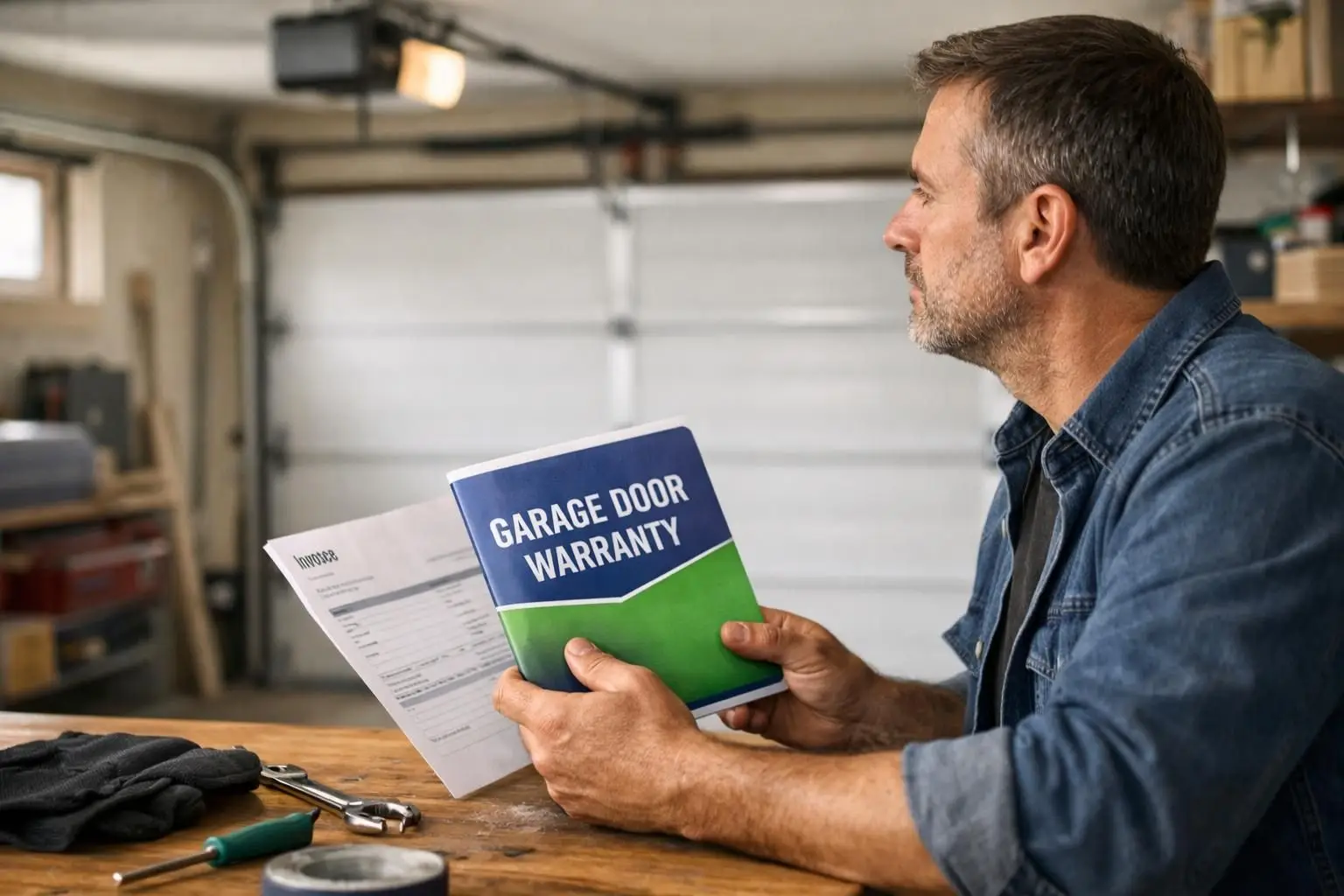
A garage door warranty is your written promise from a manufacturer or installer about what they’ll fix if something goes wrong. But the tricky part is that “garage door” can mean the door panels, the moving hardware, and the opener, and each can have different rules. If you live in a damp, salty-air area near the water or deal with constant rain like many neighborhoods in the Pacific Northwest, those rules matter even more because moisture speeds up rust and swelling. You’re about to learn what a typical warranty covers, what it doesn’t, what voids it, and how to keep your paperwork and maintenance simple.
Quick Summary
- A warranty can cover different things: door sections, hardware, paint or finish, and the opener may be separate.
- “Coverage” usually means defects in materials or workmanship, not normal wear from daily use or weather exposure.
- Most denied claims come from missing maintenance, DIY changes, or damage caused by impacts and misalignment.
- A service plan is ongoing tune-ups, while a warranty is a limited promise to fix certain failures.
- Keeping records, photos, and a basic maintenance routine makes warranty claims smoother.
What a Garage Door Warranty Typically Covers (and What it Usually Doesn’t)
A garage door warranty typically covers defects in materials or workmanship for specific parts, for a defined time. Terms are usually split by category, so panels, hardware, finish, and the opener may each have different coverage. The opener is often covered by the opener manufacturer, not the door brand.
Covered issues usually look like a part failing early without outside damage. Example: a new panel cracking at a seam with no dent or impact mark may be treated as a manufacturing defect. By contrast, a dent from a car bumper, ball, or ladder is considered damage, not a defect.
Common exclusions matter just as much: normal wear and tear (rollers, bearings, seals), cosmetic changes (fading, minor scratches), corrosion in coastal or high-moisture areas unless explicitly included, storm/flood impacts, and problems caused by poor maintenance or incorrect adjustments. If grit and water cause binding at the bottom of the tracks, it’s often a maintenance issue, not a warranty claim.
How Long is a Garage Door Warranty, and Why the Timeline Can Vary
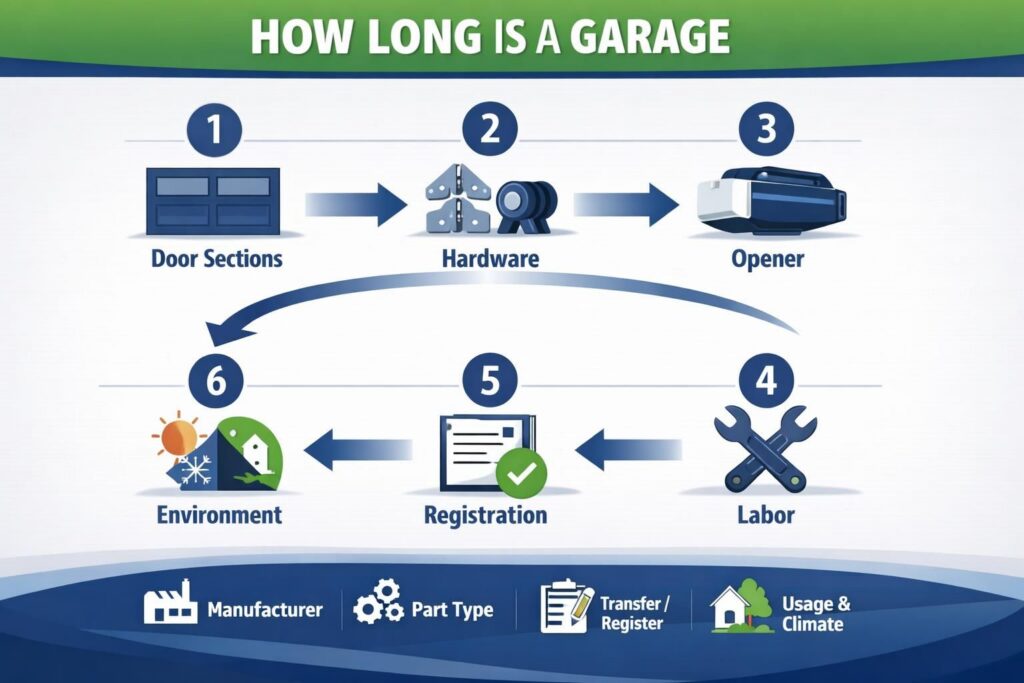
Garage door warranty length depends on the component and who backs it. Most warranties are split by category, not one blanket term.
Manufacturers often cover door sections longer than wear items like rollers, springs, and electronics. Installers may offer a separate labor warranty that covers the work to replace covered parts. The opener usually has its own warranty through the opener brand, even if bundled with the door.
This split matters: a panel may still qualify for parts coverage while labor coverage has expired, so you pay for installation. Timelines vary by cycles, environment, and residential versus commercial terms. For examples, see common door types.
What Voids a Garage Door Warranty (Common Real-life Triggers)
Warranties are often voided by changes, misuse, or neglect the maker can’t control. Denied claims usually trace back to a preventable cause.
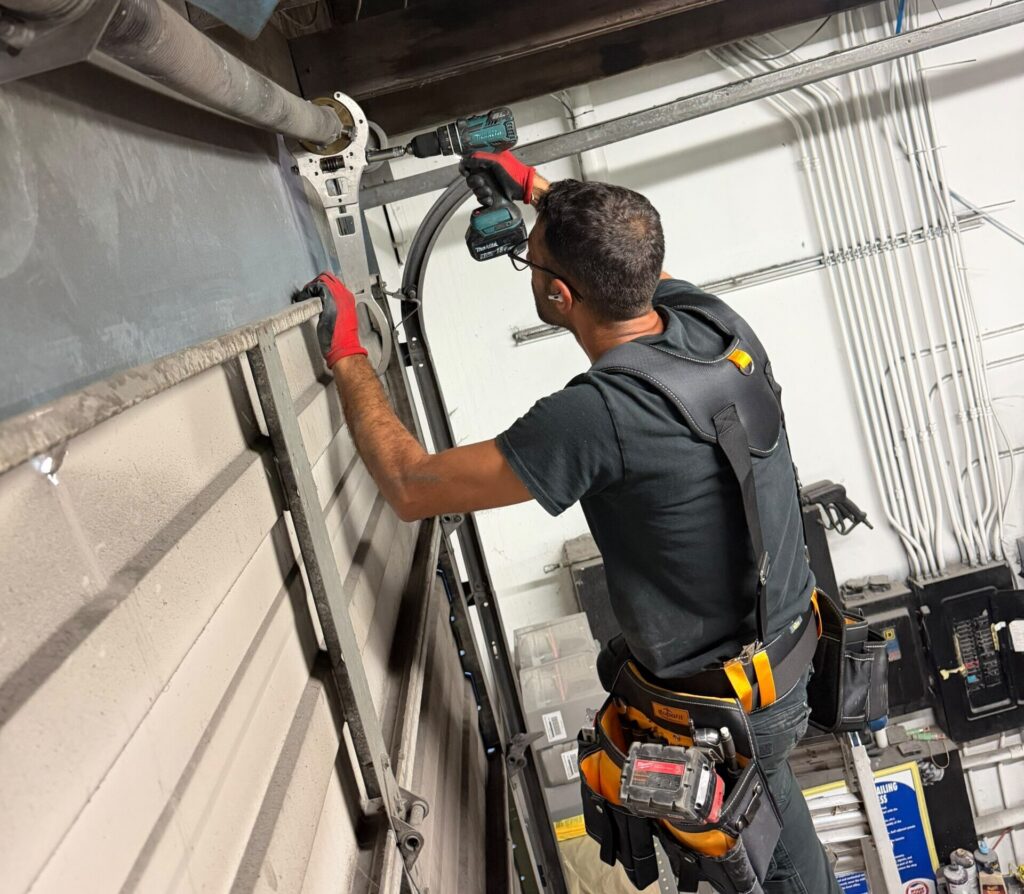
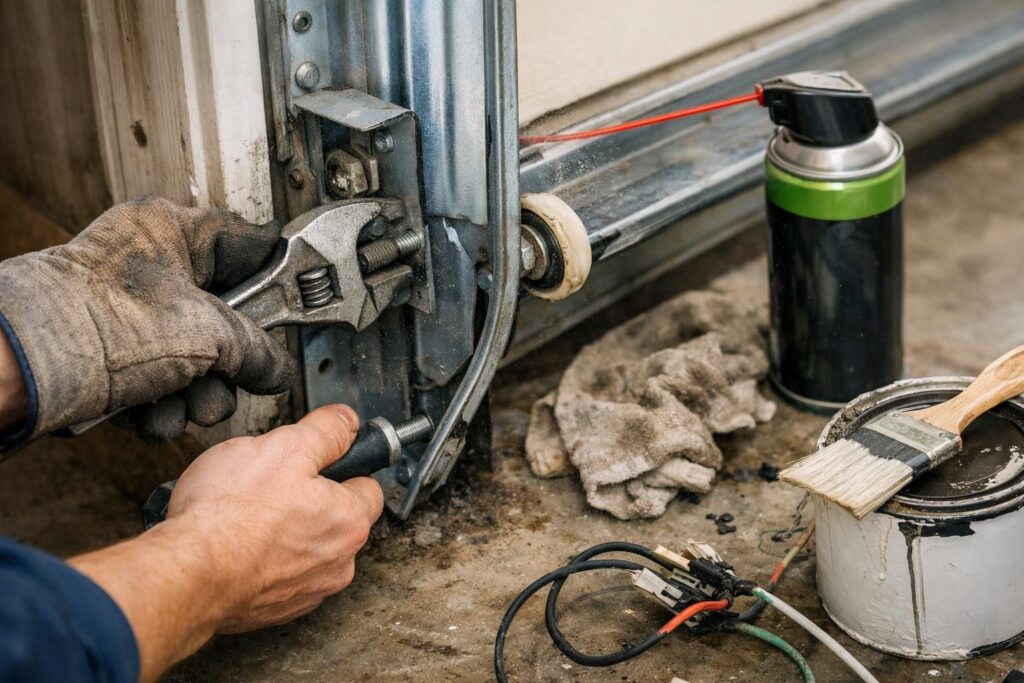
Common triggers include DIY spring or cable work, other safety-critical adjustments, using non-approved parts (off-brand springs, mismatched rollers, incorrect hinges), disabling opener safety sensors, and damaging the finish with improper paint or harsh cleaners. Skipping routine upkeep can also void coverage when a small alignment issue becomes track damage or an opener failure.
A typical scenario: a spring breaks, the homeowner keeps running the opener, and the added strain bends the rail or burns the motor. Even if the spring might be covered, the opener damage may be ruled misuse. Before risky repairs, read why springs are risky.
Garage Door Warranty vs Service Plan: What’s the Difference in Practice?
A warranty is a limited promise to correct covered failures; a service plan is paid maintenance meant to prevent failures. In practice, a warranty reacts after something goes wrong, while a plan reduces wear so problems don’t cascade into bigger repairs.
Warranties usually apply to defects or installation errors, not aging parts. Service plans typically include inspection, lubrication, alignment checks, hardware tightening, and minor adjustments. Example: if the door gets noisier and starts shaking, a service visit can correct track alignment and replace worn rollers before the opener is overstressed. A warranty claim may only apply after a part breaks, and it can be denied if the break is judged normal wear.
Choosing is simple: with a new door, learn the warranty and do basic upkeep. With an older or heavily used door, a plan can cost less than repeated repairs. In coastal or winter-grime areas, maintenance is especially valuable. See regular maintenance basics.
How to Make a Warranty Claim (a Simple Step-by-step Checklist)
Fast claims depend on proof: what you bought, when it was installed, and what failed. Gather details before you call so the provider doesn’t have to guess while your door is stuck.
Checklist:
- Log calls and emails, plus any next steps they request.
- Collect paperwork: invoice, warranty booklet, and emailed receipts.
- Record symptoms: what changed, when it started, and any unusual noises.
- Take photos: model/serial label, the failed part, and wide shots of the door and tracks.
- Stop using the door if it binds, jerks, or looks unsafe.
Contact the right party: installer for labor or installation issues, manufacturer for door defects, and opener brand for opener issues.
Mistakes That Shorten Warranty Life (and Easy Habits That Protect It)
Protect your warranty with consistent, basic care. Most warranty headaches start when early warning signs are ignored until multiple parts are affected.
Mistakes that commonly shorten warranty life include skipping lubrication, repeatedly slamming the door manually, letting torn weather seals invite water and grit into the track area, and mixing incompatible parts during repairs (for example, mismatched rollers side to side). These issues can look like “defects” later, but they’re often classified as wear, misuse, or poor maintenance.
If the door squeals during a cold, wet week, it’s usually friction at rollers and hinges, not a manufacturing flaw. Follow a simple routine like lubricate tracks and rollers to reduce strain.
Weather protection also helps. Proper bottom and perimeter seals limit water intrusion that leads to rust and binding. For options and fit guidance, see weatherstripping options.
Conclusion
A garage door warranty is only useful when you know which parts are covered, how long coverage lasts, and what actions can cancel it. Keep your invoice, warranty documents, model labels, photos, and basic maintenance notes in one place.
If the door is off-track, the spring or cable looks damaged, or the opener is straining, stop using the system and schedule help before the problem causes more damage. Good records and safe decisions make warranty questions much easier to handle.