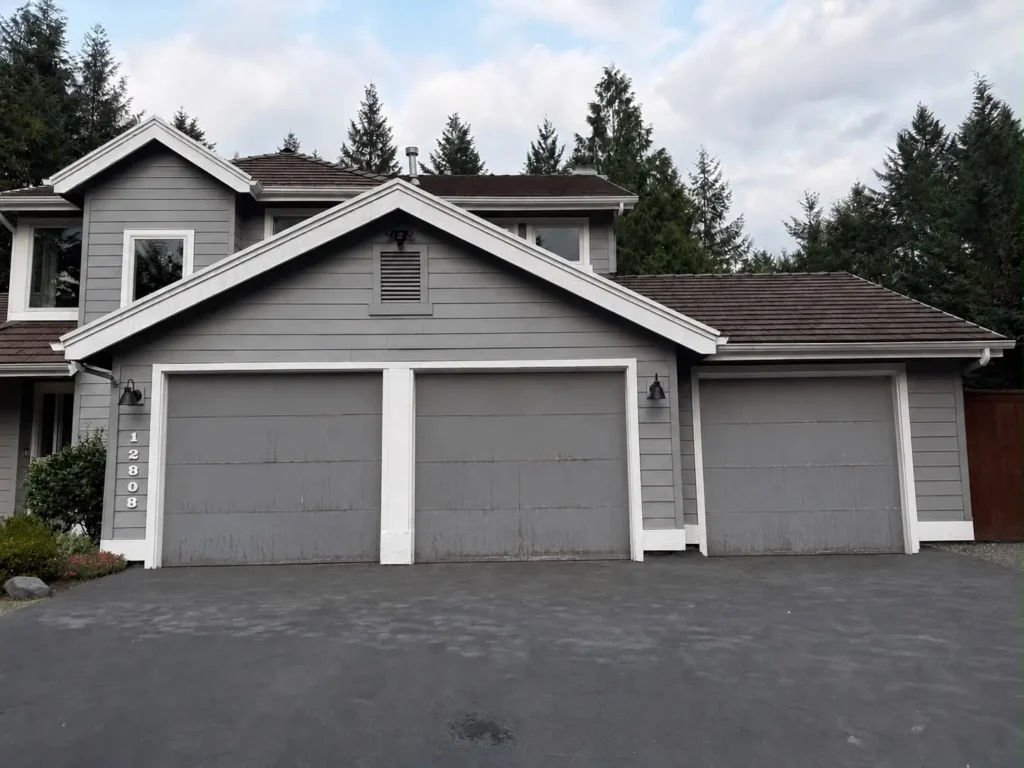
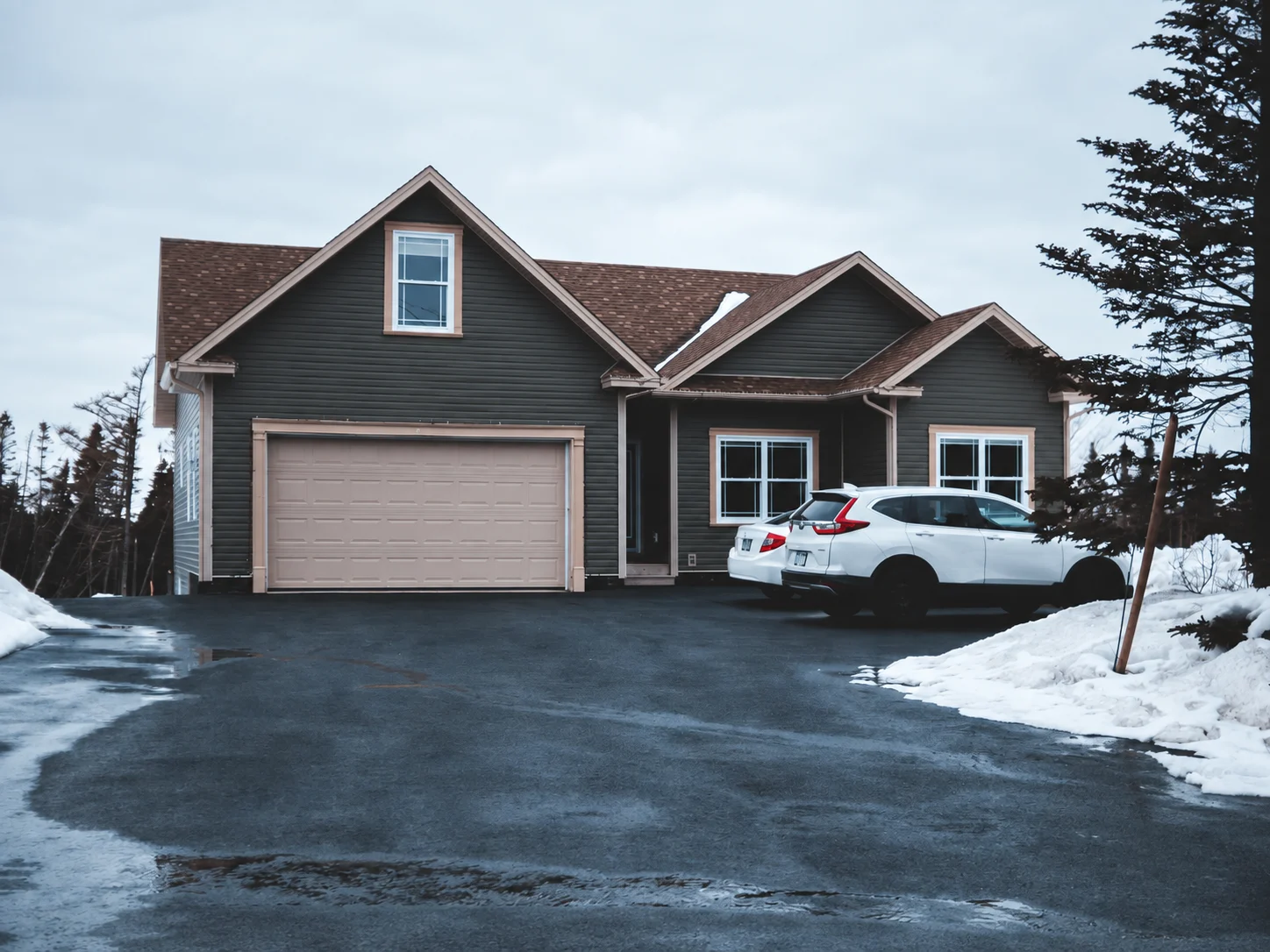
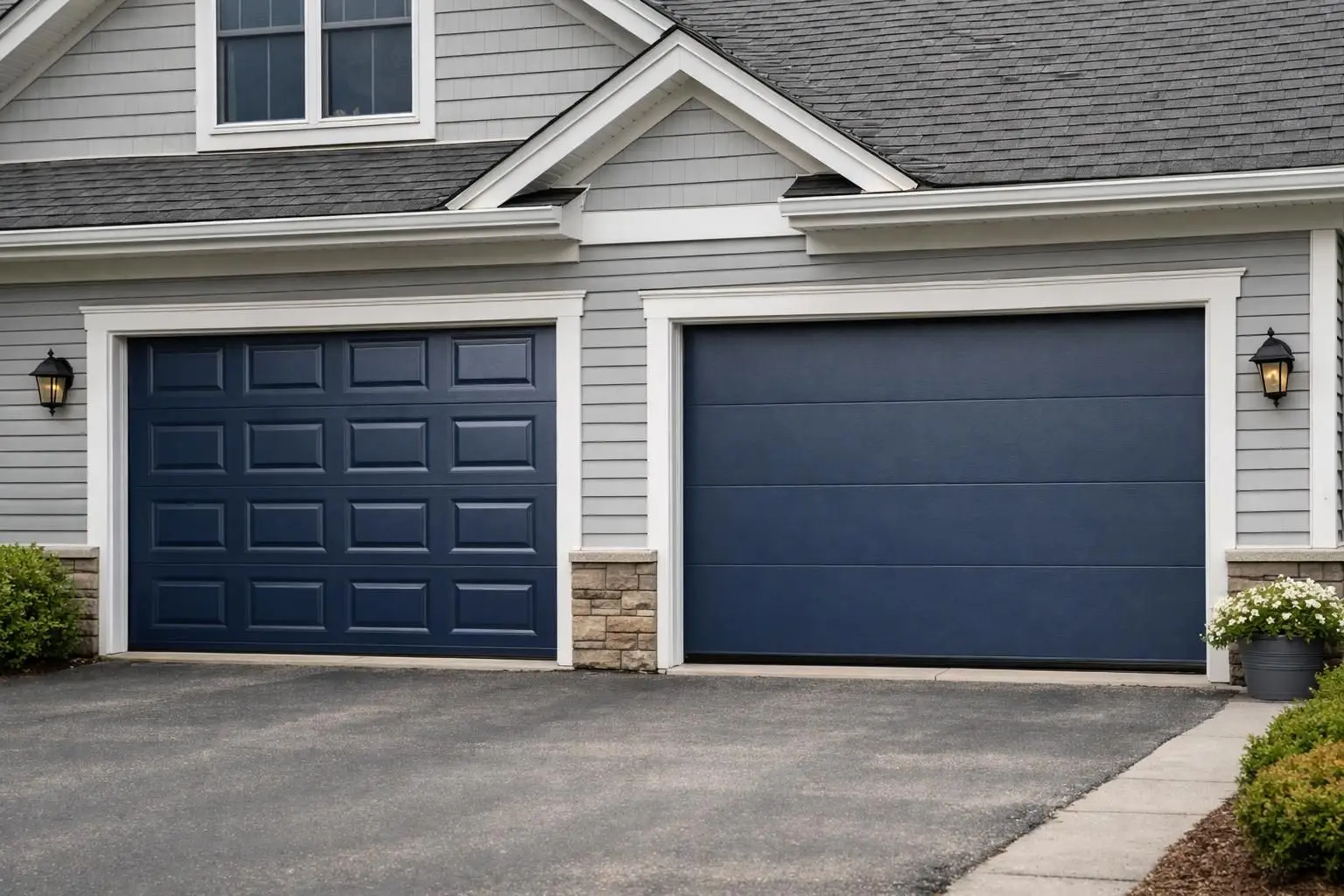
Choosing between a raised panel vs flush panel garage door mostly comes down to the look you want, plus how much everyday upkeep you’re willing to deal with. Panel style is the “face” of the door. It changes curb appeal, how dents show up, and even how annoying cleaning feels after a wet winter or a dusty summer. If you’re in a neighborhood with lots of craftsman homes, a traditional raised look may blend right in. If your street leans newer and boxier, flush can look calmer and more modern. Here’s how to pick without overthinking it.
Best for: Homeowners choosing between traditional and modern curb appeal who want a realistic view of cleaning and wear.
Not ideal when: Your current door has structural issues like an off-track section or a damaged spring that needs repair first.
Good first step if: You take two photos of your home’s front and compare how each panel style matches your windows and trim.
Call a pro if: Your door won’t close, is crooked, is making grinding noises, or you’re unsure about insulation and sizing.
Quick Summary
- Raised panels have a stepped, framed look that reads more traditional from the street.
- Flush panels are flat and clean-lined, so they tend to look more modern and minimal.
- Panel style affects how dirt collects and how dents and waves show in certain light.
- Durability depends more on the material and construction than the panel profile alone.
- Insulation and energy efficiency mostly come from the insulated door build, not whether panels are raised or flat.
Quick Summary: Raised Panel vs Flush Panel (at a Glance)
Raised panels look framed and dimensional; flush panels look flat and smooth. If your home has lots of trim, divided-light windows, or traditional details, raised panels usually match. If the exterior is simple with large clean surfaces, flush panels won’t compete.
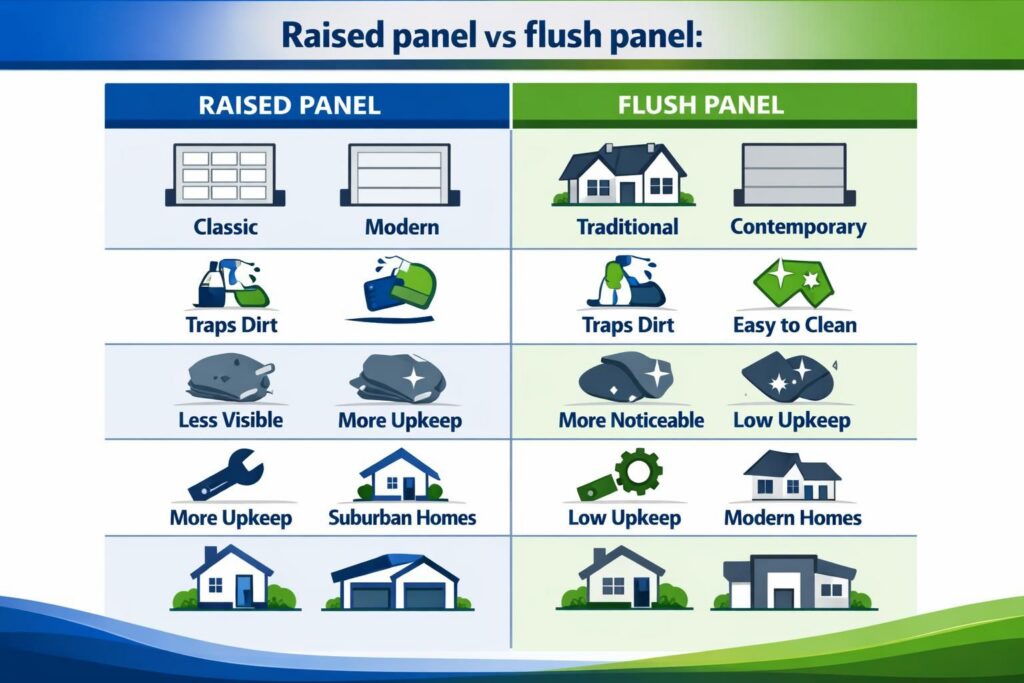
Shortcut: raised equals traditional, flush equals modern. Recessed panels sit between them with gentler shadow lines.
What is a Raised Panel Garage Door?
A raised panel garage door features rectangular sections that project slightly, like framed boxes across the door. The raised shape is built into each section, not added later.
On older homes with traditional trim, raised panels often look more “correct,” even on steel doors, because the shadow lines mimic classic woodwork. Those edges can collect pollen and road dust, especially near busy streets.
Best Home Styles for Raised Panel
Raised panels fit traditional homes best, especially where the neighborhood has older architecture and lots of trim detail. For instance, on craftsman, colonial, or many suburban traditional style exteriors, raised panels match the “framed” look of windows and doors. They can also work on a modern farmhouse if the rest of the exterior has warm, classic cues like lap siding.

What is a Flush Panel Garage Door?
A flush panel garage door has flat sections with little raised detailing, so it reads as one clean plane. It’s popular on newer builds and modern remodels. Flush panels pair well with large windows and straight lines, and they wipe down faster after rain because fewer edges hold grime.
Best Home Styles for Flush Panel
Flush panels fit modern and contemporary homes best, plus plenty of updated mid-century and “clean remodel” exteriors. For instance, if your home has smooth siding, simple black window frames, or a flat, minimal front porch, flush panels keep the look consistent. They’re also a common pick in neighborhoods with newer infill homes and tight, uniform street frontage.
Raised Panel vs Flush Panel: Side-by-side Comparison
Raised panel doors win when you want depth and classic character, while flush panel doors win when you want a clean, modern face that’s easy on the eyes. For example, if two homes on your block already have raised panels, going flush may stand out on purpose, or it may look out of place depending on the architecture.
| Raised Panel | Best for | What you’ll notice | Typical feel |
|---|---|---|---|
| Raised panel | Traditional exteriors | More shadow lines | Detailed, classic |
| Flush panel | Modern exteriors | Fewer lines and edges | Simple, minimal |
Now, if you’re comparing “flush vs raised garage door style” for durability, keep this in mind: the panel profile is only one piece. Construction, material, and insulation usually matter more.
Curb Appeal & Architectural Match
Flush panels read more modern because they avoid busy shadow lines. On a simple facade, they stay quiet and let other features lead. Raised panels add texture and can make a plain exterior feel finished. For a middle ground, consider recessed panels.
Maintenance, Durability & Dent Visibility
Flush doors have fewer grooves to trap dirt, but dents and oil-canning can show in strong, raking sunlight. Raised panels can disguise small dings, yet edges collect cobwebs and grime. Durability depends more on material and thickness than panel shape. See regular maintenance basics.
Cost, Insulation, and Materials (What Changes—and What Doesn’t)
Panel style can influence price, but material, insulation, and upgrades matter more. A non-insulated door costs less than an insulated door with thicker sections, better seals, and upgraded hardware. Windows and specialty finishes often outweigh raised versus flush. See insulation and energy basics.
Steel vs Wood vs Aluminum (and How Panel Style Affects the Look)
Most materials come in raised or flush, but they age differently. Wood suits raised panels yet needs paint or sealer in wet climates. Aluminum resists rust and is light, but dents show on flat designs. Fiberglass handles moisture, though UV can fade. compare common door materials.
Insulation & Energy Efficiency Considerations
Panel style doesn’t determine insulation. A flush door can be drafty, while a raised door can have an insulated core. What matters most is insulation plus tight seals. Start with perimeter weatherstripping. In rainy regions, fix common seal gaps helps prevent leaks and drafts.
Design Options: Windows, Textures, Colors, and Long vs Short Panels
Both styles are customizable. Add windows to raised panels to echo your home’s grids, or use slim horizontal glass on a flush door for a modern look; window choices explained helps.
Textures and color matter. Woodgrain warms steel, while charcoal or black can sharpen flush doors; black with windows design tips covers balance. Long panels widen; short panels feel classic.
Which One Should You Choose? (Decision Guide by Home Style + Priorities)
Choose raised panels for traditional depth; choose flush panels for clean, modern lines. Homes with trim, shutters, or porches usually suit raised panels. Minimal, geometric exteriors often look better with flush. Also consider sun, road grit, and shade for cleaning and dent visibility. garage door types overview helps.
Choose Raised Panel If…
Choose raised panel for a classic
Choose Flush Panel If…
Choose flush panel for a clean, modern look and an easier surface to wipe down. It fits homes with black window frames, simple siding, and minimal detailing.
Notes: dents can show more in certain sun; they pair well with modern window layouts; durability depends heavily on material in wet or coastal areas.
Conclusion
If you’re weighing a raised panel vs flush panel garage door, pick the one that matches your home’s architecture first, then dial in material and insulation for durability and comfort. For a practical next step, take a straight-on photo of your garage and compare it to raised and flush examples in similar neighborhoods. And if your current door is noisy, crooked, or not closing safely, get it checked before you commit to a new style.