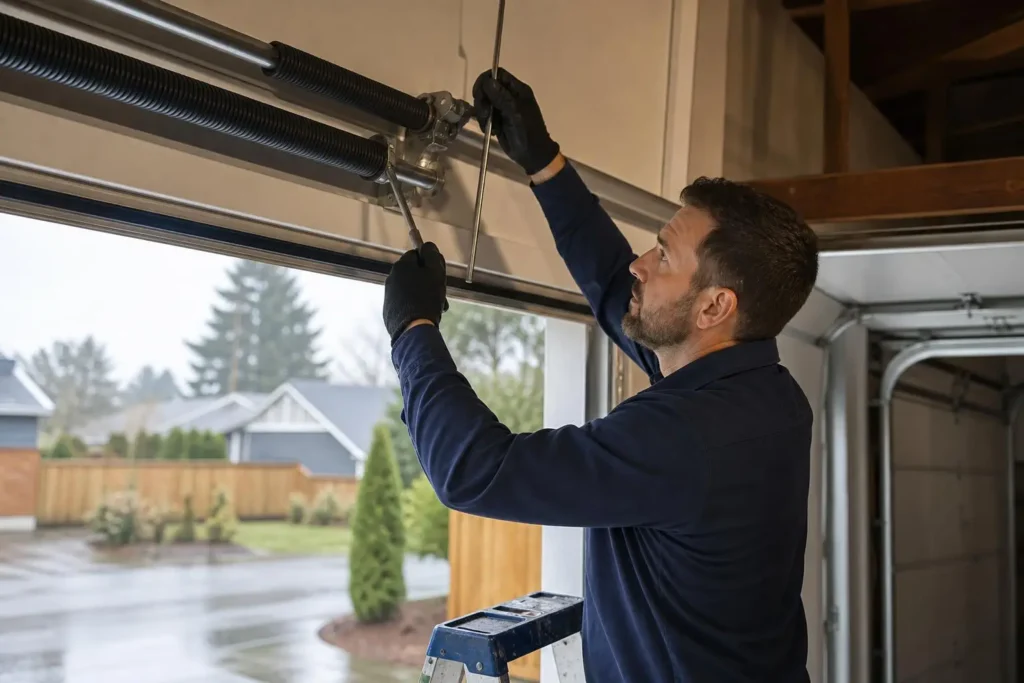
If you’re searching for garage door spring replacement cost Seattle, you’re probably dealing with a door that suddenly feels too heavy, won’t open, or made a loud bang from the garage. That’s stressful, especially on a rainy Seattle morning when you need to get to work or keep your car secure. This guide explains what affects spring pricing without throwing made-up numbers at you. You’ll learn why springs break, how torsion and extension springs differ, when one spring may need to become two, and when it’s safer to call a professional instead of trying a do it yourself fix.
Quick Summary
- Garage door spring cost depends on door weight, spring type, access, and service timing.
- A broken spring usually makes the door feel extremely heavy or impossible to lift.
- Torsion springs sit above the door, while extension springs stretch along the sides.
- Seattle weather can add wear through moisture, rust, and frequent temperature changes.
- Do it yourself spring repair is risky because springs hold strong stored tension.
Quick Answer: What Affects Spring Replacement Cost
Spring replacement cost is affected most by the door’s weight, the spring system, the quality of the replacement spring, and how quickly you need service. A light single-car door in a level Ballard garage is usually a simpler job than a heavy insulated double door on a steep Queen Anne driveway. The parts, labor time, and setup can all change.
A spring is the part that helps lift the door. Think of it like the counterbalance on an old window. Without it, the door’s full weight is on you and the opener. The garage door opener is the motor that moves the door, but it isn’t meant to lift a door with a broken spring.
The garage door spring repair cost may also change if other parts are worn. Cables, drums, rollers, and bearings help the spring system move smoothly. If one of those parts is damaged, replacing only the spring may not solve the problem. For example, a homeowner in West Seattle might call for a broken spring, then find the cable is frayed because the door has been dragging on one side.
If you want a broader view of related repair categories, Seattle repair costs can help you understand how spring work fits into other common garage door repairs.
Why Garage Door Springs Break
Garage door springs break because they wear down from repeated use, weather exposure, rust, and stress from an unbalanced door. Every time your door opens and closes, the spring tightens and relaxes. That movement slowly weakens the metal, much like bending a paperclip back and forth until it snaps.
Seattle’s damp climate can make this worse. Garages in neighborhoods near Puget Sound, Lake Washington, or shaded tree-lined streets often hold moisture. Moisture can lead to rust. Rust creates rough spots on the spring, and those weak spots can shorten its working life.
For example, a garage in Ravenna that stays cool and damp through much of the year may show rust earlier than a dry, heated garage. If the door also has old rollers that don’t roll smoothly, the spring has to work harder every day.
Common signs of a broken garage door spring Seattle homeowners may notice include:
- A loud bang from the garage
- A door that opens only a few inches
- A gap in the spring coil
- A door that feels too heavy to lift by hand
- Loose cables near the sides of the door
- A crooked door when opening
Regular visual checks can help you catch early wear. If you’re trying to prevent repeat problems, regular garage maintenance explains simple habits that keep the whole system moving more smoothly.
Torsion Springs vs Extension Springs
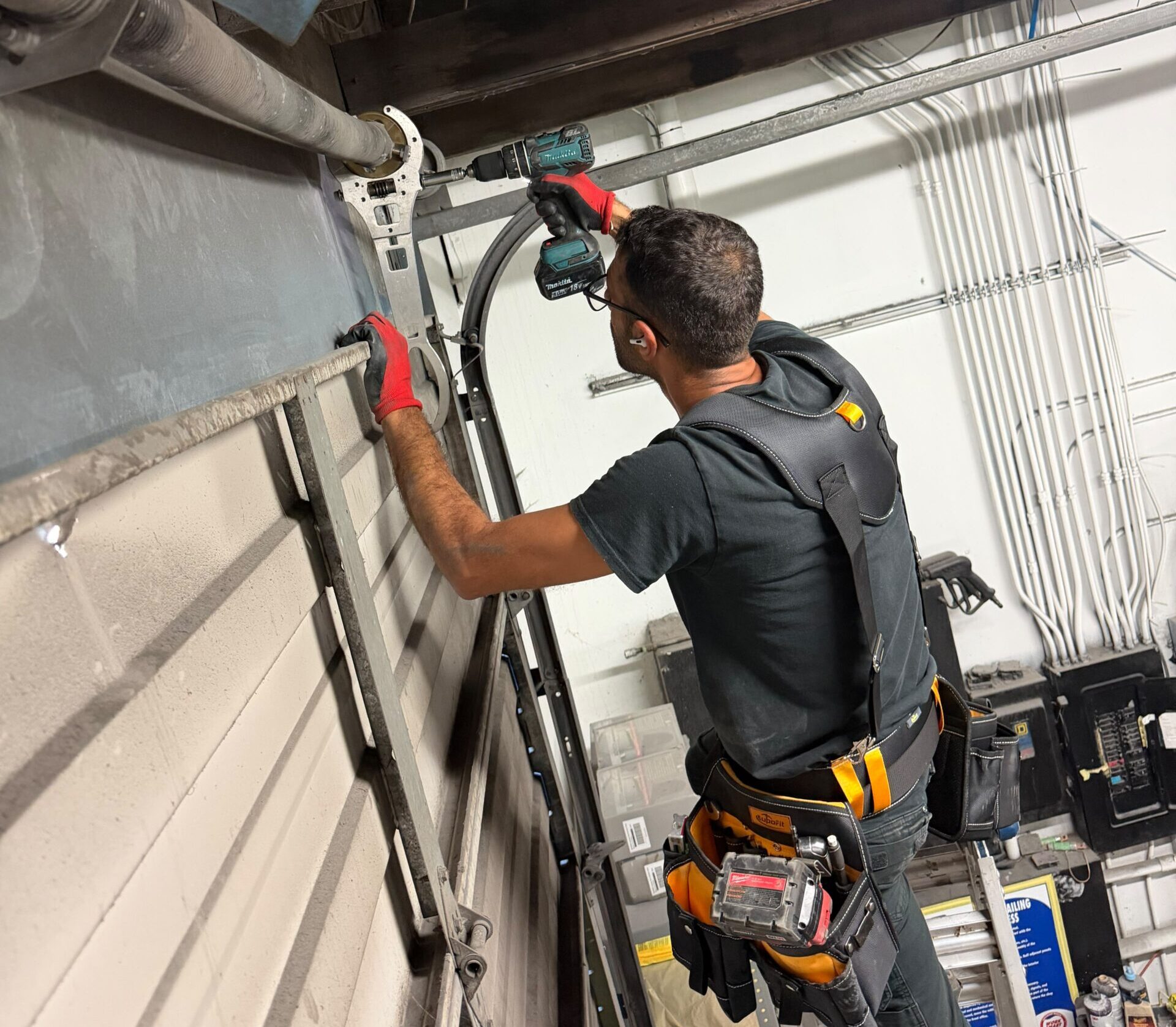
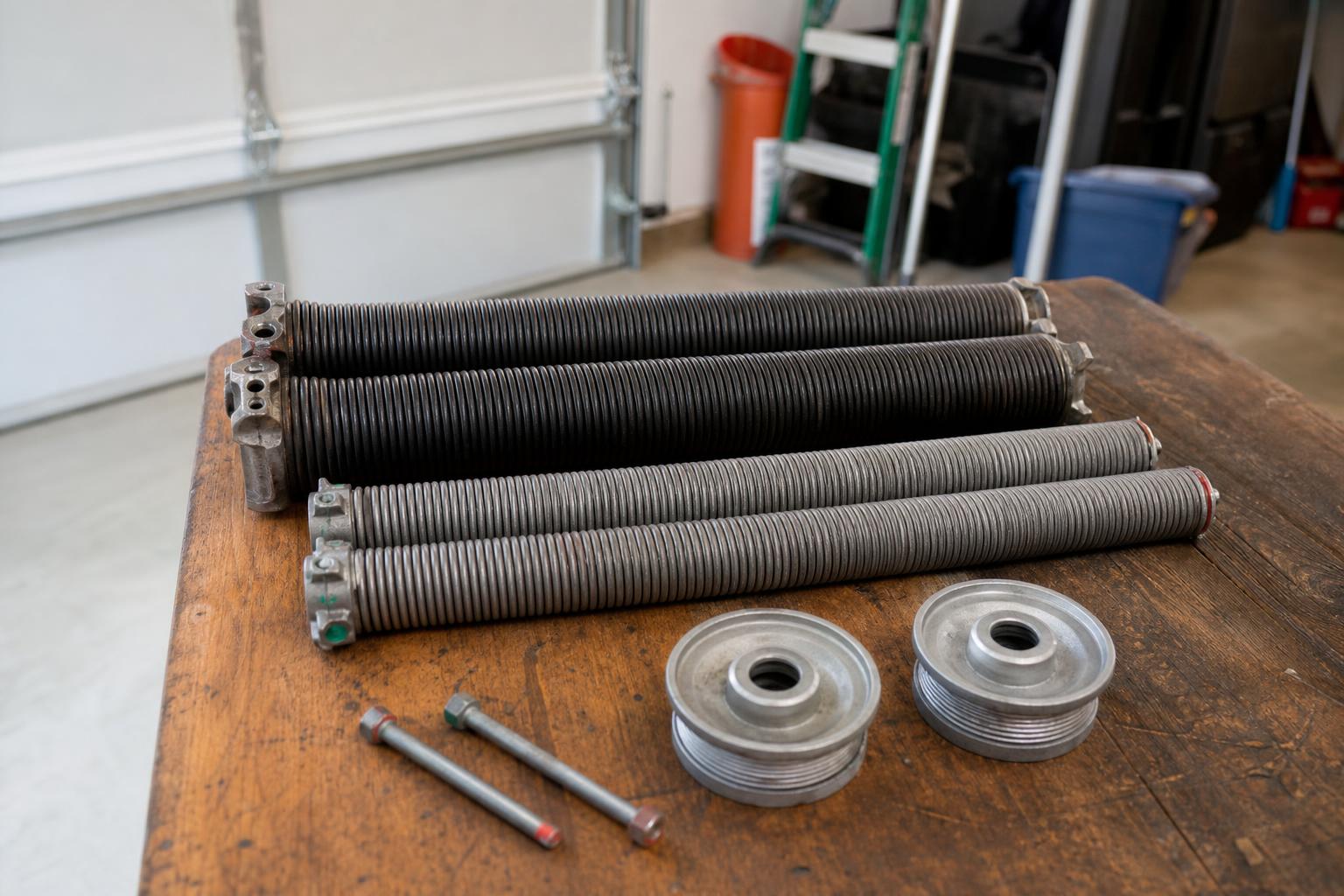
Torsion springs are generally the more controlled spring system, while extension springs are older-style springs that stretch along the sides of the door. A torsion spring is mounted on a metal bar above the garage door. When the door moves, the spring twists to store and release force. An extension spring stretches and contracts beside the horizontal tracks.
This matters because the spring type affects parts, labor, safety hardware, and how the door behaves when something fails. Many Seattle homes with newer sectional doors use torsion systems. Older detached garages in areas like Greenwood, Georgetown, or parts of Beacon Hill may still have extension springs.
| Option | Best for | Limits | Typical outcome |
|---|---|---|---|
| Torsion spring | Controlled lifting | Needs proper winding tools | Smoother balanced movement |
| Extension spring | Some older doors | More exposed moving parts | Works when correctly contained |
| Two-spring torsion setup | Wider heavier doors | More parts to match | Better load sharing |
For example, a wide insulated door on a two-car garage in Magnolia may need a torsion setup because the door is heavier and needs smoother balancing. A smaller older garage behind a Craftsman-style home may still use extension springs, especially if the door system hasn’t been updated in years.
The torsion spring replacement cost can differ from extension spring work because the setup, spring sizing, and adjustment process are different. The right spring isn’t chosen by looks alone. A technician checks door height, weight, track setup, and drum size so the door doesn’t shoot up or slam down.
Cost Factors Seattle Homeowners Should Know
Seattle homeowners should expect spring replacement cost to change based on the door setup, site access, part condition, and scheduling needs. A garage off a narrow alley in Capitol Hill can take more planning than a wide driveway in Shoreline. The repair itself may be similar, but parking, access, and setup affect the job.
Local weather matters too. Moisture can corrode springs, cables, and bottom brackets. Wind-driven rain can also get into older garages with worn seals. If your garage feels drafty or damp, Seattle weather protection may help you understand why exterior protection affects door parts over time.
For example, if a spring breaks during a weekday and the door is closed, the repair may be straightforward. If the spring breaks while the door is half open and the car is trapped inside, the technician may need to secure the door first before replacing anything. That extra safety step is part of the job.
Door Size and Weight
Door size and weight are major cost factors because heavier doors need stronger, correctly matched springs. A single-car non-insulated door usually places less demand on the spring system than a wide insulated door with windows or decorative panels.
For example, a heavy wood-look door in Laurelhurst may require a different spring setup than a plain steel door on a small detached garage in Columbia City. If you’re unsure what size your door is, standard garage sizes can help you understand common residential door dimensions.
Spring Type and Cycle Rating
Spring type and cycle rating affect cost because stronger or longer-lasting springs may require different materials and sizing. Cycle rating means the expected number of open-and-close movements a spring is designed to handle. One full open and close is one cycle.
For instance, a family in North Seattle using the garage as the main entry may cycle the door many times a day. A household that parks outside and rarely opens the garage may not need the same spring choice. The best fit depends on use, not just price.
Emergency or Same-day Service
Emergency or same-day service can affect cost because the schedule, travel timing, and safety needs may be different. A stuck door late in the evening is not the same situation as a planned repair during normal scheduling.
For example, if your car is trapped in a garage before a ferry commute or school pickup, same-day help may matter more than waiting. In that case, the priority is making the door safe and usable, not shopping around while the spring is under tension.
When One Spring Should Become Two Springs
One spring should become two springs when the door is wide, heavy, or would operate more safely with the lifting load shared across the system. A two-spring setup doesn’t mean twice the problem. It often means each spring carries less strain, and the door can be balanced more evenly.
This is common on double-wide garage doors. Many Seattle homes have garages that hold two vehicles or store bikes, tools, kayaks, and seasonal gear. Those doors can be large and heavy, especially when insulated for colder months.
For example, a homeowner in Wallingford with a wide garage door may have one large torsion spring above the door. During replacement, the technician may recommend converting to two springs if the door weight and hardware support that setup. The goal is smoother lifting and better balance.
A two-spring setup can also help if one spring breaks in the future. The door still shouldn’t be used with a broken spring, but the remaining spring may reduce sudden imbalance compared with a single-spring system. The decision should be based on the door’s measured weight and hardware, not a guess.
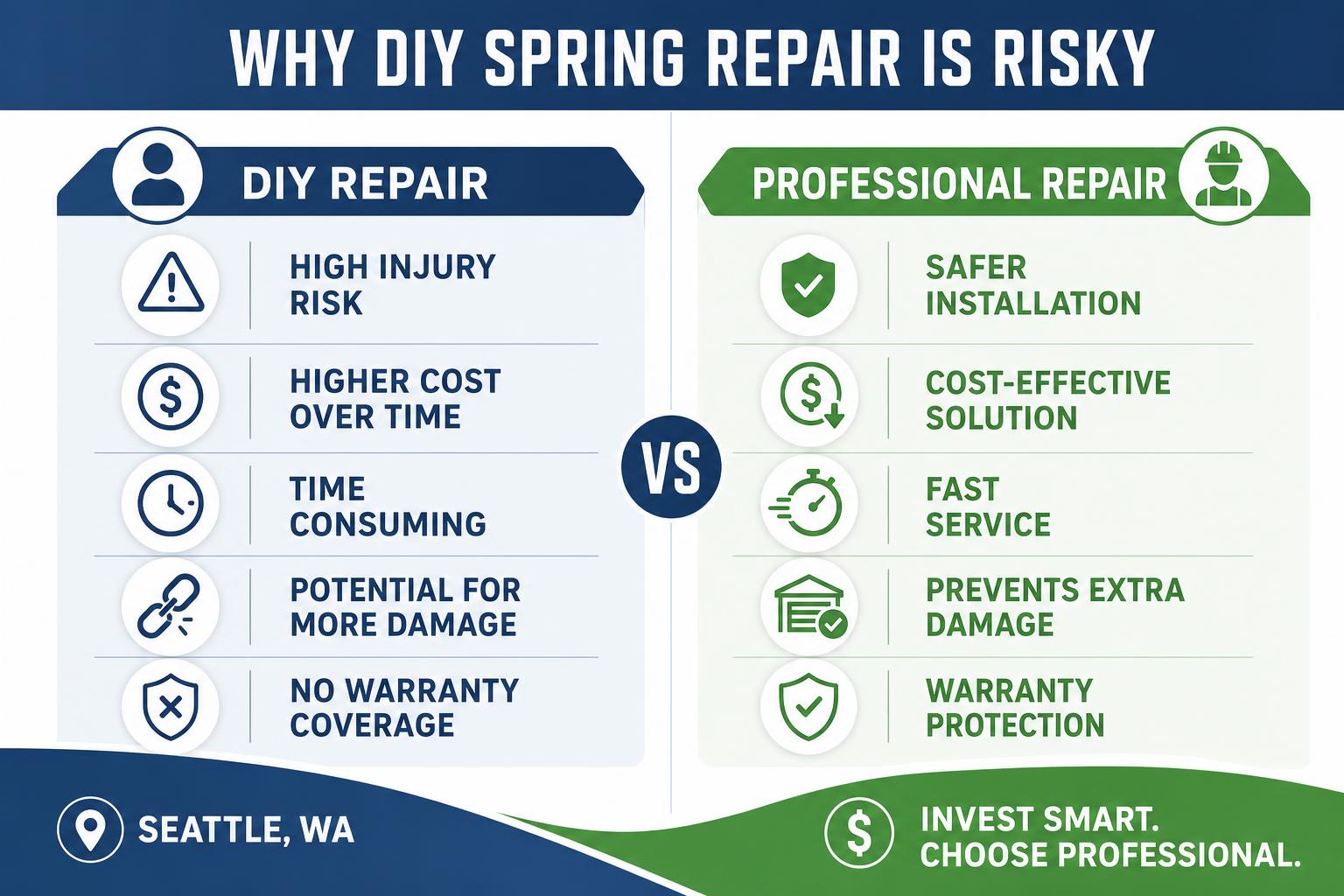
Why DIY Spring Repair is Risky
DIY spring repair is risky because garage door springs store enough tension to cause serious injury or damage when handled incorrectly. DIY means do it yourself. This is not like tightening a cabinet hinge or replacing a lightbulb. A spring under tension can move suddenly, and the tools can slip.
Torsion springs must be wound and unwound in a controlled way. Extension springs can also be dangerous if they don’t have safety cables. A safety cable is a cable that runs through an extension spring to help contain it if it breaks.
For example, a homeowner in Fremont might watch a short online video and think the repair looks simple. But if the winding bar isn’t seated properly, the spring can spin the bar with force. If the door isn’t clamped correctly, it can drop unexpectedly.
Common DIY mistakes include:
- Using the wrong spring size
- Loosening the wrong bracket
- Forgetting to secure the door
- Trusting the opener to hold the door
- Reusing frayed cables
- Standing in the path of moving parts
If you want more detail on the safety side, DIY spring repair dangers covers why spring work is one of the repairs homeowners should treat with extra caution.
When to Call Dan’s Garage Door Services
You should call Dan’s Garage Door Services when the door is stuck, heavy, crooked, noisy, or showing a visible spring gap. You should also call if you’re searching for garage door spring replacement near me because you need local help that understands Seattle homes, hills, alleys, and weather conditions.
A professional visit usually starts with a safety check. The technician looks at the spring, cables, drums, rollers, tracks, and opener connection. This matters because a broken spring can hide other problems. For example, a door in Rainier Valley might have a broken spring and worn rollers, which can make the new spring work harder if ignored.
You should stop using the door if it won’t open normally. Don’t keep pressing the opener button. The motor may strain, the rail may bend, or the cables may come loose. If the door is partly open, keep people, pets, and vehicles away from it.
For general repair help beyond springs, reliable garage repair is a useful place to start if your door has several symptoms at once.
Conclusion
Garage door spring replacement cost Seattle homeowners pay depends on the door, spring type, condition of nearby parts, and how urgent the repair is. The safest next step is to stop using the door, look for obvious warning signs from a distance, and schedule a proper inspection. If the spring is broken, the door feels heavy, or the cables look loose, don’t force it. A careful repair protects your door, opener, car, and everyone who uses the garage.