
Your garage door closes, touches the floor, then pops back open. Or it starts down and reverses halfway. If your garage door reverses after closing in Tacoma, the opener is usually reacting to a safety signal, resistance, or a setting that tells it the door hit something.
Start by noticing the timing. A door that reverses before reaching the floor often points to safety sensors, glare, debris, track friction, or roller trouble. A door that hits the floor, pauses, then opens again often points to travel limits or an opener force setting issue. Don’t keep forcing it closed.
Quick Summary
- If the door reverses immediately or mid-close, check for sensor blockage, dirty lenses, sunlight glare, or something in the track.
- If the garage door closes then opens after touching the floor, the opener travel limit may be set wrong.
- Don’t increase force settings to “power through” a heavy, jerky, or binding door.
- Stop troubleshooting if you see damaged tracks, loose cables, spring issues, or repeated reversals.
- A Tacoma garage door repair technician can test the opener, sensors, rollers, tracks, and door balance safely.
What it Means When a Door Reverses
A reversing garage door is usually reacting to a safety signal, not “changing its mind.” The opener, which is the motor unit that moves the door, is designed to stop or reverse when it thinks something is in the way or the door is meeting too much resistance. Think of it like an elevator door reopening when it senses a blockage.
For a garage door that reverses after closing in Tacoma, timing tells you a lot about where the problem may be.
- Reverses immediately: the safety sensors may not be seeing each other, or something is blocking the doorway.
- Reverses halfway down: the door may be rubbing, binding, or hitting debris in the track.
- Touches the floor, pauses, then opens: the opener may think the floor is an obstruction because the down travel setting is off.
- Reverses randomly: vibration, loose hardware, sunlight on the sensors, or intermittent alignment can trigger it.
The key point: don’t treat reversal as just an opener annoyance. It’s a symptom. The door, opener, sensors, tracks, rollers, or balance may be telling you something needs attention before the problem gets worse.
Sensor Problems vs Travel Limit Problems
Sensor trouble usually stops the door before it reaches the floor. Travel limit trouble usually appears right at the floor. The travel limit tells the motor, “This is fully closed.” If it is set too far down, the opener keeps pushing after the door hits the floor, feels resistance, and reverses for safety.
Here’s the quick way to sort the two apart.
| What you see | Most likely issue | Safe thing to check |
|---|---|---|
| Door starts down, then reverses before the floor | Sensor blockage or misalignment | Clear the doorway and look at both sensor lights |
| Door reverses only when sun hits the garage | Sensor glare | Shade the sensor briefly and test again |
| Door reaches the floor, pauses, then opens | Down travel limit or opener setting | Note the timing; don’t keep forcing it closed |
| Door reverses after sensor/opener work | Misaligned sensor or setting change | Check for bumped brackets or loose sensor mounts |
The safety sensors are the small “eyes” near the bottom of the tracks. They send an invisible beam across the doorway. If the beam is blocked, dirty, or crooked, the opener thinks a person, pet, or object is in the way. One or both sensor lights may blink.
Wipe the lenses with a soft cloth. Move boxes, bikes, leaves, or snow melt buildup away from the opening. If the door still hits the floor and comes back up, don’t just increase the opener force. Force controls how hard the opener pushes. Turning it up can hide a heavy door, bad roller, or balance problem.
Track, Roller, and Door Balance Issues
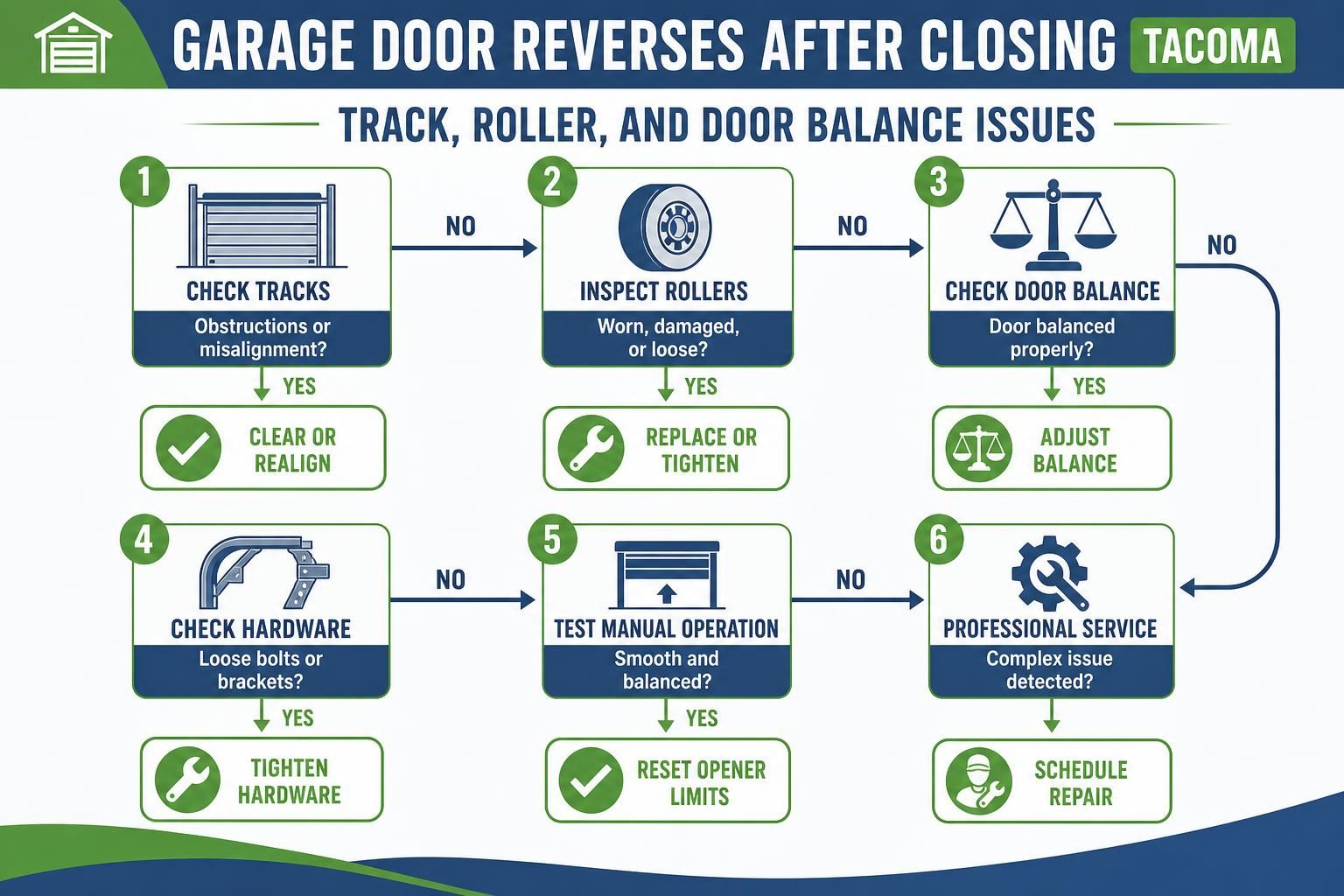
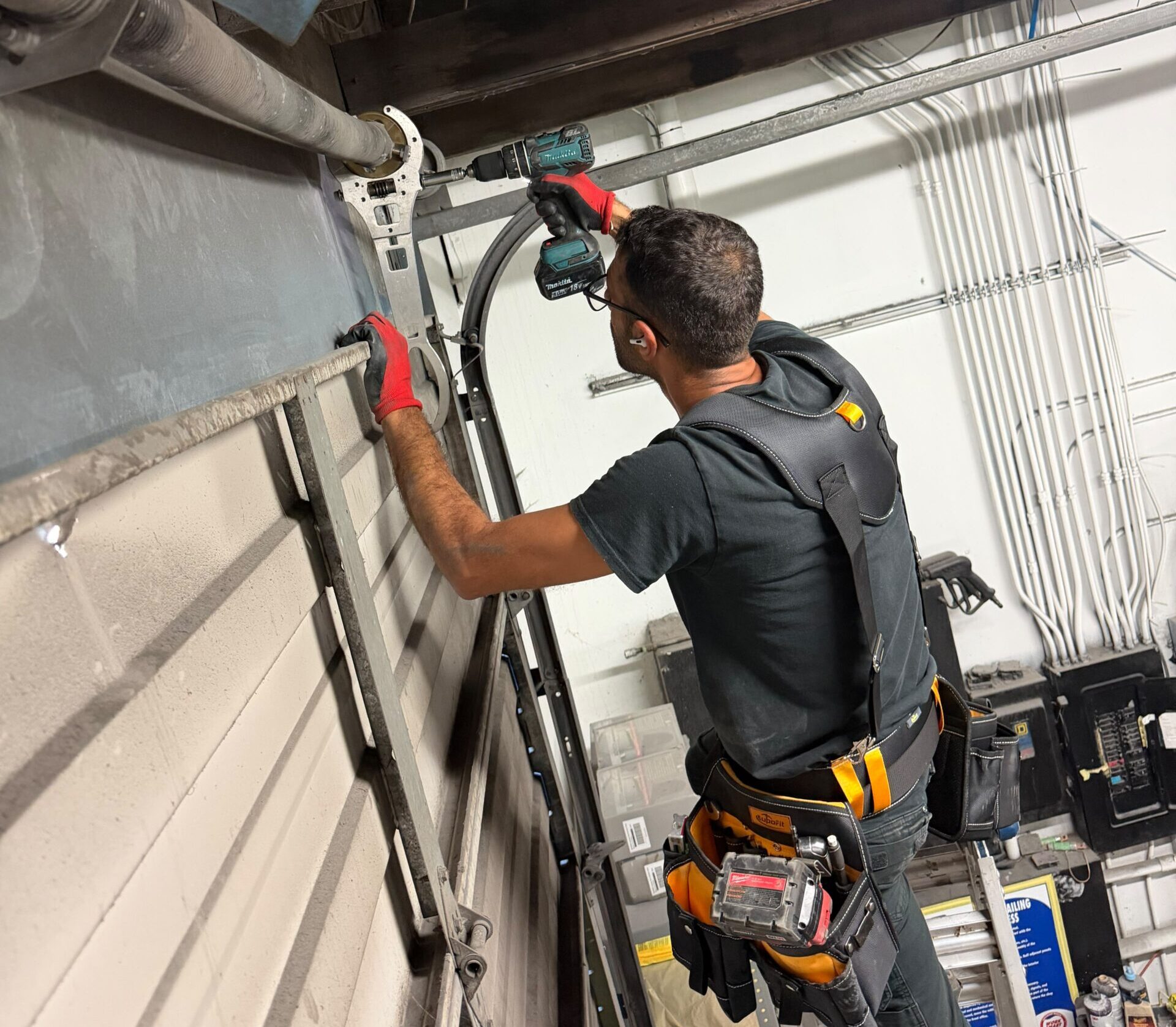
A door can also reverse because it’s fighting friction. The opener expects the door to move smoothly. If the track is bent, a roller is worn, or the door is out of balance, the opener feels extra resistance and may reverse to avoid crushing something.
Think of the track like a train rail. If the rail is dirty, dented, or shifted, the rollers can’t glide cleanly. You might notice scraping sounds, shaking, a jerky drop, or the door reversing halfway down instead of at the floor.
Balance means the springs are carrying the door’s weight correctly. Springs are the tightly wound parts that help lift a door that may weigh hundreds of pounds. If the door feels unusually heavy, drops fast, or won’t stay in place when disconnected from the opener, stop there. Don’t adjust springs or cables yourself.
- A bump from a car, bike, or trash bin
- Storm debris in the track
- Loose-looking hinges or brackets
- Cracked or wobbling rollers
- Recent opener, sensor, or track work
If you see bent metal or the door keeps reversing, schedule garage door repair with Dan’s Garage Door Services in Tacoma before the opener strains itself further.
Safe Checks Before You Call
Do the easy, safe checks first. You’re not repairing the door yet; you’re collecting clues so you don’t guess.
- Clear the doorway. Move bikes, bins, tools, leaves, and anything near the bottom seal. Even a small object can trigger the opener’s safety reverse.
- Check when it reverses. If it starts down and pops back up before touching the floor, think sensors, blockage, or friction. If it reaches the floor, pauses, then opens, think travel limit or opener setting.
- Look at the safety sensors. These are the small boxes near the floor on both sides of the door. Make sure they face each other. If one light is blinking or off, the beam may be blocked or misaligned.
- Wipe the sensor lenses. Use a soft cloth. Dust, spider webs, and Tacoma rain grime can be enough to confuse the beam.
- Watch for sunlight glare. If the door reverses only at certain times of day, direct sun may be hitting a sensor.
- Try the wall button and remote. If one works differently, note it.
Stop if the door jerks, feels heavy, won’t stay closed, or you see damaged cables, springs, or track metal.
When Reversal Means a Bigger Repair
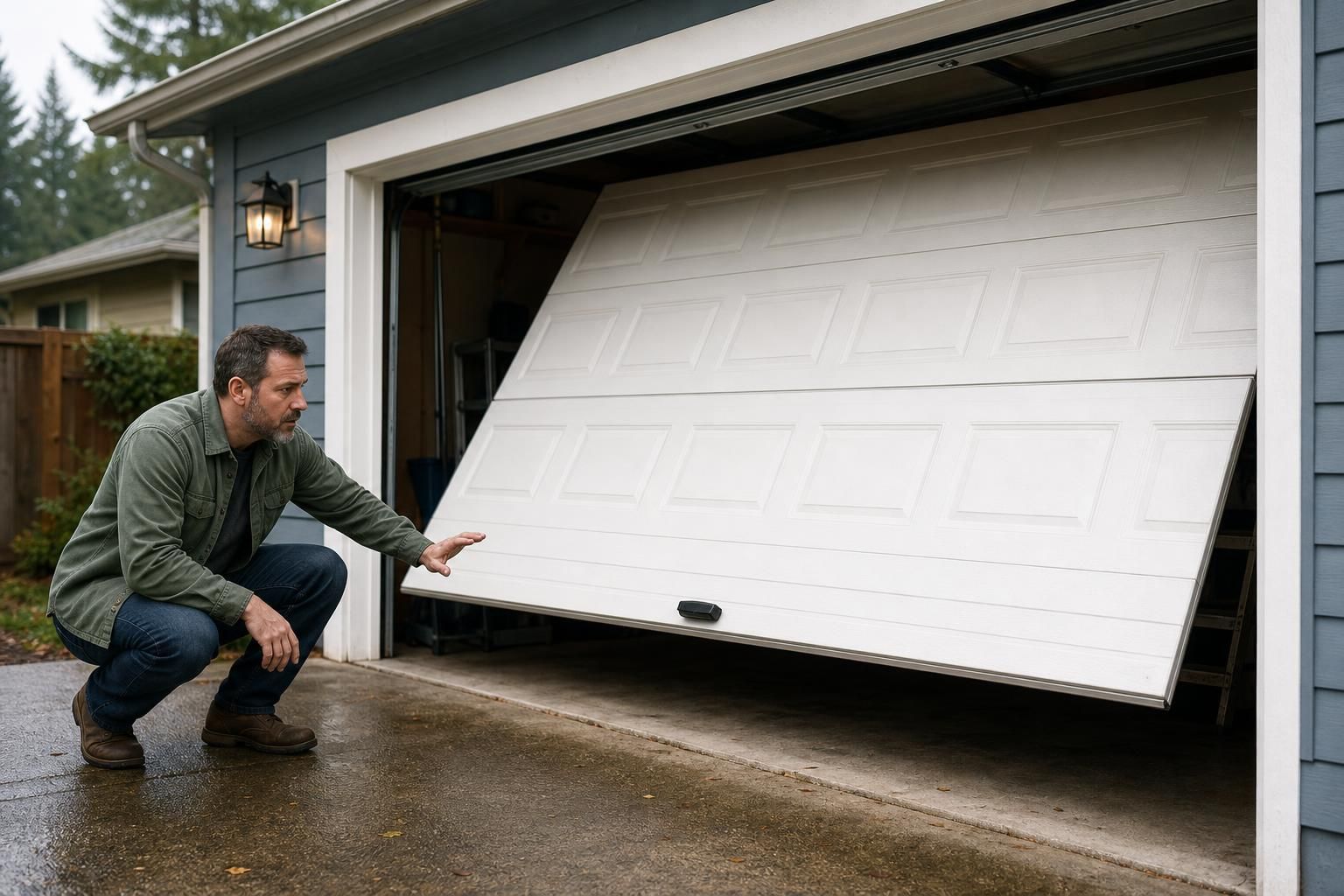
Call a technician when the door is no longer just “confused” but physically struggling. A garage door can weigh well over 100 pounds, and the opener is only meant to guide it. It’s not supposed to lift a heavy, unbalanced, or binding door by brute force.
Bigger repair signs include:
- The door reverses halfway down and you hear grinding, scraping, or popping.
- The door looks crooked in the opening.
- The rollers jump, wobble, or drag in the track.
- You see bent track metal, frayed cables, loose brackets, or a broken spring.
- The door feels unusually heavy or jerky when disconnected from the opener.
Don’t increase the opener force setting to “push through” the problem. Force controls how hard the opener will pull or push before reversing. Turning it up can hide a bad spring, damaged roller, or bent track, which can make the door unsafe.
If you’re seeing these symptoms in Tacoma, schedule garage door repair with Dan’s Garage Door Services before using the door repeatedly. This is especially true after a bump, storm, or recent opener or sensor work.
Get Help With Garage Door Repair in Tacoma
If your door still reverses after the safe checks, treat it as a repair issue instead of an opener quirk. The timing tells the technician where to start: immediate reversal points toward sensors, mid-close reversal can mean resistance, and a door that hits the floor then opens often points to travel limits or opener settings.
Before you book service, write down three details:
- When the reversal happens: immediately, halfway down, at the floor, or randomly.
Before you book service, write down three details: when the reversal happens, what changed recently, and what you noticed.
- What you noticed: blinking sensor lights, grinding, shaking, a heavy-feeling door, or a gap under the seal.
That information saves time and helps avoid guessing. Don’t keep cycling the door over and over, especially if it’s loud, crooked, heavy, or won’t stay closed.
For garage door repair in Tacoma, contact Dan’s Garage Door Services. They can check the sensors, opener settings, rollers, tracks, springs, and balance so the door closes safely again.
Conclusion
If your garage door reverses after closing in Tacoma, focus on when it happens. Reversing before the floor often points to sensors, glare, blockage, or track resistance. Touching the floor and reopening usually points to travel limits or opener settings.
Don’t use force adjustments to cover up a heavy, crooked, jerky, or binding door. Stop troubleshooting if you see spring, cable, track, wiring, or balance problems. For safe diagnosis and garage door repair in Tacoma, contact Dan’s Garage Door Services and tell them exactly when the reversal happens.