If you want to convert single garage door to double, you’re really talking about changing the structure of the front wall, not just swapping a door panel. That’s why some homes are straightforward and others get complicated fast. In older neighborhoods with narrower lots, you might be fighting roof loads, brick facades, or tight driveways. In newer areas, the framing is often simpler but still needs planning. In this guide, you’ll learn what’s possible, what can block the project, what costs usually come from, and the typical steps contractors follow.
Best for: Homes with enough wall space and a center post that can be replaced with a properly sized beam.
Not ideal when: The garage front wall is masonry or the opening sits under major roof loads and you can’t add support.
Good first step if: You measure the existing opening and confirm what’s above it in the attic or ceiling area.
Call a pro if: You see sagging above the opening, cracks in drywall or brick, or any signs the center post is load-bearing.
Quick Summary
- Most conversions require removing the center post and installing a larger structural beam over the new opening.
- Some garages can’t be widened safely without redesigning support, especially with heavy roof loads or masonry fronts.
- Costs usually come more from framing and permits than from the door itself.
- Contractors typically use temporary supports, then rebuild the opening before installing the new door and opener.
- Picking the right door means matching size, insulation, and wind resistance to your local weather and garage use.
Can You Convert a Single Garage Door to a Double (and When You Can’t)?
Usually yes, if the front wall can be reframed with a larger beam and there’s enough distance between corners. “Can’t” cases include walls that can’t be modified safely or legally, lot-line limits, or layouts where loads and bracing can’t be rerouted.
Check for obstructions: corner bracing, utilities, downspout chases, or a required shear wall. Masonry or historic facades may need specialized detailing to prevent cracking and water intrusion.
Two Single Doors Vs. Widening a Single Opening
Two single doors keep the center post, so framing is often simpler, but entry is narrower. Widening creates one larger opening, usually requiring post removal and a bigger beam. If you regularly struggle with a narrow driveway approach, the wider opening is easier daily.
Typical Costs and What Drives the Price
Costs are usually driven by structural carpentry and compliance, not just the new door. If the header is undersized, expect a new beam, labor, and exterior/interior patching. Matching siding, trim, and paint can add time.
Main price drivers: wall rebuild scope, electrical moves for opener/sensors, masonry patching, permits/inspections, and disposal/site protection. For door-specific pricing, see typical install cost factors.
Door, Labor, Engineering, Permits, Opener
Door price depends on size, material, windows, and insulation. Labor increases with shoring, demolition, and reframing. Engineering covers structural plans when loads are complex. Permits cover required city approvals and inspections. A wider, heavier door may also require a stronger opener, new tracks, and reinforcement.
Structural Changes Explained (Header/beam, Center Post, and Support)
Most conversions remove the center post and replace the existing header with a larger beam so loads transfer to the sides. The beam may be built-up lumber or engineered to resist sag. The center post can carry roof or second-story weight.
Side framing relies on king studs and jack studs that carry the beam down to the foundation. Widening can reduce bracing, so seismic or high-wind zones may require hold-downs or engineered shear panels.
When You’ll Need an Engineer or New Beam
Bring in a structural engineer when the opening gets much wider, there’s living space above, or the wall provides bracing. Expect a new beam if the existing header was sized for a single door and can’t span the new width. Visible sag or cracking above the door is a sign to evaluate.
Step-by-step Process Contractors Follow
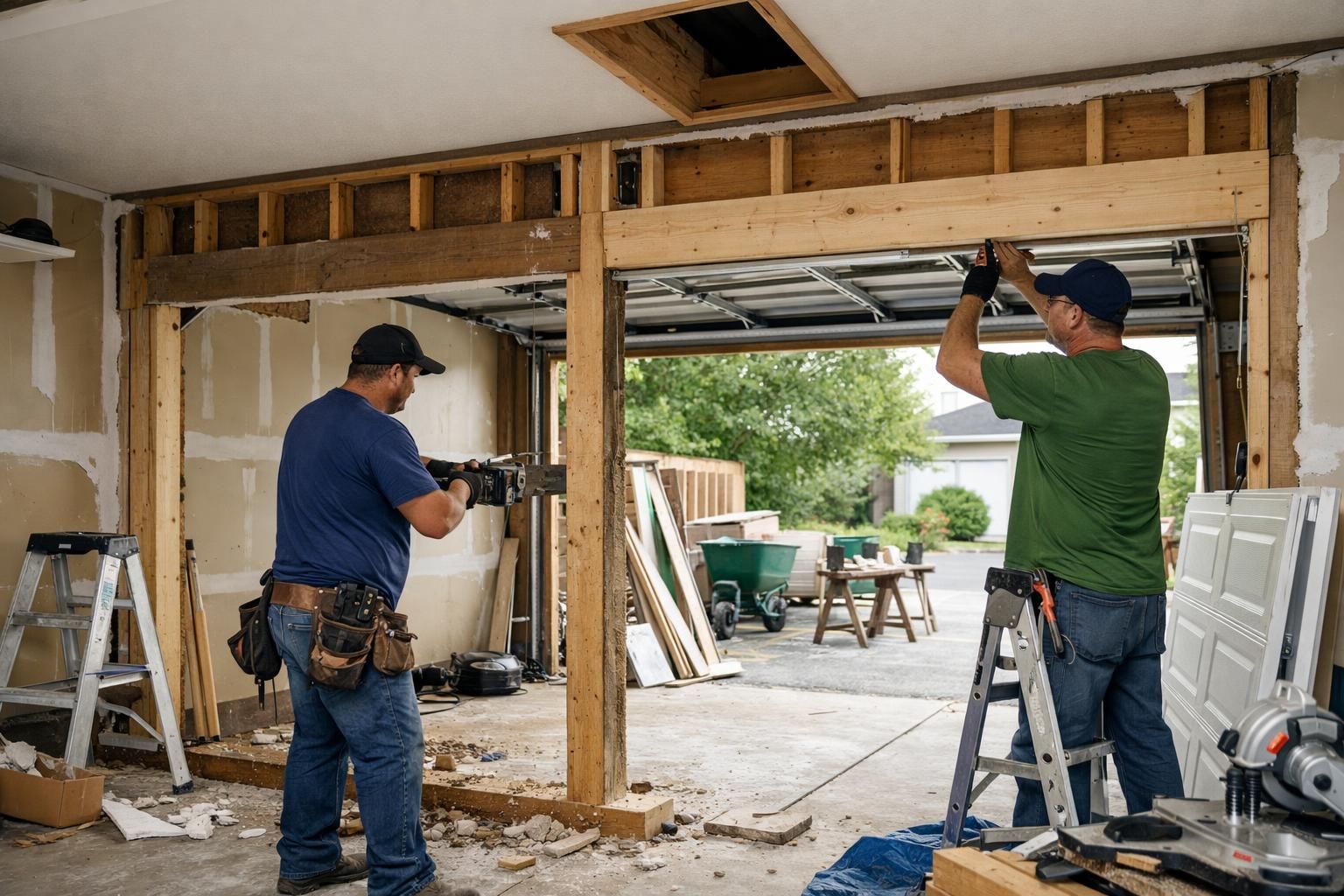
Contractors typically: protect the site, add temporary supports, open the wall, reframe and set a new header, then install the door and opener. The order matters because loads above the opening must stay supported while posts are removed. Crews often add basic weather protection while framing is exposed. Scheduling is often driven by permits, inspections, and special-order doors. For opener choices, see opener drive comparison.
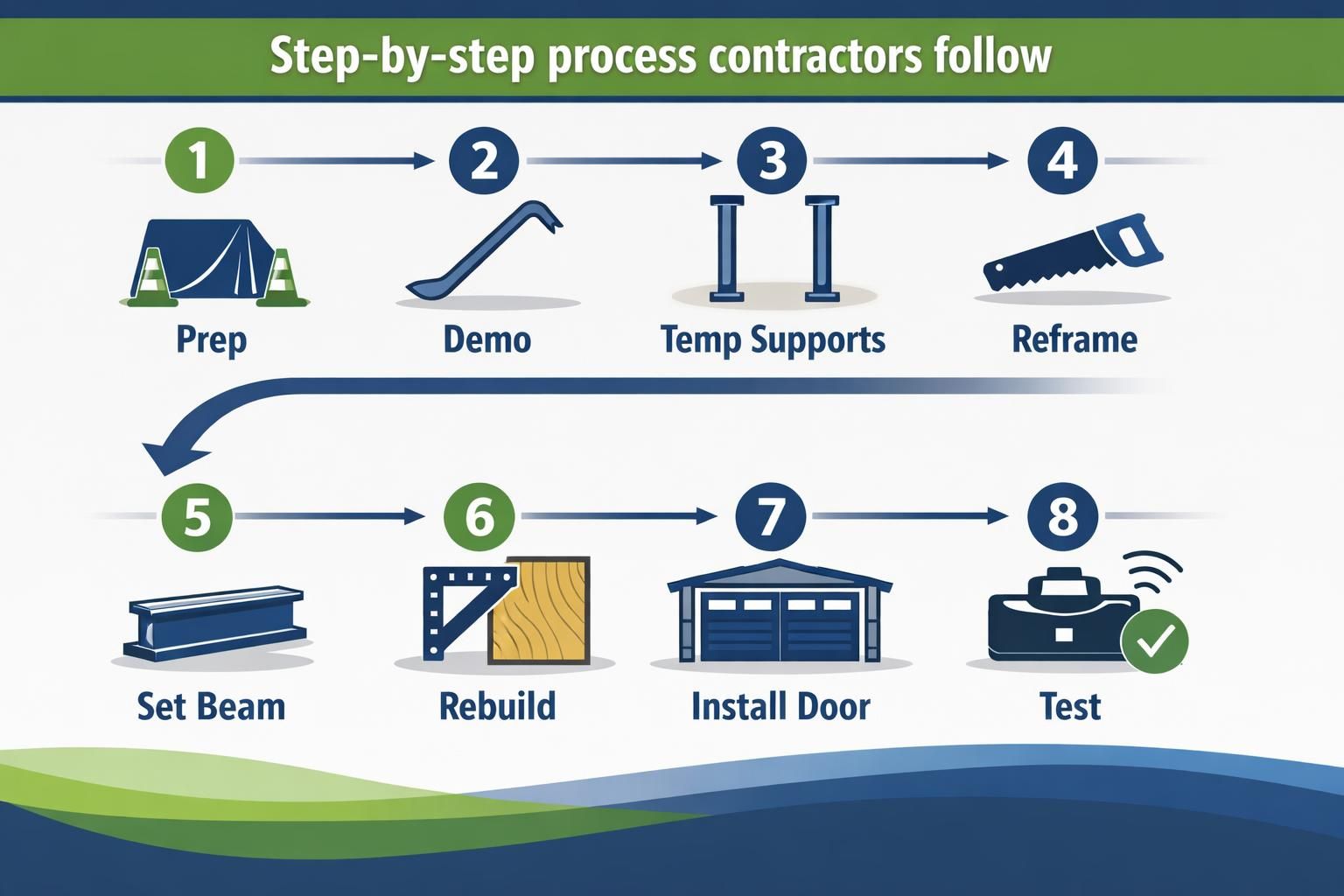
Demo, Temporary Supports, Framing/beam, Install Door & Opener
On-site flow is typically: demo door, trim, and any siding/drywall in the way. Add temporary supports so the load is carried safely. Remove the center post, install the new beam, and rebuild side supports. Then install tracks, hang the door, add springs, mount the opener, and set safety sensors.
Choosing the Right Double Door and Opener
Choose a door suited to the opening, climate, and daily use. A “double door” is usually a wide sectional door on tracks. If the garage is conditioned or a workshop, insulation and good seals reduce drafts and noise.
Measure the rough opening and headroom; common size guide helps. Then match the opener to door height and weight. Wide doors may need reinforcement and careful balancing for durability.
Sizes, Insulation, Wind Rating, Smart Features
Size is about fit, headroom, and clearance. Insulation improves comfort and reduces noise. Wind rating measures resistance to gusts and pressure. Smart features add Wi‑Fi control and alerts. For stormy, wind-driven rain, pair insulation with good bottom and perimeter seals; see weather seal basics.
Pros and Cons (Access, Curb Appeal, Reliability, Resale)
One double door improves access with a wider opening, helpful for tight street parking, narrow lanes, or wide-mirror SUVs. Two single doors add redundancy: if one spring, cable, or opener fails, you may still use the other. With one large door, a single failure can block the whole garage.
Curb appeal depends on the facade and neighborhood norms. Resale varies by buyer preference. For noise concerns, see what those noises mean before choosing hardware.
FAQs (Permits, Timeline, Can I DIY, What Happens to the Old Opening?)
Do I Need a Permit to Widen the Opening?
Often yes, because widening changes structural framing and may involve electrical. Permits let the city verify fastening, bracing, and safety requirements before the wall is closed and the door is installed.
What’s a Realistic Project Timeline?
A realistic timeline depends on design decisions, permit review, and door availability, not just labor. For example, the framing work might be quick once scheduled, but you can lose time waiting for approvals or a custom door size, especially in busy building seasons.
Can I DIY This Conversion?
DIY is risky because it involves load-bearing framing and high-tension springs. Removing a center post without proper temporary support
What Happens to the Old Opening and Materials?
The old door, tracks, and affected framing are removed, then the wall is reframed to the new width. Some siding can be reused if it comes off cleanly, but older materials may break or mismatch, so patch areas often need repainting.
Conclusion
If you’re planning to convert single garage door to double, treat it like a structural remodel with a door install at the end. Measure carefully, confirm what the center post is supporting, and expect that permits or engineering may be part of a safe plan. Your best next step is a site visit plan: check clearances, look for load clues above the opening, and choose a door that fits your climate and routine.