If you’re wondering how long garage door installation takes, the honest answer is that most standard installs are measured in hours, not days. A straightforward door replacement can often be finished the same day when the opening is standard, the correct parts are ready, and the old hardware comes off cleanly.
The timeline changes when the job includes a new opener, damaged framing, rotted trim, uneven flooring, custom door sizing, or track changes. Here’s what usually affects the schedule and how homeowners can avoid common delays.
Quick Summary
- Most garage door installs take a few hours when the opening and parts are standard and accessible.
- Adding an opener usually adds time because it needs mounting, wiring, and safety checks.
- Old hardware, rotted trim, or an uneven floor commonly slows the job down.
- You can cut delays by clearing space, confirming sizes, and having the right parts on-site.
- Same-day installation is often possible, but custom doors and repairs can change the schedule.
Typical Timeframes: Door Only vs Door Plus Opener
A standard door swap is often a same-day job. Adding an opener usually extends the visit because there’s more to mount, align, and test. If the new door matches the existing setup, crews move faster; changes to the system add time.
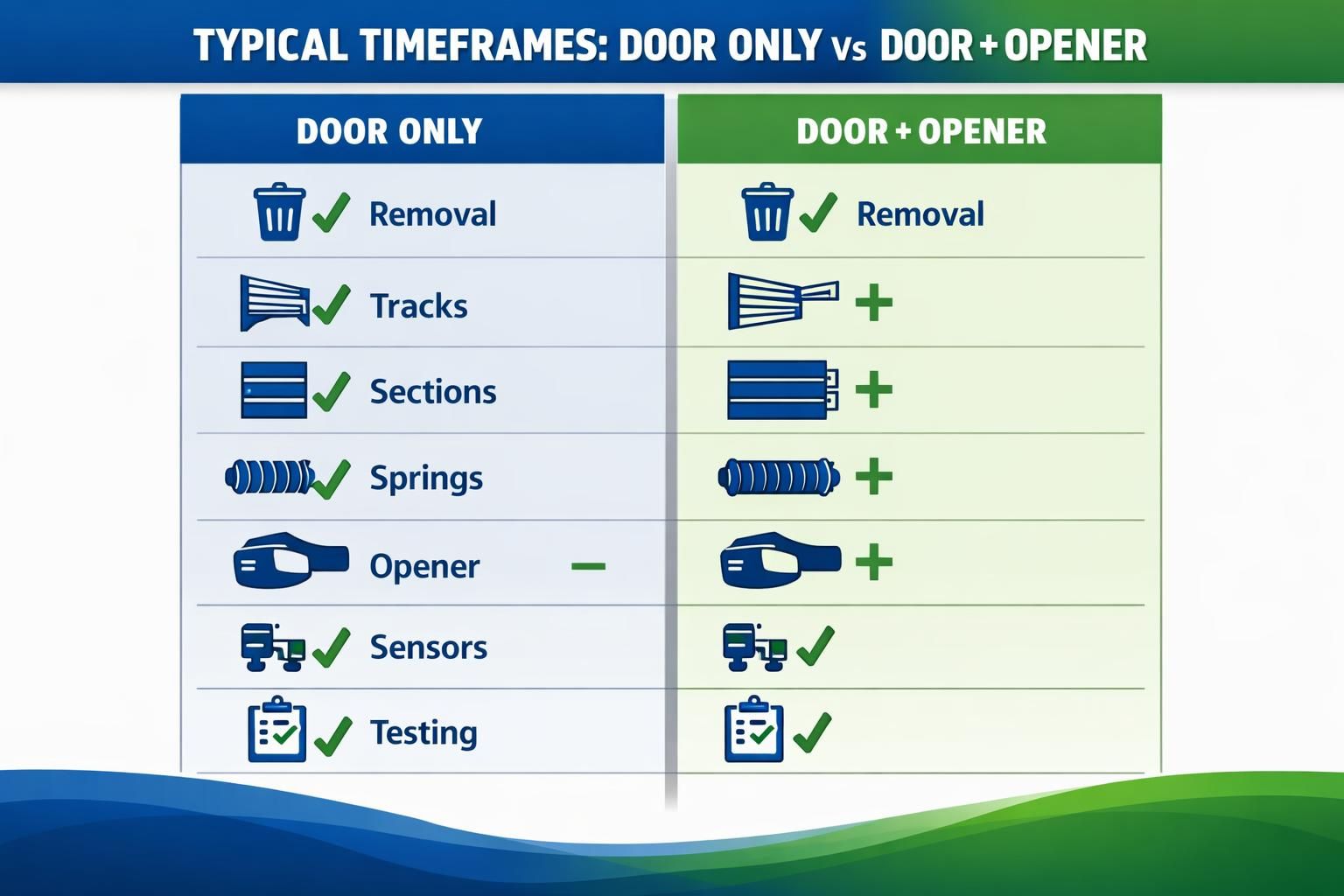
Practical timing categories:
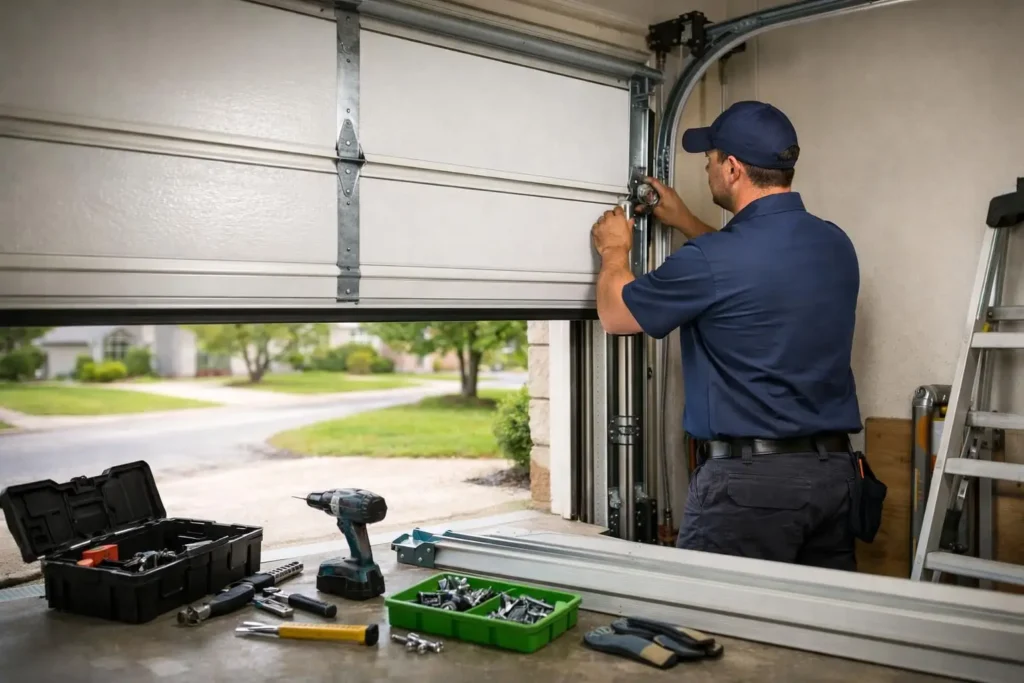
- Door only: remove old door, install tracks/springs, set sections, and balance.
- Door plus opener: add rail and motor mounting, sensors, and force/travel limits.
- New door style: extra time if track geometry changes, such as tilt-up to sectional.
Access also matters: tight driveways and street parking can slow unloading and staging. If you’re still comparing designs, door style options explains how style and weight can affect hardware and installation steps.
What Happens During Garage Door Installation (Step by Step)
Garage door installation follows a set sequence because each step depends on the last being square, level, and safe. Small issues early can add time later.
Typical steps include:
- Final safety check: recheck rollers, fasteners, clearances, seals, and opener function if included.
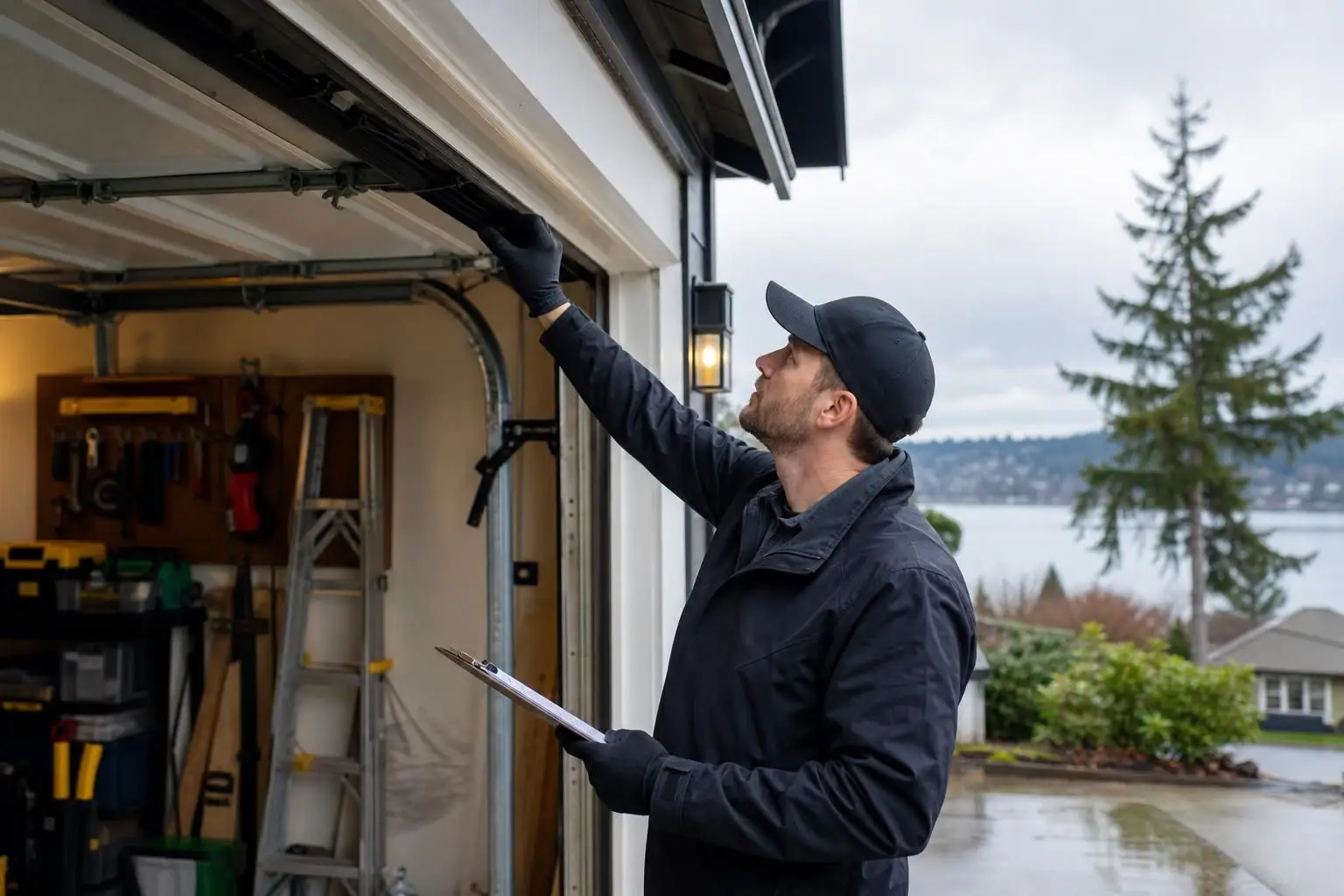
- Site check and safety setup: measure the opening, headroom, and side room.
- Remove the old door and hardware: panels, tracks, springs, and cables are removed safely.
- Prep the opening: confirm the floor line and replace worn brackets if needed.
- Install tracks and jamb hardware: tracks must be plumb to avoid binding.
- Stack and secure door sections: each section is hinged and set into the track.
- Install springs and cables: the system is counterbalanced for the door’s weight.
- Balance and test manually: the door should hold at mid-lift.
A sloped slab may require extra bottom-seal alignment to prevent gaps.
The Biggest Delays That Stretch the Garage Door Replacement Timeline
Most delays come from hidden wear or mismatched parts, not the new panels. Moisture, temperature swings, and impacts can leave the opening and hardware rougher than they look.
Common delay causes:
- Out-of-square framing: tracks need shimming and careful adjustment.
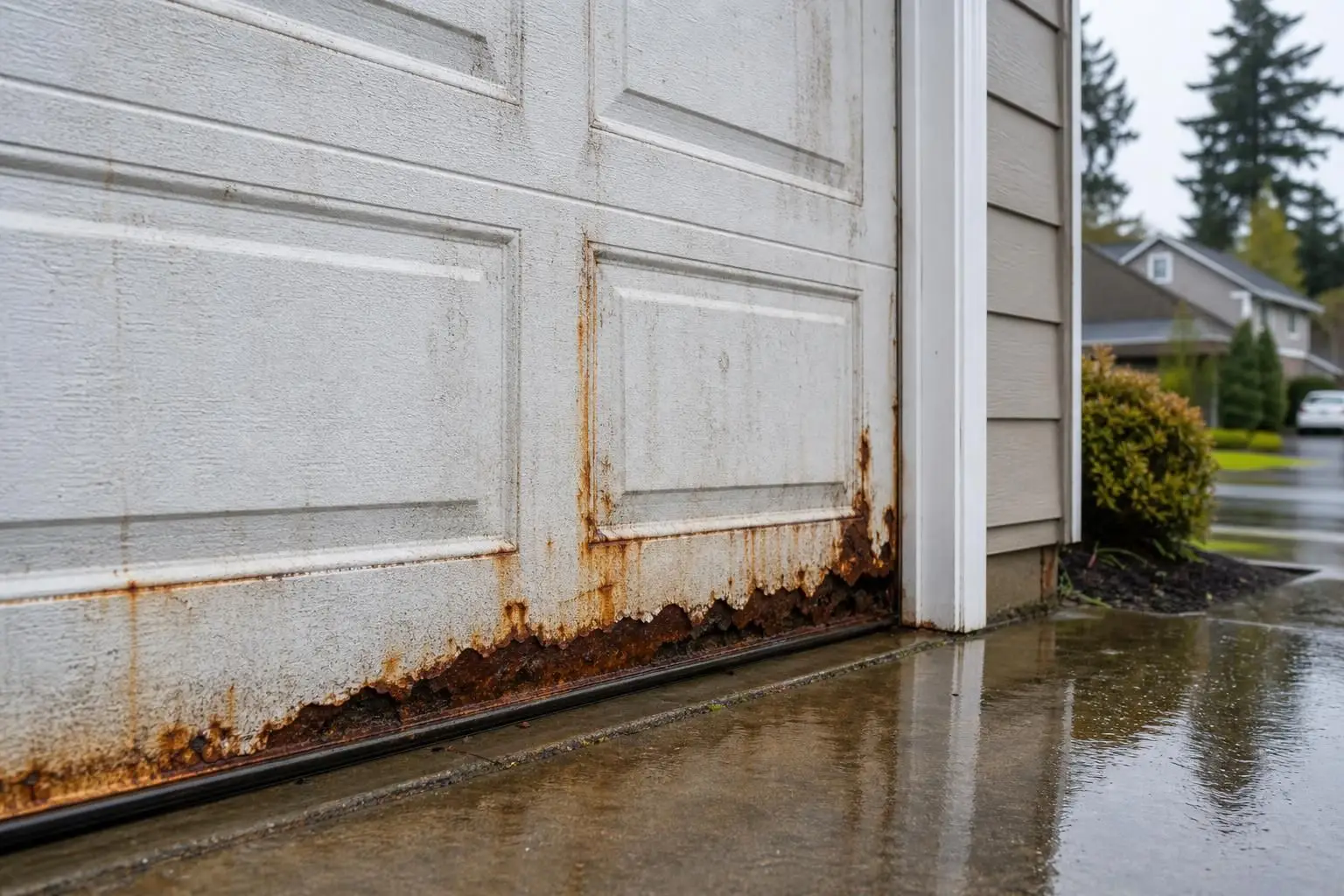
- Rotted trim or soft wood: often at lower corners where water hits.
- Bent tracks or damaged jambs: twists create binding and alignment problems.
- Wrong door size or incorrect track radius: the curve must match the lift path.
- Floor gaps: uneven slabs make sealing harder without rubbing.
Coastal garages often have rusted fasteners that slow removal. If you want better weather protection, plan ahead because seals are easier while everything is exposed. garage weather sealing tips covers useful options.
How Long to Install a Garage Door and Opener (and What Adds Time)
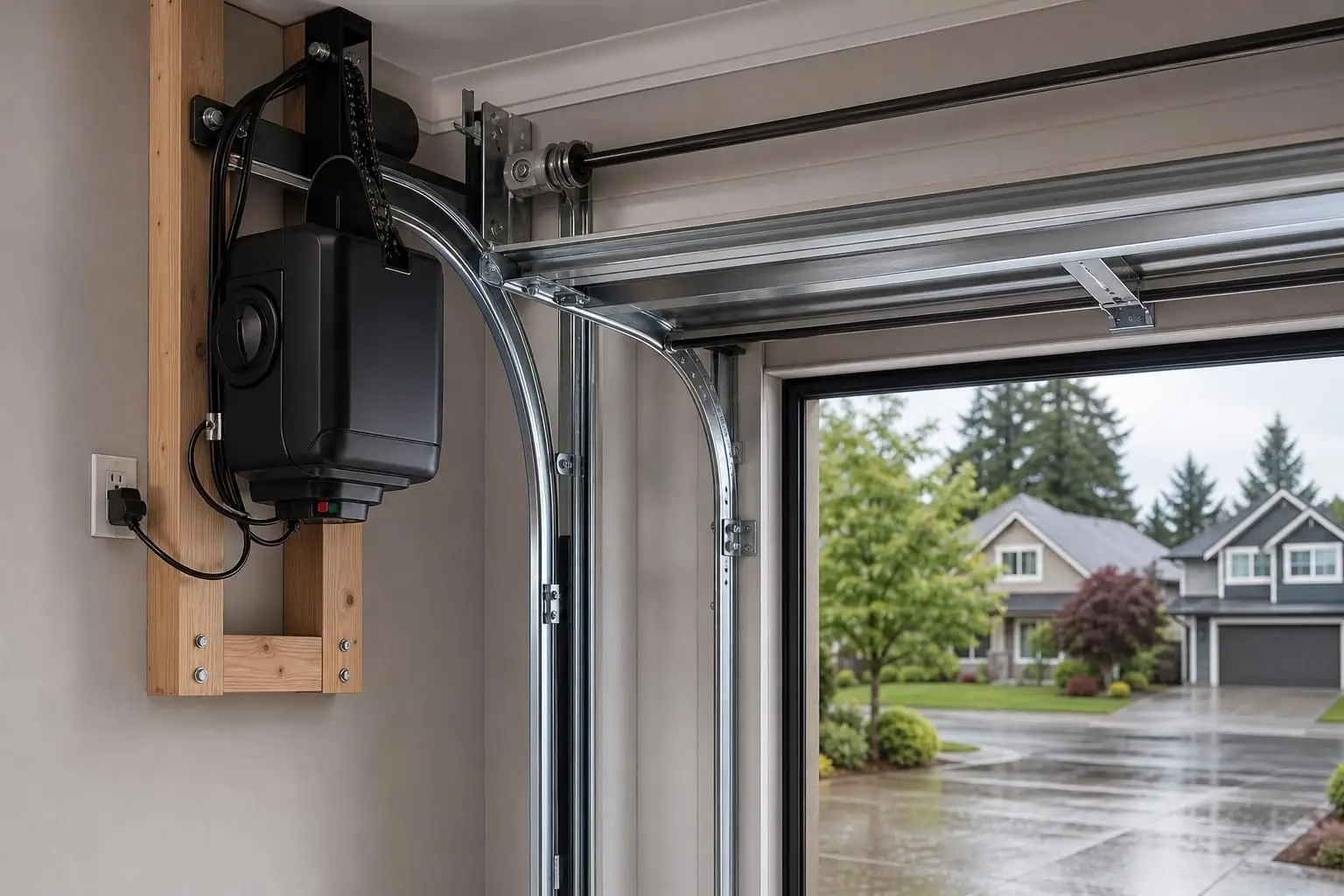
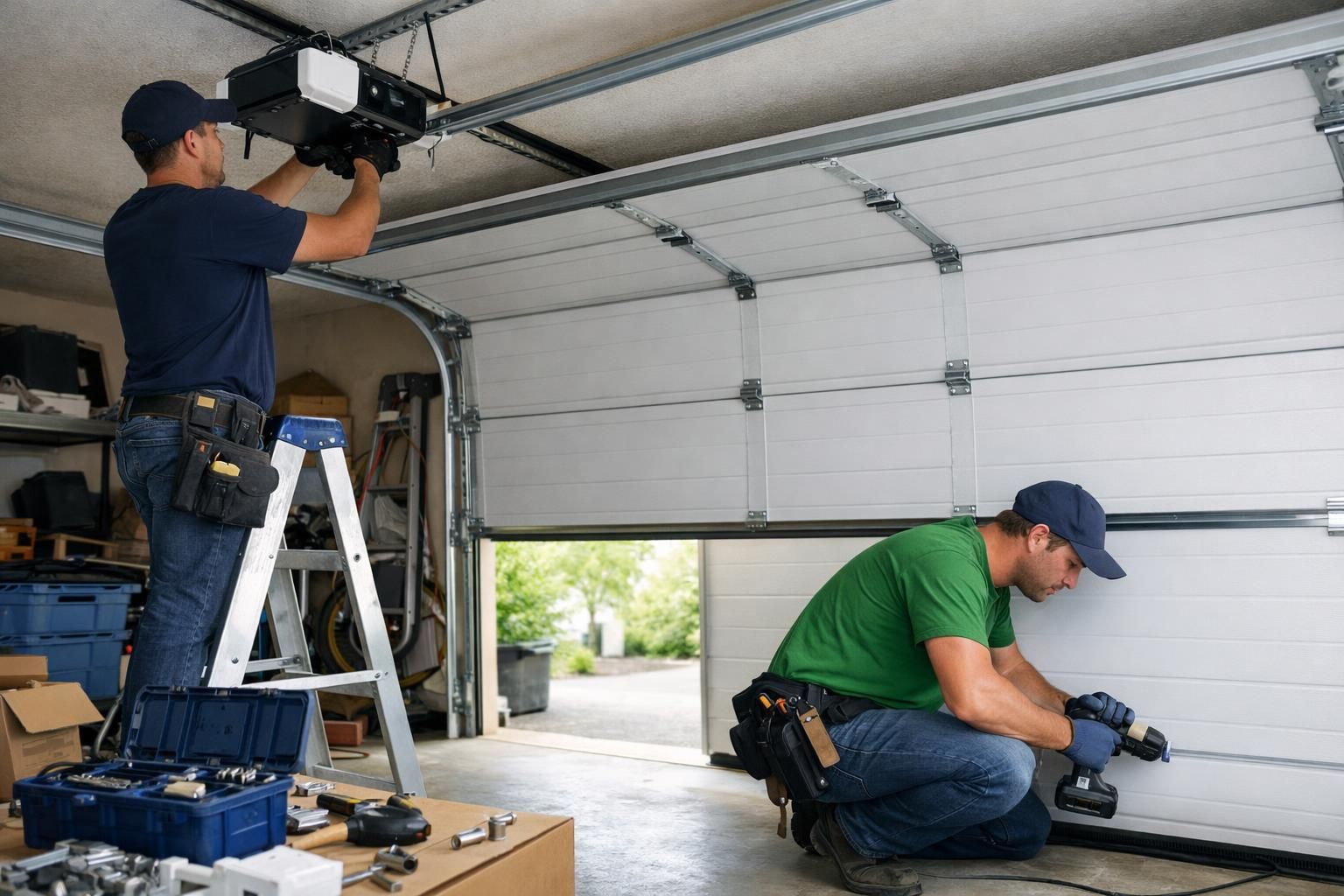
Adding an opener takes longer because it’s mechanical and safety-critical. It includes the motor, rail, trolley, sensors, and travel/force limits that must be tuned so the door stops correctly.
Common time-adders:
- Mounting challenges: some ceilings need added blocking for a secure mount.
- Electrical readiness: a nearby outlet matters; hardwiring is a separate scope.
- Sensor alignment: photo-eyes must line up perfectly.
- Door balance issues: the opener can’t mask a poorly balanced door for long.
If power isn’t available, the opener portion may wait for an electrician. Opener type also affects feel and noise; see chain vs belt opener.
Rule of thumb: if the door doesn’t lift smoothly by hand, expect extra time because the door must be corrected first.
Can You Get Same Day Garage Door Installation?
Same day garage door installation is often realistic when the door is in stock, the opening is standard, and there’s no structural repair needed. In many areas, the limiting factor isn’t the labor. It’s having the correct door, tracks, springs, and hardware ready to go.
You’re more likely to get it done same-day when:
- You’re choosing a common size and style
- The old door comes off cleanly
- The garage has clear access and working lighting
- No reframing, rot repair, or concrete changes are needed
For example, a typical two-car garage in a planned neighborhood often has a standard opening and plenty of headroom. That’s the easiest scenario for a same-day swap. But a custom home with a tall opening, decorative trim details, or a nonstandard radius track might require ordering parts.
If you’re not sure whether your size is standard, measuring helps avoid the “wrong door on the truck” problem. measure common door sizes walks you through what matters.
How to Avoid Delays: Prep Checklist You Can Do Before the Installer Arrives
You can’t prevent every surprise, but you can remove the common friction points that slow install day. Treat it like hosting movers: clear access and solid info speed everything up.
Prep checklist:
- Clear the garage: move cars out and leave room to the door, tracks, and ceiling area.
- Remove fragile items: vibrations and shifting shelves can happen.
- Confirm your door choice: material, insulation, and windows affect weight and hardware.
- Check access: unlock gates, secure pets, and make nearby parking possible.
- Plan remotes and keypads: gather old remotes and decide who needs access.
- Ask about haul-away: confirm old door and packaging removal.
Conclusion
If you’re planning around work, school pickup, or a rainy-day window, knowing how long does garage door installation take helps you set a realistic schedule. In many cases, you’re looking at a same-day job, with extra time when an opener is added or the opening needs repair. Your best next step is to measure, clear the space, and ask the installer what parts and site conditions could slow things down.