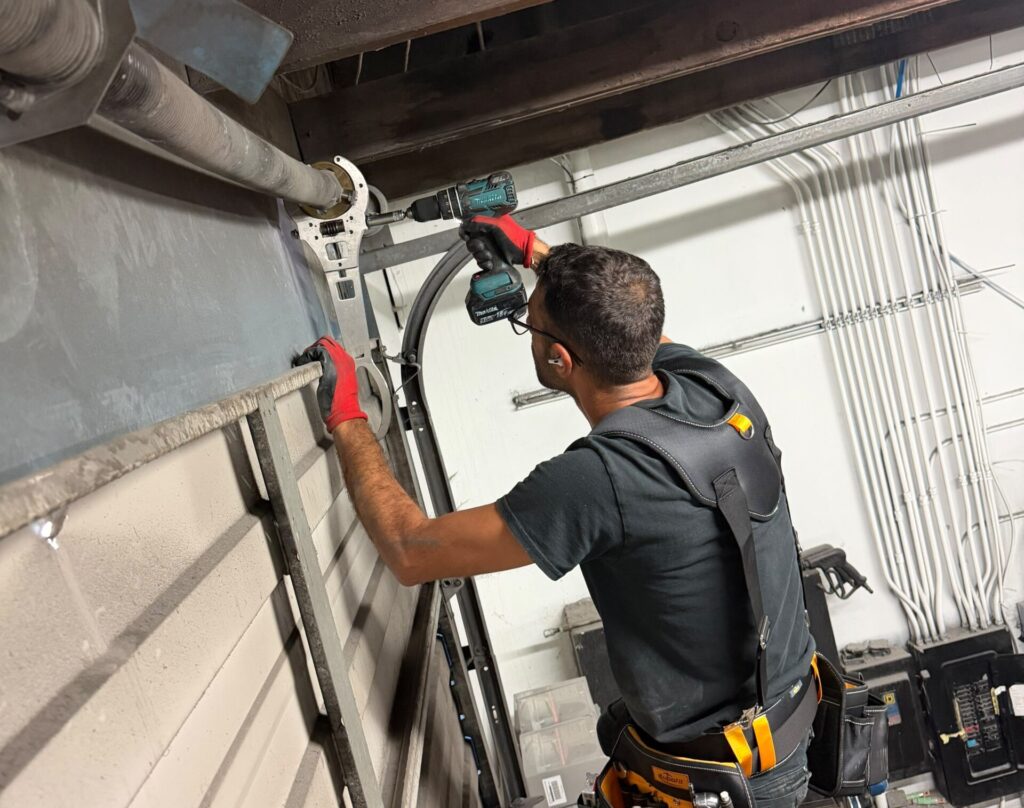
If your garage door opens slowly, it’s usually a sign that something is creating drag, strain, or imbalance. Sometimes the fix is simple, like cleaning dirty tracks or adding the right lubricant. Other times, especially with springs or a tired motor, slow movement can point to a repair that shouldn’t wait. In Seattle-area homes, damp weather, temperature swings, and older garage hardware can all make the problem more noticeable. This guide will help you understand what “slow” really means, what you can safely check, and when it’s time to bring in a garage door opener repair professional.
Best for: Homeowners noticing gradual slowdown who want to separate simple maintenance from repair warning signs.
Not ideal when: The door is crooked, stuck, snapping, shaking hard, or making loud metallic sounds.
Good first step if: You can safely watch the full open and close cycle from inside the garage.
Call a pro if: The door feels heavy by hand, the springs look damaged, or the opener strains.
Quick Summary
- A slow garage door opener may be fighting friction, poor balance, worn rollers, or motor strain.
- Damp Puget Sound weather can make rust, swelling, and sticky hardware worse.
- Springs are under high tension and shouldn’t be adjusted by homeowners.
- Basic cleaning and lubrication can help if the door is otherwise balanced.
- Slow movement becomes urgent when the door shakes, reverses, or hangs unevenly.
Garage Door Opening Slowly? What It Usually Means
A garage door opening slowly can be an early sign that part of the system is creating additional resistance or no longer working efficiently. Common causes include opener settings, worn rollers, dry tracks, spring balance problems, or hardware that has become stiff from age, moisture, or temperature changes.
If you notice your garage door opening slowly compared with its normal movement, pay attention to whether the problem affects both opening and closing and whether you hear grinding, squeaking, or straining sounds. Those details can help narrow down whether the issue is coming from the opener, springs, tracks, rollers, or another component.
Think of the door like a sliding patio door. If it used to glide and now drags, something changed. A garage door moving slow may still open all the way, but the opener may be working harder than it should. For example, a homeowner in Queen Anne might notice the door crawls during cold, wet mornings, then moves better later in the day. That pattern can point to weather-related friction or stiff hardware.
Slow movement can show up in a few ways:
- The door starts moving late after you press the remote.
- It rises a few inches, pauses, then continues.
- It closes smoothly at first, then drags near the floor.
- The opener hums longer than usual.
- The door moves faster by hand than with the opener.
If the door has also become noisy, shaky, or uneven, the slowdown is more than an annoyance. It’s a clue. Regular maintenance helps prevent small issues from turning into bigger repair calls, especially in damp neighborhoods near Lake Washington or Puget Sound. You can learn more about routine upkeep through regular garage door maintenance.
Opener Settings and Motor Strain
A slow opener often means the motor is struggling, the opener settings are off, or the drive system has started to wear. The opener is the powered unit mounted above the door. It pulls or pushes the door using a chain, belt, or screw-style mechanism.
Most openers have force settings. Force means how much push or pull the motor uses before it stops. If the setting is too low, the door may crawl, pause, or reverse. If it’s too high, the opener may force a door through resistance that should’ve been repaired. Neither situation is ideal.
For example, in a North Seattle garage with an older chain-drive opener, the chain may sag slightly and slap during movement. The motor still works, but it sounds tired and the door rises slowly. In that case, the issue may be the opener drive, not the door panels.
A slow garage door opener can also be a warning that internal parts are wearing down. Listen for grinding, clicking, or a motor that runs but doesn’t move the door right away. Those are common signs that the opener is losing efficiency. If you’re comparing symptoms, opener failure signs can help you understand what different noises and delays may mean.
Roller, Track, and Lubrication Issues
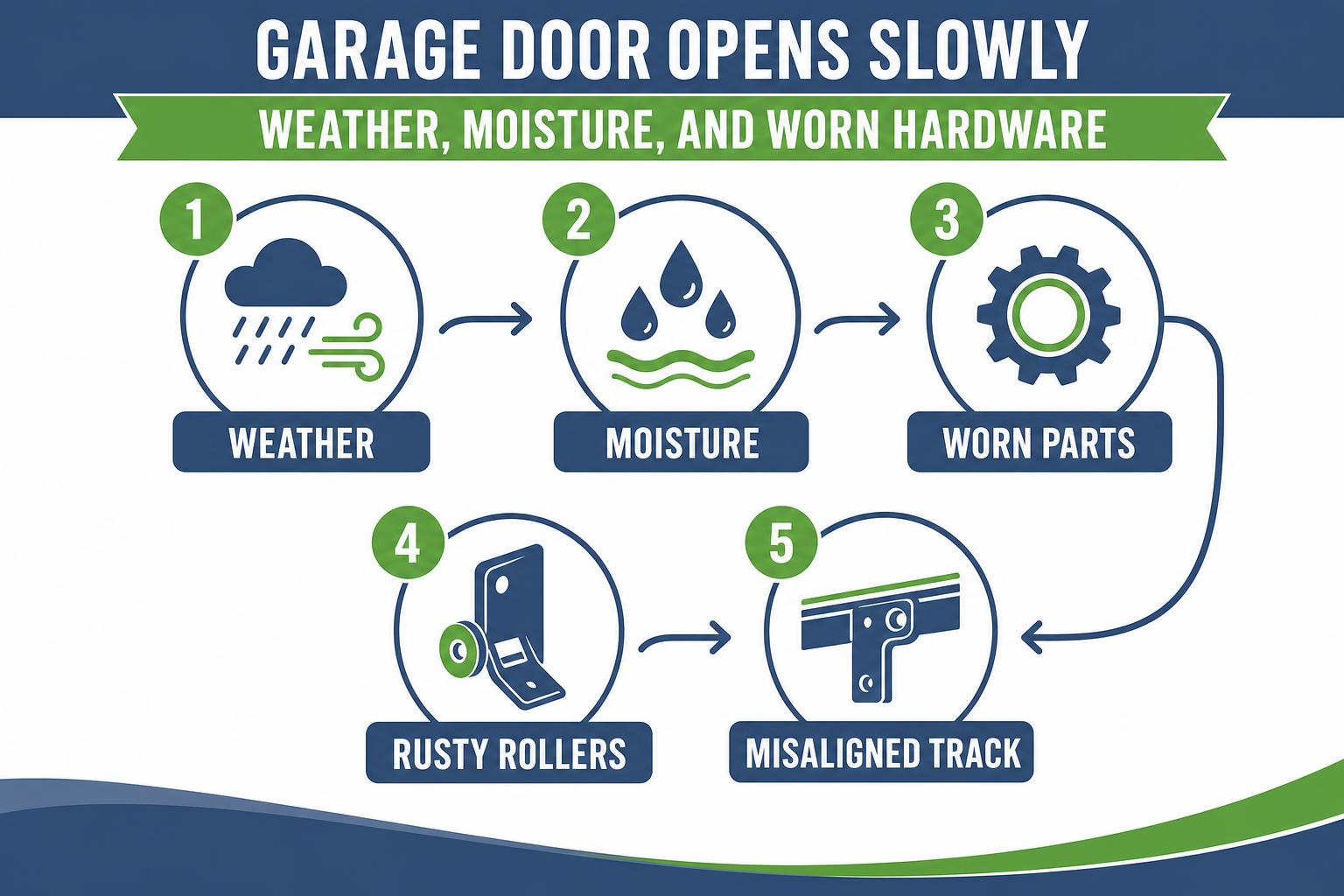
Dirty tracks, worn rollers, and poor lubrication are some of the most common reasons a garage door becomes slow. Rollers are the small wheels on the sides of the door. Tracks are the metal rails those wheels travel inside.
When the rollers don’t turn smoothly, the opener has to pull harder. When the tracks are dirty or slightly bent, the door may drag. Lubrication means applying a garage-door-safe lubricant to moving metal parts so they slide or roll with less friction. Don’t use heavy grease on the tracks themselves. It can collect grit and make the problem worse.
For example, a garage in Ballard that faces wind-driven rain may collect fine debris near the lower tracks. Over time, the rollers hit that grime every time the door moves. The result is a garage door slow to open and close, even though the opener still sounds normal.
Good places to inspect include:
- Rollers that wobble, crack, or stop spinning
- Tracks with packed dirt or visible bends
- Hinges that squeak during movement
- Brackets that look loose
- Areas where the door rubs against the frame
If you want a safe maintenance starting point, follow basic guidance on how to lubricate tracks and rollers. If a roller is cracked or the door keeps jumping in the track, stop using it and get help. A door that leaves the track can become dangerous quickly.
Spring Balance Problems
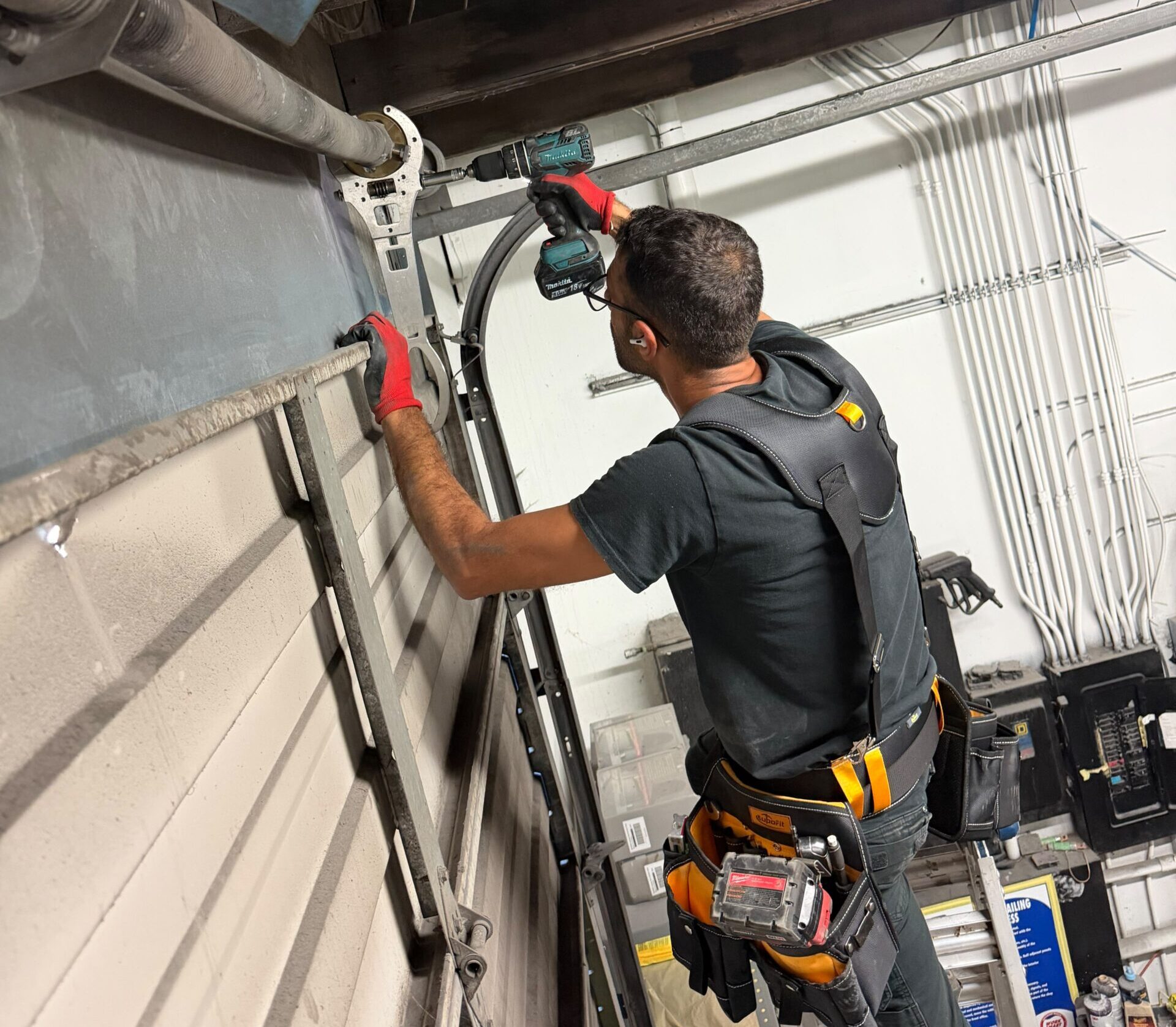
A weak or broken spring can make the door feel heavy, which often causes slow opening even when the opener seems fine. Springs are tightly wound metal parts that help lift the door’s weight. Without proper spring balance, the opener has to do work it wasn’t built to handle alone.
Here’s the simple test concept. When disconnected from the opener, a balanced door should be manageable by hand and should not slam down. But don’t try this if the door is crooked, jammed, or making sharp popping sounds. Springs store a lot of energy. Mishandling them can cause serious injury.
For example, a homeowner in West Seattle may notice the opener pulls the door up a foot, then stops and hums. The motor isn’t necessarily the main problem. The spring may no longer be helping enough, so the opener is lifting too much weight.
Don’t adjust, loosen, or remove spring parts yourself. This is one of the clearest moments to call for service. If you’re tempted to troubleshoot further, read about DIY spring repair dangers before touching anything near the spring system.
Weather, Moisture, and Worn Hardware
Seattle weather can slow a garage door by encouraging rust, swelling, sticky seals, and stiff moving parts. Moisture doesn’t always break something right away. It often creates small resistance that builds over time.
Wood trim can swell. Bottom seals can stick to damp concrete. Metal hardware can corrode. Cold mornings can make old lubricant thicker. If your garage faces an alley, steep driveway, or shaded side of the house, moisture may linger longer than you expect.
For instance, a door in a shaded Capitol Hill garage may drag near the bottom after several wet days. The opener strains for the first few inches, then the door moves normally once the seal breaks free from the floor. That points to moisture and seal friction more than motor failure.
Look for rust on hinges, roller stems, brackets, and the lower track area. Also check weatherstripping, which is the flexible material that seals gaps around the door. If it’s torn, swollen, or folded inward, it can rub against the door while it moves. For weather-specific prevention ideas, see Seattle weather protection.
When Slow Movement Becomes a Safety Issue
Slow movement becomes a safety issue when the door is uneven, jerky, reversing unexpectedly, or unable to stay in position. At that point, the door isn’t just inconvenient. It may be unstable.
A garage door is heavy, and the opener is not a safety brace. If a spring, cable, or roller fails, the opener may not control the door properly. Safety sensors, which are the small devices near the floor that detect objects in the doorway, also need to work correctly. If they are misaligned, the door may stop or reverse during closing.
For example, a family in Shoreline may see the door close halfway, slow down, then reverse with the opener light blinking. That could be sensor trouble, track resistance, or both. If kids, pets, bikes, or storage bins are near the doorway, don’t keep testing it over and over.
Stop using the door if you notice:
- One side is lower than the other.
- A cable looks loose or frayed.
- The door slams shut.
- The opener rail bends during movement.
- The door pops loudly.
- The door comes off track.
If sensors seem involved, basic sensor checks may help. But if the door is also crooked or dragging, sensor adjustment alone won’t solve the root cause.
Simple Checks Homeowners Can Do
Homeowners can safely check visible dirt, remote response, sensor alignment, and obvious hardware wear without taking the door apart. The key is to observe first and avoid any part under tension.
Start with the door closed. Stand inside the garage where you can see both tracks. Run one full open and close cycle. Watch the rollers, listen to the opener, and notice where the slowdown happens. Does it start right away? Near the middle? Close to the floor?
For example, in a Ravenna home, the door may slow only at the same spot every time. That often suggests track friction or a damaged roller in that area. If the slowdown happens randomly, the opener or sensor system may be more likely.
Try these simple checks:
- Clear boxes, tools, and bikes away from the tracks.
- Wipe visible dirt from the inside of the tracks.
- Look for rollers that don’t spin.
- Check that sensor lights are steady.
- Replace weak remote batteries if response is delayed.
- Listen for scraping, grinding, or popping.
Don’t remove brackets, loosen cables, or adjust springs. If you see a roller partly out of the track, stop. Door track problems need careful handling, and off track door repair explains why it’s not a casual fix.
When to Schedule Garage Door Repair
You should schedule garage door repair when slow movement continues after basic cleaning, lubrication, and sensor checks. You should also call sooner if the door feels heavy, moves unevenly, or the opener sounds strained.
Garage door opener repair is often needed when the motor runs too long, the drive system slips, or the opener can’t move a properly balanced door. But the opener isn’t always the cause. A technician will usually check the full system, including springs, rollers, cables, tracks, hinges, safety sensors, and opener settings.
For example, a homeowner in Magnolia might assume the motor is failing because the door crawls upward. During inspection, the real issue could be worn rollers and a weak spring. Replacing only the opener wouldn’t fix the slow movement.
Schedule service if:
- The slowdown gets worse over a few days.
- The opener hums but the door barely moves.
- The door reverses for no clear reason.
- The door shakes or binds in the tracks.
- The springs, cables, or rollers look damaged.
- You’ve lubricated moving parts and nothing improves.
If rollers look worn, chipped, or loose, it’s worth reviewing roller replacement signs before the door becomes harder to move. Early repair is usually simpler than waiting until the door jams.
Conclusion
When a garage door opens slowly, treat it as an early warning instead of a normal part of aging. Start with safe checks: watch the movement, clear the tracks, look at the rollers, and listen to the opener. If the door is heavy, uneven, noisy, or still slow after basic maintenance, schedule repair. A careful inspection can protect the opener, the door, and everyone using the garage.