A garage door balance test helps you tell whether your door’s springs are doing their job or leaving the opener to carry too much weight. That matters because a balanced door should feel controlled, not heavy, jumpy, or stubborn. If you live around Seattle, where damp weather can affect metal parts and older neighborhood garages may have aging hardware, this simple check can give you an early warning. You’ll learn what the test shows, how to do it safely, what warning signs to watch for, and when it’s time to stop and call a trained technician.
Quick Summary
- A balanced garage door should stay partly open without rising or falling quickly.
- If the garage door is off balance, the springs may be worn, loose, or damaged.
- Never adjust springs or cables yourself because they’re under high tension.
- A heavy door can strain the opener, rollers, tracks, cables, and hinges.
- Stop testing if the door jerks, drops, tilts, or feels unsafe.
What a Garage Door Balance Test Tells You
A garage door balance test tells you whether the springs are correctly supporting the door’s weight. Springs are tightly wound metal parts that help lift the heavy door so you and the opener don’t have to lift the full load.
Think of the springs like a helper standing beside you. If that helper is strong and steady, the door moves smoothly. If the helper is tired, the door feels heavy, drops too fast, or refuses to stay open. For example, in an older detached garage in Fremont, a wooden door may look fine from the driveway but still feel unusually heavy because the springs have weakened over time.
This check doesn’t repair anything. It’s only a warning sign. A garage door spring balance test can point toward spring trouble, cable issues, friction in the tracks, or extra weight from a damaged panel. In rainy areas like Seattle, rust and grime can also make movement rougher.
A balance test can help you notice:
- A door that drops when released
- A door that shoots upward
- A door that feels much heavier than usual
- A door that opens unevenly
- An opener that sounds strained
If your door has changed suddenly, don’t ignore it. Sudden changes often mean a part has failed or is close to failing.
Safety Warning Before Testing the Door
You should only test a garage door if it looks stable, moves normally, and has no obvious broken parts. If anything looks crooked, loose, frayed, or cracked, skip the test.
A garage door is heavier than it looks. The opener, which is the motorized unit that pulls the door open and closed, doesn’t actually carry all that weight when everything is working correctly. The springs do most of the lifting. If they’re weak or broken, the door can drop fast. For example, if you pull the emergency release on a door in a sloped Queen Anne driveway garage and the door falls, you may not have time to react.
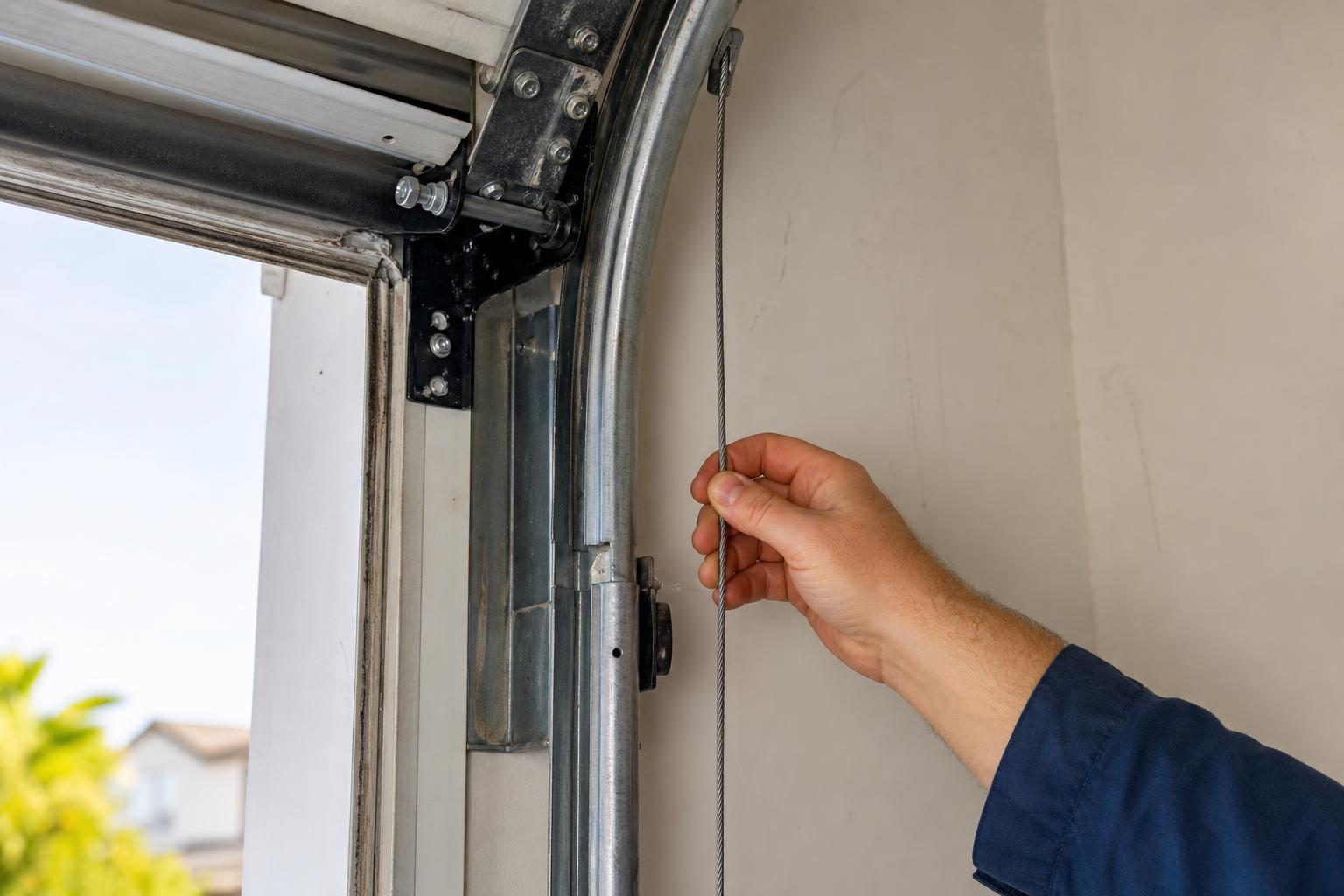
Before you touch anything, look at the system from a safe distance. Check the springs above the door or along the sides, depending on your setup. Look at the cables, which are the metal ropes that help lift the door. If a cable is hanging loose or wrapped strangely around the drum, stop.
Don’t test the door if you see:
- A visible gap in a spring
- A cable that looks frayed or loose
- A door sitting crooked in the opening
- Bent tracks
- Rollers out of the track
- Panels cracked near hinges
- Loud popping or grinding sounds
Keep children, pets, and parked bikes away from the opening. In many Seattle garages, space is tight, and stored items sit close to the tracks. Clear the area first so nothing gets caught if the door moves unexpectedly.
How to Do a Simple Balance Check
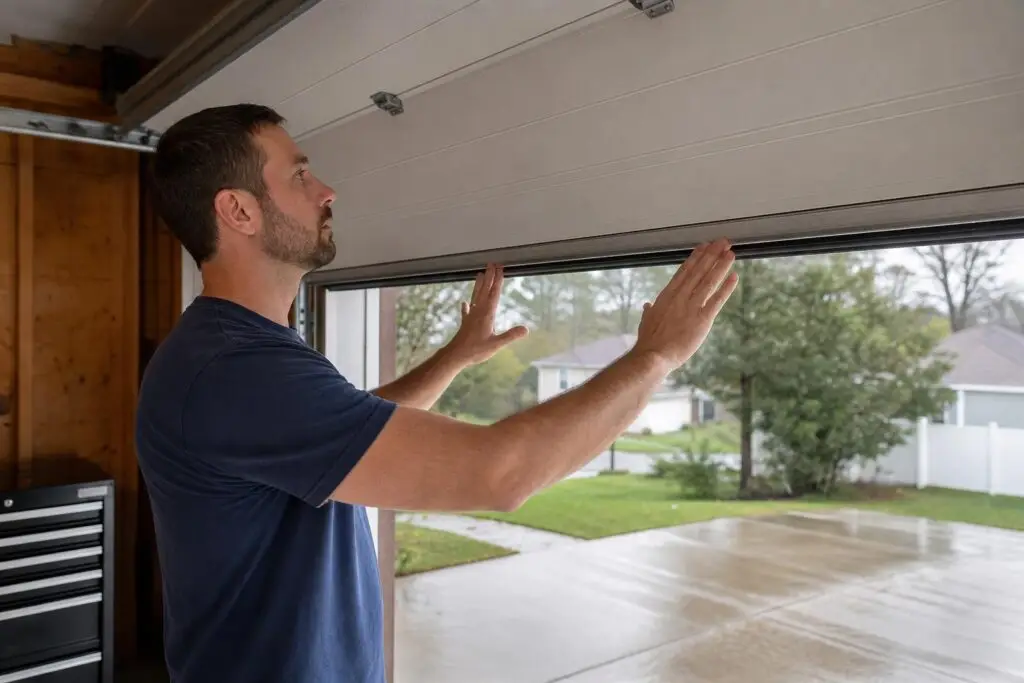
The safest simple balance check is to disconnect the opener, lift the door by hand to waist height, and see whether it stays there. This tells you how the door behaves without help from the motor.
Start with the door fully closed. The door should be resting on the floor. If it won’t close all the way, don’t force it. For example, if your garage door in West Seattle stops several inches above the concrete, there may be a track, cable, or sensor issue that needs attention before a balance check.
Follow these steps slowly:
- Close the garage door fully.
- Pull the red emergency release cord to disconnect the opener.
- Stand to the side, not directly under the door.
- Lift the door by hand to about waist height.
- Let go carefully while keeping your body clear.
- Watch whether the door stays in place, rises, or falls.
- Lower the door gently when finished.
- Reconnect the opener only after the door is fully closed.
A balanced door should stay near the position where you leave it. A little movement can happen, especially with older doors. But it shouldn’t slam down or fly up.
If the garage door will not stay open, that’s a strong clue that the springs aren’t carrying enough weight. If it rises on its own, the spring tension may be too strong. Either way, don’t try to fix the tension yourself. If the opener has also been acting strange, this guide to opener failure signs can help you tell whether the motor may have been stressed by the imbalance.
Signs the Door is Too Heavy
A garage door feels heavy when the springs are no longer offsetting enough of the door’s weight. You may notice this by hand, through opener behavior, or by how the door moves.
The easiest clue is effort. If you disconnect the opener and can barely lift the door, something is wrong. Most properly balanced residential doors should feel manageable, even though they’re physically heavy. For example, if a homeowner in Ballard has to use both hands and strain just to lift the door a foot, the opener has probably been working too hard.
You might also notice the door starts closing normally, then drops near the bottom. Or it may open halfway and stop. These are common signs that the system isn’t balanced.
Watch for these clues:
- The opener hums or strains
- The door reverses for no clear reason
- The door drops when halfway open
- The door is hard to lift by hand
- The top section bends when opening
- The door shakes or jerks
- The opener rail flexes
Cold, damp weather can make weak parts feel worse. Metal contracts slightly in colder conditions, and old rollers may not move as freely. But weather alone usually doesn’t explain a door that suddenly feels very heavy.
If the garage door is off balance after a panel replacement, insulation upgrade, or hardware change, the door’s weight may have changed. A spring system matched to the old setup may not fit the new one.
What an Unbalanced Door Can Damage
An unbalanced garage door can damage the parts that guide, lift, and power the door. The problem usually starts small, then spreads because each part has to compensate for the extra load.
Think of it like carrying a heavy grocery bag with one weak handle. At first, you may get by. Then the handle stretches, your wrist strains, and the bag tilts. A garage door works the same way. For example, a heavy insulated door on a narrow Capitol Hill garage may strain the opener and pull unevenly on older cables.
Unbalanced movement can lead to:
- Worn rollers
- Bent tracks
- Loose hinges
- Frayed cables
- Damaged spring parts
- Opener motor strain
- Door sections cracking near brackets
If the door starts leaning or rollers leave the track, stop using it. A door that’s no longer seated in the tracks can become dangerous quickly. You can read more about warning signs around off track repair if the door looks crooked or jammed.
Springs
Springs can wear faster when the door is too heavy or poorly balanced. A weak spring may stretch, lose tension, or break, leaving the door much harder to lift.
For example, if one spring breaks on a two-spring system in a Ravenna garage, the door may still move a little, but the remaining spring is overloaded. That’s not a safe temporary fix.
Cables
Cables can fray, slip, or snap when the door pulls unevenly. These cables help transfer lifting force from the springs to the bottom of the door.
For instance, if one side of the door rises faster than the other, the cable on the slower side may loosen. That can make the door tilt, bind in the track, or stop halfway.
Opener Motor
The opener motor can burn out sooner when it has to lift a door the springs should be lifting. The opener is designed to guide movement, not act like a weightlifting machine.
For example, if your opener in a Shoreline garage groans every morning and the door crawls upward, the motor may be struggling against a balance issue. Basic care can help, but it won’t solve spring tension problems. For general prevention, see opener lifespan tips.
Why Spring Adjustment is Not a DIY Job
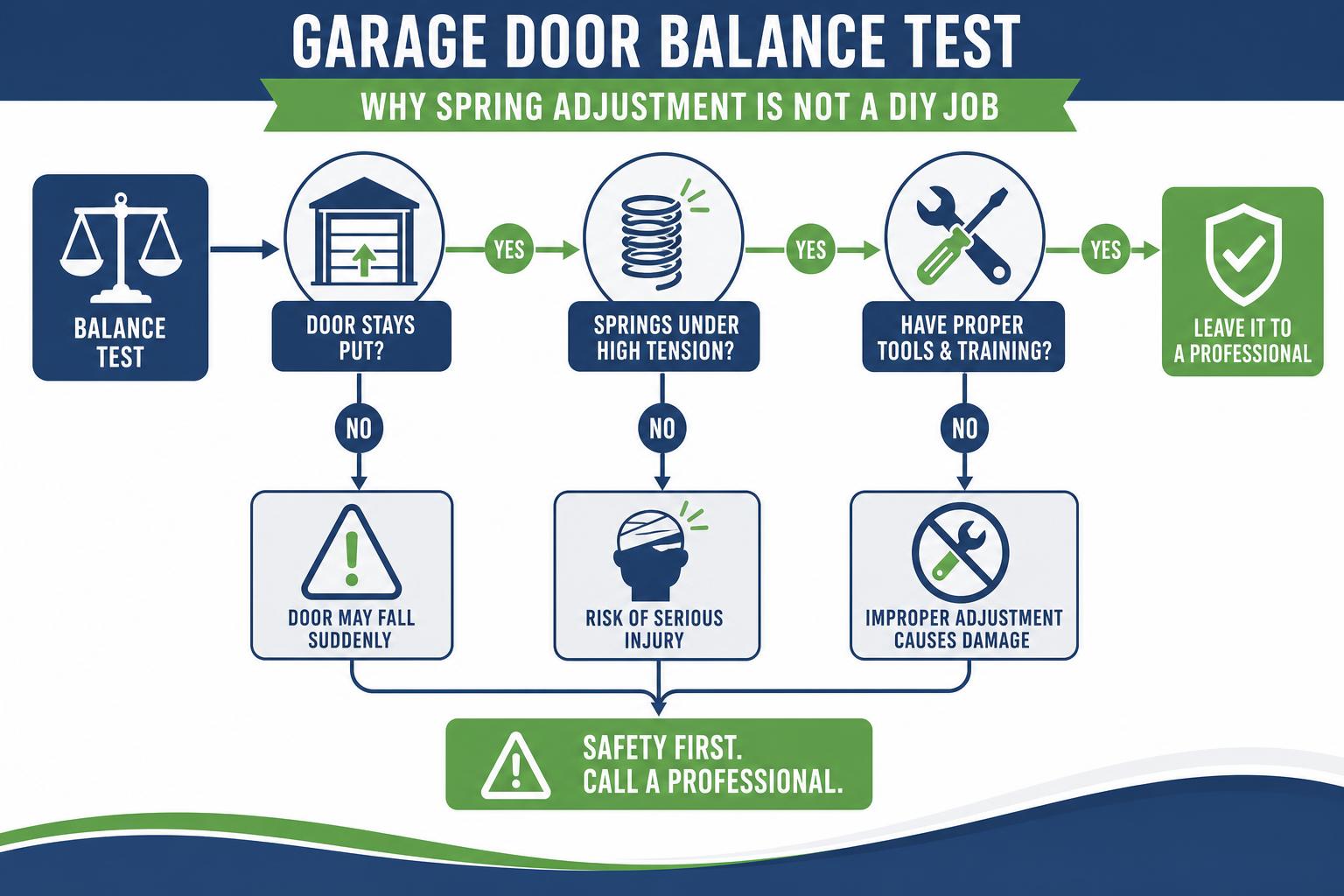
Spring adjustment is not a do-it-yourself job because garage door springs store enough force to cause serious injury. The danger isn’t just the spring itself. It’s the tools, cables, brackets, and door weight all moving together.
There are two common spring types. Torsion springs sit above the door and twist to store energy. Extension springs stretch along the sides of the door. Both can be dangerous when adjusted without training. For example, a homeowner in Green Lake might think tightening a spring by one turn sounds simple, but the wrong movement can release force suddenly.
A spring adjustment also requires matching the spring to the door. Door height, weight, material, and hardware all matter. If the door has been insulated, repaired, or fitted with heavier panels, the old spring setup may no longer be right.
Common DIY mistakes include:
- Using the wrong winding tools
- Loosening the wrong set screw
- Standing in the spring’s path
- Over-tightening the spring
- Ignoring cable position
- Testing the door before parts are secure
Online videos can make the job look predictable, but real garages aren’t always clean, level, or built the same way. Older Seattle homes may have low ceilings, tight side clearance, or custom door sizes. Those details change the repair approach. If you’re tempted to adjust springs, read about DIY spring repair dangers before touching the hardware.
When to Call for Service
You should call for service when the door fails the balance check, feels unsafe, or shows signs of spring, cable, track, or opener strain. Waiting can turn a small repair into a larger problem.
If the door drops from waist height, don’t keep testing it. If it rises on its own, don’t try to “even it out” by adjusting random parts. For example, if your garage door in Magnolia opens halfway and then slides down after you disconnect the opener, that’s a clear service call.
Call sooner if you notice:
- The garage door will not stay open
- The door slams shut
- One side is higher than the other
- A spring has a visible gap
- A cable is hanging loose
- The opener rail bends
- The door is stuck open or closed
- You hear a loud bang from the garage
A technician can safely check spring tension, cable condition, roller movement, track alignment, and opener force settings. Opener force settings are the limits that tell the motor how hard to push or pull. They shouldn’t be used to hide a heavy door problem.
If the door won’t move at all, keep cars, kids, and pets away until it’s checked. You may also find this guide on a garage door that won’t open helpful while you decide what to do next.
Conclusion
A garage door balance test is a simple way to spot a door that’s becoming too heavy, uneven, or unsafe. Start with a visual check, test only when the door looks stable, and stop immediately if it drops, rises, tilts, or feels wrong. Don’t adjust springs or cables yourself. If your Seattle-area garage door fails the test, the safest next step is to have a trained technician inspect the springs, cables, opener, and tracks before more damage occurs.