If your garage door looks crooked, rubs on one side, or stops halfway up, a bent garage door track in Seattle may be the cause. The track is the metal guide that the rollers move through as the door opens and closes. When it bends or shifts, the door can move unevenly or bind.
This guide explains warning signs, common causes, safe checks, and when the track may need repair, realignment, or replacement. If the door is fully off-track, hanging, or supported unevenly, stop using it and call for professional help.
Quick Summary
- A bent or misaligned track can make the garage door crooked, noisy, stuck, or uneven.
- Stop using the opener if the door rubs, tilts, jumps, or scrapes.
- Safe checks include looking for gaps, scrape marks, loose brackets, and unusual movement.
- Repair, realignment, or replacement depends on the bend, brackets, rollers, and door balance.
- Don’t try to bend tracks back or force rollers into place yourself.
Signs the Track is Bent or Misaligned
A garage door track is probably bent or misaligned when the door rubs, scrapes, tilts, or leaves uneven gaps as it moves. If the rail shifts, rollers may stop gliding smoothly.
Check from inside the garage without putting fingers near rollers, hinges, cables, or between sections. Stand back and look for these signs:
- The garage door looks crooked when closed.
- One side rises faster than the other.
- The door rubs the track on one side.
- You hear metal scraping, grinding, or popping.
- A roller sits at an odd angle.
- There is a widening gap between the rollers and the track.
- The door rises a few inches, tilts, then stops.
- The opener strains or reverses before the door is fully open.
If the door is jammed, tilted, or partly off the track, stop. A garage door repair service inspection can confirm the cause.
Why Track Damage Can Get Dangerous Fast
Track damage can become dangerous because the door is heavy, spring-loaded, and meant to move along a controlled path. Once the track bends, rollers can bind, twist, or pop out while the opener keeps pushing.
Garage door springs store force to help lift the door’s weight. That stored force means a crooked or stuck door can shift suddenly if the wrong part moves.
The opener can make damage worse. If you keep pressing the remote while the door rubs the track, it can bend brackets, crack rollers, pull screws loose, or push the door further out of alignment.
Stop immediately if the garage door is crooked:
- Don’t pull the emergency release while the door is tilted.
- Don’t try to push the door closed by hand.
- Don’t hammer the track back into shape.
- Don’t loosen springs, cables, hinges, or brackets.
- Don’t stand under a stuck door.
If the door is stuck open or uneven, use the emergency garage door repairs guide while you wait.
What Causes Bent Garage Door Tracks
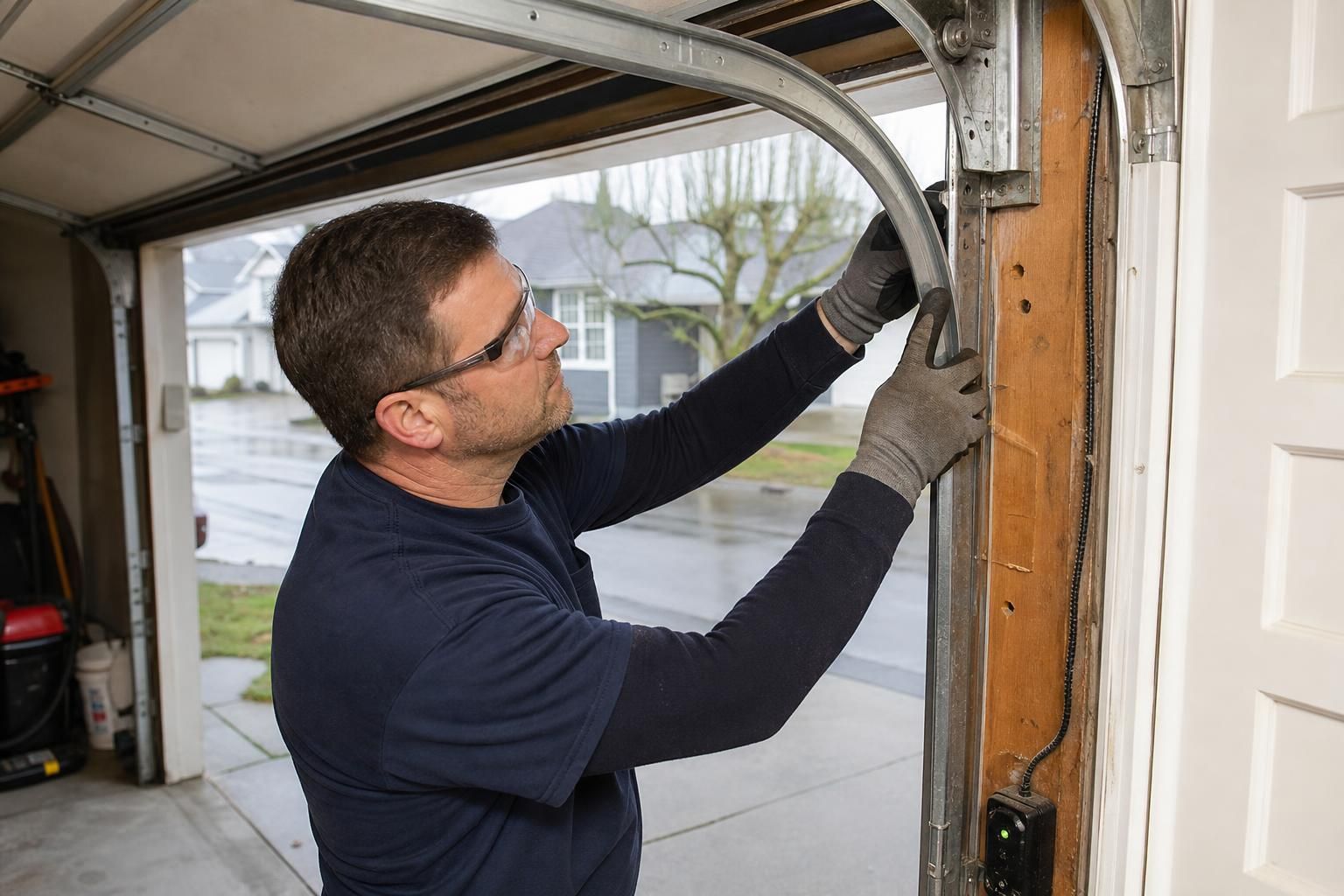
Bent garage door tracks are usually caused by impact, worn moving parts, loose hardware, corrosion, framing movement, or poor previous installation. In Seattle homes, moisture and seasonal changes can add stress.
Impact damage is the most obvious cause. A bumper, bike, trash bin, or storage rack can hit the vertical rail, and the door may not scrape until later.
Worn rollers are another common cause. If a roller cracks, flattens, or stops turning smoothly, it can drag instead of roll, pushing the track out of alignment.
Loose brackets matter too. If screws loosen, the track can shift away from the door. You may hear a garage door rubbing track noise before seeing a gap.
Moisture-related corrosion can weaken metal and roughen roller movement. Basic maintenance for tracks and rollers helps normal upkeep, but lubrication won’t fix a bent track.
Poor installation or framing settlement can also leave the track slightly out of line, causing rollers to bind over time.
Repair vs Realignment vs Replacement
Repair, realignment, or replacement depends on how badly the track is bent, whether brackets are secure, and whether the door still moves safely. A small shift may need realignment. A kinked, cracked, or repeatedly failing track may need replacement.
Repair fixes a localized issue, such as a loose bracket or minor track damage. Realignment repositions the track so rollers travel straight. Replacement removes the damaged track section and installs a new one.
| Track solution | Usually fits when | Not enough when | Pro checks |
|---|---|---|---|
| Repair | Small bend or loose hardware | Metal is cracked or crushed | Brackets, fasteners, roller movement |
| Realignment | Track shifted out of position | Door is badly tilted or binding hard | Spacing, level, door balance |
| Replacement | Severe bend, rust, or repeated derailment | Door sections or frame are also damaged | Track condition, rollers, hinges, framing |
If your door rises a few inches, tilts, and stops, one roller may be binding or the track may be out of alignment. If scraping returns after each use, the track may be too damaged for adjustment.
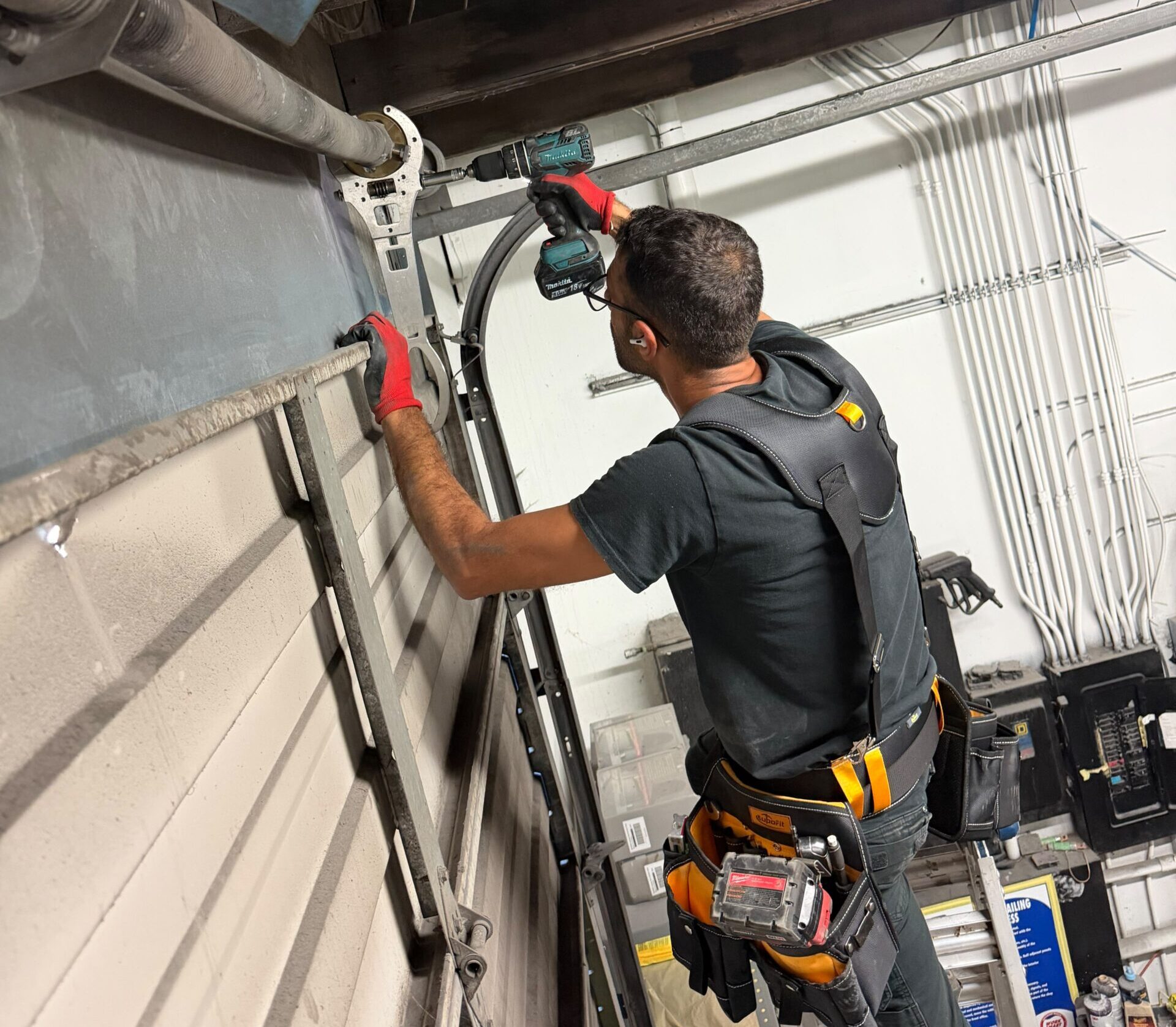
Dan’s Garage Door Services can inspect a bent garage door track in Seattle and determine whether realignment or replacement is safer. A technician checks roller condition, hinge wear, bracket strength, opener force, door balance, and whether panels are being pulled out of square.
If the door is aging or repeatedly going crooked, replacement planning may beat repeated repairs. Compare broader warning signs in key replacement signs before deciding.
What Not to Do With a Crooked Door
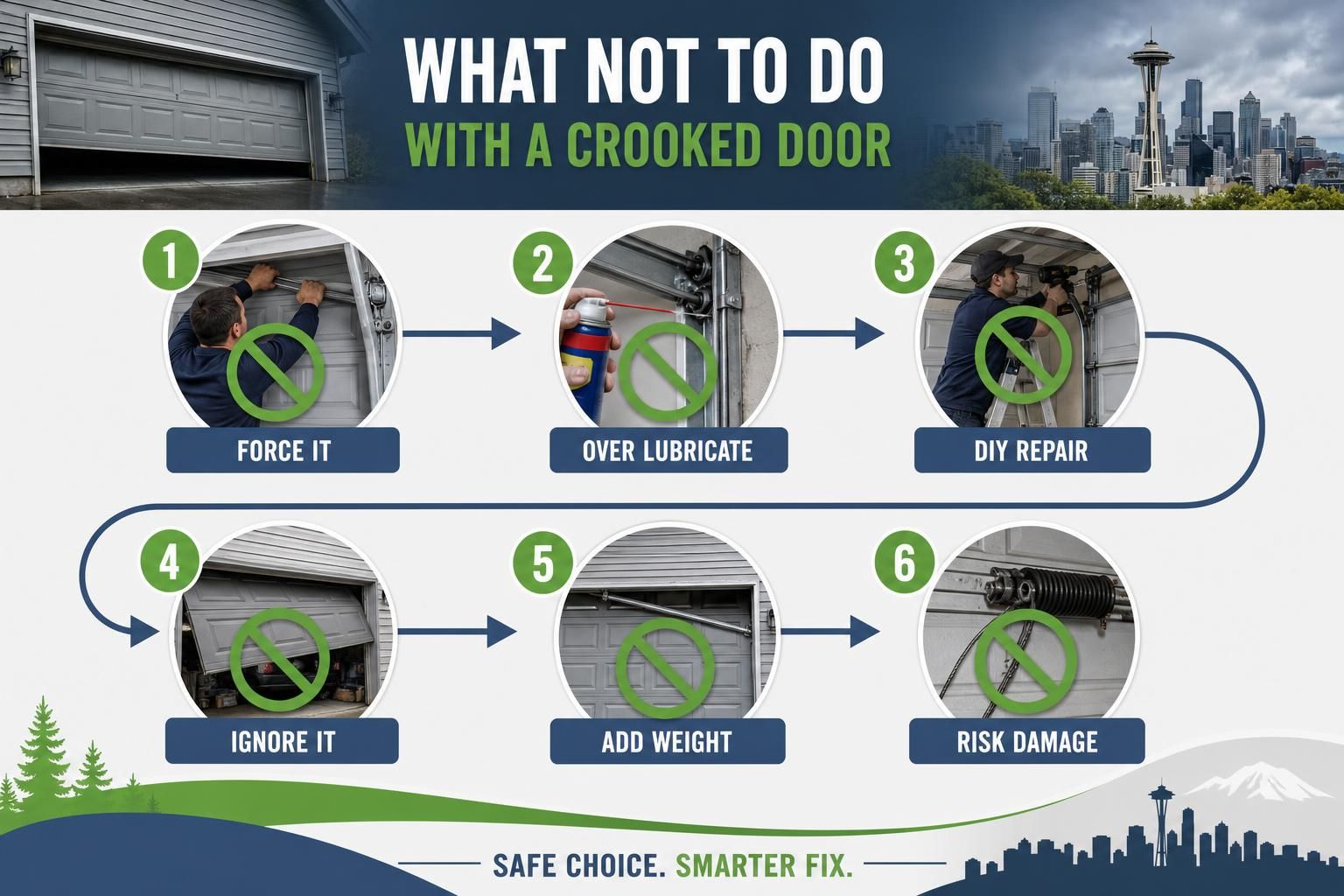
Don’t force a crooked garage door. Forcing it can turn a track problem into roller damage, opener strain, or a full off-track situation. The safest homeowner task is observation.
Use this safe check sequence instead:
- Leave the opener alone and don’t keep testing it.
- Stand inside the garage, away from the door path.
- Look for obvious rubbing, gaps, loose brackets, or rollers sitting crooked.
- Listen for scraping, popping, or grinding if the door moved recently.
- Take photos from a safe distance for the technician.
- Keep people, pets, and stored items away from the door.
Don’t bend the track with pliers, remove bracket bolts, pull a roller back into the track, or adjust springs and cables. Those parts can move fast and cause injury.
Don’t blame the opener first. It may stop or reverse because it senses binding. Also, don’t add lubricant to a bent area and keep using the door. Lubrication may quiet normal movement, but it won’t straighten metal or fix loose mounts.
Call for Track Repair in Seattle
Call for track repair in Seattle when the door is crooked, rubbing, noisy, stuck, or showing signs that the rollers aren’t traveling smoothly. Early inspection can prevent extra damage to rollers, hinges, brackets, and the opener.
Before you call, gather a few simple details. Note what you saw and when it started. Was there a bumper tap? Did the door rise a few inches and stop? Is the gap bigger on one side? Did you hear metal scraping?
You can also take photos from a safe distance. Helpful photos show the vertical track, roller area, lower bracket area, and scrape marks. Don’t climb, loosen parts, or reach around the track to get a better angle.
If you’re not sure whether the issue is urgent, a free garage door consultation can help you describe the symptoms and decide whether the door should stay unused until a technician arrives. Dan’s Garage Door Services can inspect the track, rollers, brackets, and opener force to recommend repair, realignment, or replacement.
Conclusion
A bent garage door track in Seattle isn’t something to ignore or force through with the opener. If the door is rubbing, crooked, scraping, or stopping unevenly, stop using it and inspect only from a safe distance.
Small alignment problems may be repairable. Severe bends, cracked metal, rust, damaged brackets, or repeated roller issues may call for replacement. Dan’s Garage Door Services can check the track, rollers, brackets, opener behavior, and door balance, then explain the safest repair, realignment, or replacement option for your Seattle garage.