If your garage door opener hums but door won't move, the opener is getting power, but something is stopping the door or motor from doing its job. That humming sound is a clue. It can point to a locked door, a disconnected opener, a broken spring, a jammed track, or worn parts inside the opener. For homeowners around Seattle, damp weather can also make rusty rollers, swollen trim, and sticky tracks more noticeable. You'll learn the safe first checks, what the sound usually means, and when it's time to stop before a simple garage door stuck problem becomes dangerous.
Best for: Homeowners who hear humming and want safe checks before calling for garage door repair.
Not ideal when: The door is crooked, hanging loose, or supported by a visibly broken spring or cable.
Good first step if: The opener has power but the door doesn't lift, lower, or respond normally.
Call a pro if: The door feels extremely heavy, moves unevenly, or any spring or cable looks damaged.
Quick Summary
- A humming opener usually means the motor has power but can't move the door.
- Start with simple checks, such as locks, power, remotes, and the emergency release.
- Broken springs and cables are dangerous and shouldn't be handled as a do-it-yourself repair.
- Track, roller, and obstruction problems can make the opener strain or stop.
- Replacing the opener may make sense if internal parts are worn or failure keeps returning.
What the Humming Sound Usually Means
A humming sound usually means the opener motor is trying to work, but the door or opener mechanism is stuck. Think of it like pressing the gas pedal while your car is in park. Energy is there, but movement isn't happening.
If you hear garage door motor humming, don't keep pressing the remote over and over. That can overheat the motor or make a damaged part worse. For example, a homeowner in a tight Seattle driveway might press the wall button several times before leaving for work, only to smell a warm electrical odor near the opener. That's a sign to stop.
The most common causes include:
- The door is manually locked.
- The opener is disconnected from the door.
- A spring or cable has broken.
- A gear inside the opener is stripped.
- A roller, hinge, or track is jammed.
- Something is blocking the door's path.
If the sound is new, compare it with other noises you've heard from the system. A guide to garage door noise can help you tell humming from grinding, rattling, or squealing.
First Checks Before Touching the Door
The safest first checks are the ones that don't require lifting, forcing, or disassembling the door. Start with the easy things because many opener humming no movement cases come from a setting, lock, or blockage.
Look at the opener light, wall button, remote, and power outlet. Make sure the opener is plugged in. Check whether the wall control has a vacation lock, which is a setting that blocks remote operation. For example, after a weekend away in Ballard, you might return and find the wall control locked while the opener still makes a faint hum.
Use this simple order:
- Stand inside the garage.
- Keep people and pets away from the door.
- Look for objects near the bottom seal.
- Check whether the manual slide lock is engaged.
- Press the wall button once.
- Stop if the door strains or tilts.
Don't pull the emergency release cord yet if the door looks crooked or feels under tension. That red cord disconnects the opener from the door. If a spring is broken, the full weight of the door can drop suddenly.
The Door May Be Locked or Disconnected
A locked or disconnected door can make the opener hum because the motor is running against resistance or has nothing useful to move. This is one of the simplest problems to check.
Many garage doors have a manual slide lock on the inside. It looks like a small metal bar that slides into the track. If it's engaged, the opener may hum, click, or strain without moving the door. For example, someone in a shared driveway near Capitol Hill might lock the door before vacation, then forget about it when using the remote later.
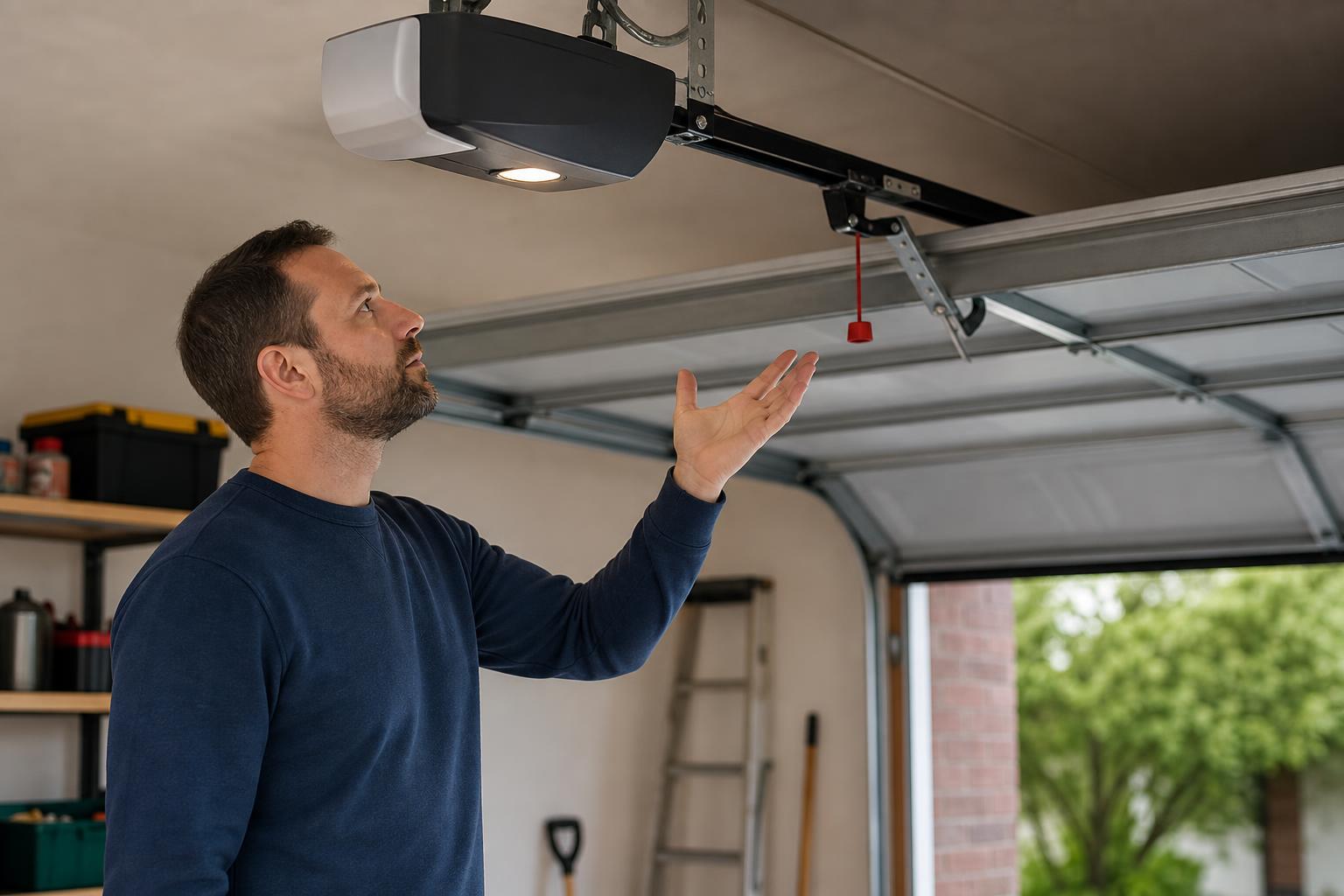
The opener can also be disconnected. The emergency release cord hangs from the opener rail and usually has a red handle. When pulled, it separates the trolley from the door arm. That lets you move the door by hand during a power outage.
If the trolley is disconnected, the opener may run along the rail while the door stays still. Reconnect it only if the door is balanced and sitting normally. If you're not sure, read more about a garage door won't open situation before testing anything by hand.
Broken Springs or Cable Problems
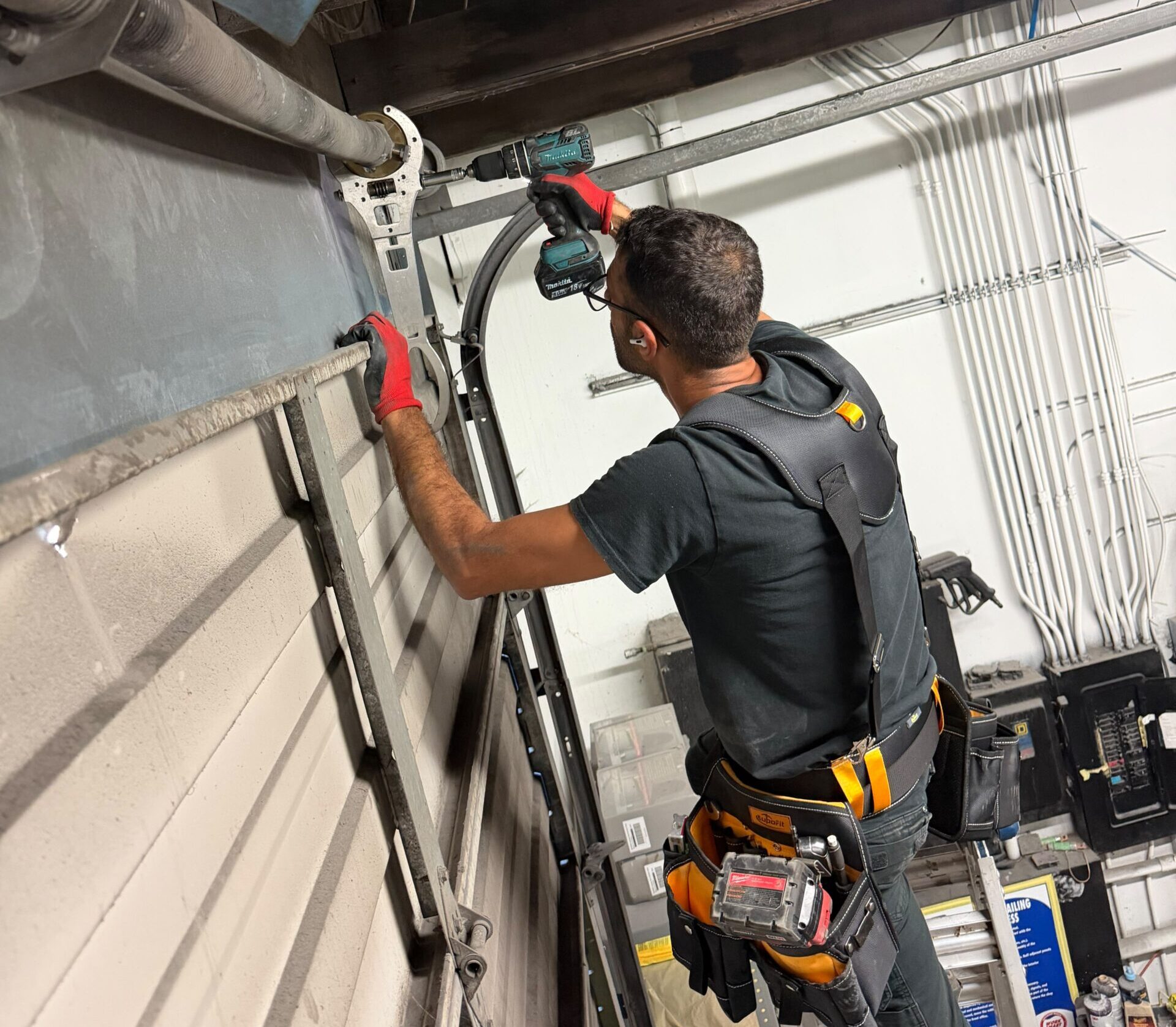
Broken springs or damaged cables are serious because they help carry the door's weight. Without them, the opener may hum, but it usually can't lift the door safely.
Garage door springs are the tightly wound metal parts that balance the door. Cables are the steel lines that run along the sides and help guide the door as it opens. If one fails, the door may feel extremely heavy, slam shut, rise only a few inches, or sit crooked. For example, after a cold, wet morning in West Seattle, a spring may snap as the door starts to lift, leaving the opener humming with no real movement.
Don't try to loosen, wind, or replace springs yourself. They hold stored force, which means they can release energy suddenly. That's why spring work is one of the clearest times to stop troubleshooting and get help. You can learn why this repair is risky in DIY spring repairs.
A cable problem can look less obvious. Watch for a loose cable hanging near the track or wrapped unevenly around a drum above the door. If you see that, don't press the opener again.
Stripped Gears or Opener Motor Strain
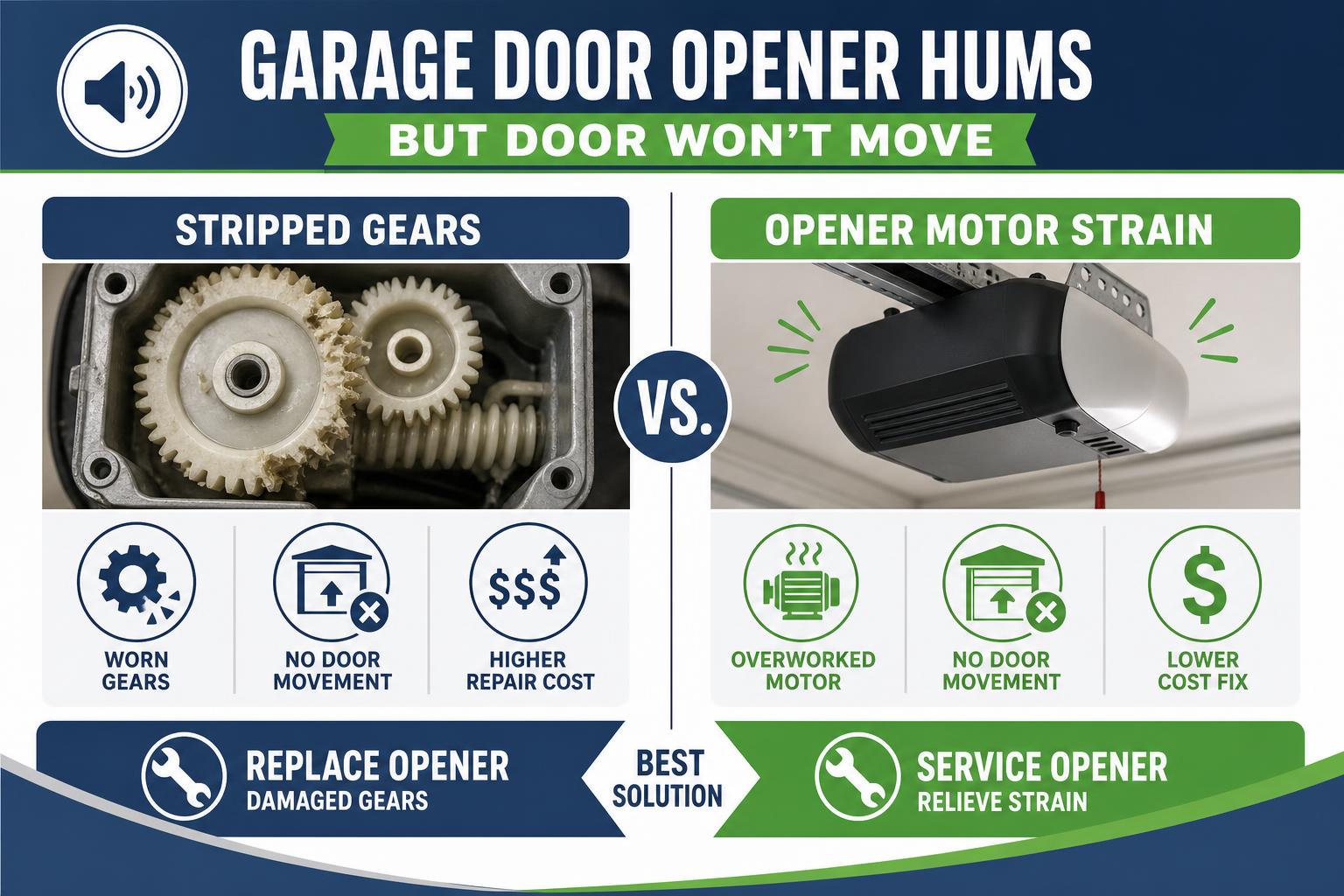
Stripped gears or motor strain can make the opener hum while the door stays still because the opener's internal parts aren't transferring power correctly. In plain terms, the motor is turning, but the movement isn't reaching the door.
Many openers use gears, which are toothed wheels that help move the chain, belt, or screw drive. A chain drive uses a metal chain. A belt drive uses a rubber-like belt. A screw drive uses a threaded rod. If a gear wears down, the opener may hum, buzz, click, or run while nothing moves. For example, in an older garage near Green Lake, years of daily use may wear the gear enough that the motor sounds alive, but the door doesn't budge.
Motor strain can also happen when the opener is fighting a heavy or sticky door. The opener isn't meant to replace working springs, rollers, and tracks. It's meant to guide a balanced door.
If the opener has failed more than once, check for broader opener failure signs. Repeated humming can be a symptom, not the whole problem.
Track
The track can be the reason a garage door opener hums but door won't move when the door is physically blocked from rolling. Check both vertical and horizontal tracks for bends, loose fasteners, shifted brackets, or debris packed near the rollers. Even a small dent can pinch a roller and make the opener strain instead of lifting smoothly. Do not hammer the track or force the door with the remote if the door is tilted or partly off track. A simple obstruction may be removable, but a misaligned track should be inspected before it damages the panels, rollers, or cables.
Track, Roller, or Door Obstruction Issues
Track, roller, or obstruction problems can stop the door while the opener keeps humming. The track is the metal path on each side of the door, and rollers are the small wheels that move inside it.
Look for dents, gaps, loose brackets, leaves, tools, toys, or gravel near the tracks. In Seattle garages, moisture can also encourage rust on metal parts, especially near older concrete floors. For example, a small bike helmet wedged near the bottom track in a Queen Anne garage can stop the door just enough for the opener to hum and quit.
Rollers can also wear out. A bad roller may wobble, grind, or bind inside the track. If the door is visibly off track, don't try to force it back with the opener. That can bend panels or pull cables loose. Here's a helpful overview of off track repair if the door has shifted from its normal path.
Light maintenance can help when nothing is bent or broken. Cleaning and carefully lubricating moving parts reduces friction. Use products made for garage doors, not heavy grease that collects grit. For more detail, see lubricating tracks and rollers.
When to Stop Troubleshooting
You should stop troubleshooting when the door shows signs of weight, tension, or uneven movement problems. Those are the situations where pressing buttons or pulling cords can make things unsafe.
Stop right away if the door is crooked, hanging on one side, has a loose cable, or opens only a few inches before stopping. Also stop if the opener hums and the lights flicker, the motor smells hot, or the rail bends under strain. For example, if your garage door in a narrow townhome garage rises two inches and then drops hard, don't test it again.
Here are clear stop signs:
- A broken spring is visible above the door.
- A cable is dangling or frayed.
- The door is tilted in the opening.
- The opener rail flexes or shakes.
- The door feels too heavy to lift.
- The motor hums after several failed tries.
If any of these happen, leave the door closed if possible. If it's open, keep people and vehicles away from it until it's inspected.
Repair or Replace the Opener?
Repair makes sense when the opener is fairly reliable and the problem comes from one clear, fixable part. Replacement makes more sense when humming is part of repeated failure, heavy strain, or outdated operation.
A repair might cover a worn gear, loose chain, faulty capacitor, or travel setting. A capacitor is a small electrical part that helps the motor start. If it fails, the motor may hum but not move. For example, a homeowner in Ravenna with a quiet belt-drive opener may only need one internal part replaced if the door itself moves smoothly by hand.
Replacement may be smarter if the opener is noisy, inconsistent, lacks safety features, or keeps struggling even after door repairs. This is also a good time to think about daily use. A detached garage used twice a week has different needs from a busy family garage facing an alley.
If you're comparing modern options, chain and belt openers can help you understand noise and operation differences without guessing.
FAQ
These quick answers cover the most common questions homeowners ask when the opener hums but the door doesn't move. The key idea is simple: don't force the door until you know whether the problem is minor or dangerous.
For example, if your garage door opener runs but door does not move after a stormy Seattle night, the issue could be a simple obstruction. But it could also be a spring, cable, or motor problem that needs professional repair.
Why Does My Garage Door Opener Hum but Not Open?
Your opener is probably receiving power, but the door or opener mechanism is stuck. Common causes include a locked door, disconnected trolley, broken spring, jammed roller, stripped gear, or weak motor part. If the door looks uneven or feels heavy, stop testing it.
Can I Open the Door Manually When the Opener Hums?
You can only try this if the door looks straight, fully closed, and normal. Pulling the emergency release on a damaged door can be risky. If a spring or cable has failed, the door may be too heavy to control safely.
Is a Humming Opener Always a Motor Problem?
No, a humming opener isn't always a motor problem. The motor may be fine, but the door may be stuck, locked, or too heavy because of a spring issue. Always check the door system before assuming the opener itself is bad.
What if the Opener Hums and Then Stops?
That often means the opener is overheating, hitting a safety limit, or failing to start properly. Give it a break and don't keep pressing the button. Repeated attempts can damage the motor or opener rail if the door is jammed.
Conclusion
When a garage door opener hums but door won't move, treat the sound as a warning, not just an annoyance. Start with safe checks like locks, obstructions, and the wall control. Then stop if the door is crooked, heavy, or showing spring or cable trouble. If the opener keeps humming after basic checks, the next practical step is a professional inspection before more parts get damaged.